





First, Read the Care Label
Before you even think about water, your garment's care label is your most important guide. It will tell you if an item is 'hand wash only', 'machine washable', or 'dry clean only'. Structured items like blazers or lined trousers should almost always be sent
to a professional dry cleaner, even if the fabric itself is wool. For most unstructured sweaters, scarves, and other knits, however, a gentle wash at home is not only possible but often preferable to the harsh chemicals of dry cleaning. Understanding the symbols is key: a tub with a hand means hand wash, while a tub with an 'X' means do not wash at all.
To Wash or Not to Wash?
One of wool's best qualities is that it's naturally odour and dirt-resistant thanks to a natural coating of lanolin on its fibres. This means it doesn't need to be washed after every single wear. In many cases, simply airing out your garment overnight is enough to refresh it. If you have a small spill or mark, try spot-cleaning with a damp cloth and a tiny amount of wool-safe detergent before committing the entire garment to a full wash. As a general rule, a wool sweater worn over another layer may only need washing a few times per season.
The Hand-Washing Method
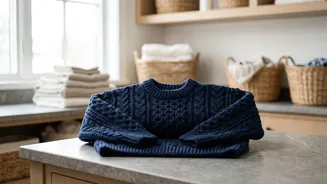
Hand-washing is the safest and most gentle method for cleaning woollen knits. Fill a clean basin or sink with cool to lukewarm water—it should not feel warm to the touch. Add a small amount of a pH-neutral, wool-specific detergent and swish it around to dissolve. Turn your garment inside out and submerge it, gently pressing the water through the fabric. Let it soak for about 10-15 minutes. Avoid any rubbing, twisting, or harsh agitation, as this is what causes wool to felt and shrink. Drain the soapy water and rinse the garment in clean water of the same temperature until the water runs clear.
Using a Washing Machine Safely
If, and only if, the care label permits, you can use a washing machine. Always select the 'wool', 'hand wash', or 'delicate' cycle. These cycles use cold water and a low spin speed to mimic the gentleness of hand-washing. For added protection, turn your knitwear inside out and place it in a mesh laundry bag to reduce friction. Wash it with other similar soft items, avoiding heavy fabrics like denim or items with zippers that could snag the knit. Use only a wool-safe detergent, as regular detergents contain enzymes that can break down protein-based wool fibres over time.
The Art of Drying Wool Correctly
How you dry your wool is just as important as how you wash it. Never, ever wring out a wool garment or put it in a tumble dryer unless the label explicitly allows it. The combination of heat and tumbling is the primary cause of shrinking. Instead, gently squeeze out excess water or roll the garment up in a clean, dry towel and press firmly. Once the excess water is removed, lay the garment flat on a fresh towel or a mesh drying rack. Gently reshape it to its original dimensions, lining up the seams and smoothing out the cuffs and hem. Let it air dry completely away from direct sunlight or heat sources like radiators.