






The Foundation: Why Rolling Saves Space
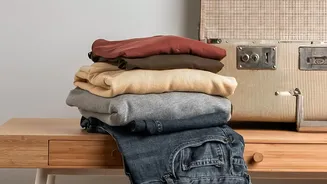
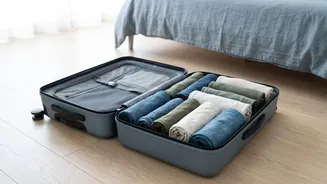
The core principle of efficient packing is compression. Folding clothes traps air and creates uneven layers, wasting precious space. Rolling, on the other hand, squeezes that air out. By turning your garments into compact cylinders, you can arrange them
like a puzzle, eliminating the empty gaps that folding creates. This method not only saves a significant amount of room but also helps to minimize the hard creases that folded clothes often get during transit. While it works best for casual wear like t-shirts and pants, it's the foundational skill for any space-savvy traveller.
The Next Level: Master the Ranger Roll
For an even more secure and compact pack, learn the 'ranger roll', a technique used by soldiers for its efficiency. This method involves an extra step that locks the roll in place, preventing it from unravelling inside your bag. To do it, lay a t-shirt flat and fold the bottom hem up and inside out by a few inches, creating a 'lip'. Fold the sides in to create a uniform rectangle, then roll tightly from the collar down. Once you reach the bottom, pull the lip you created over the entire roll, securing it like a small pouch. This works especially well for soft items like shirts, but can also be adapted for bulkier items like hoodies.
The Power Combo: Rolling Inside Packing Cubes
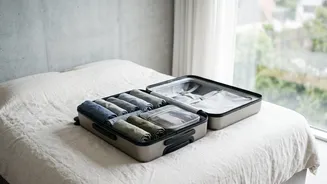
To achieve maximum space-saving, combine the rolling method with packing cubes. While rolling expels air between garments, compression cubes take it a step further by squeezing out the air trapped within the fabric itself. Using regular packing cubes helps with organization, allowing you to compartmentalize outfits or types of clothing. However, using compression cubes—which feature a second zipper to cinch everything down—can reclaim an additional 20-30% of volume. Roll your clothes first, then arrange the tight little cylinders inside a compression cube. This dual approach offers the best of both worlds: the wrinkle-reducing benefits of rolling and the superior organization and compression of cubes.
Think Beyond Rolling: The Bundle Method
Some items aren't suited for rolling, particularly structured pieces like blazers or dress pants that can get misshapen. For these, consider the bundle wrapping method. This technique involves wrapping your clothes around a central 'core', which could be a small pouch containing your socks and underwear. You start by laying out your most wrinkle-prone item, like a jacket, followed by layering other items on top. Once everything is layered, you place the core in the center and wrap each garment around it one by one. The result is a single, large bundle that's less likely to shift and crease, making it a great alternative for more structured outfits.
Strategy is Everything: Pack Smarter, Not Harder
No packing hack can save you from bringing too much stuff. The key to a light carry-on for a four-day trip is strategic wardrobe selection. Opt for versatile pieces that can be mixed and matched to create multiple outfits from fewer items. For example, two pairs of pants and three tops can create six different looks. Choose lightweight, quick-drying, and wrinkle-resistant fabrics whenever possible. Always wear your bulkiest items, like a jacket or boots, on the plane to free up valuable real estate in your bag. This planning phase is just as crucial as your packing technique.
Fill Every Last Gap
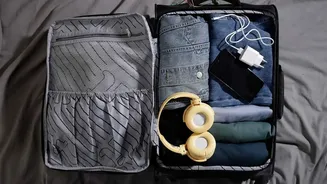
Once your main items are packed, it's time to get creative with the leftover space. This technique, sometimes called 'nesting', involves using every available pocket of air. Stuff smaller items like socks, underwear, or charging cables inside your shoes. This not only saves space but also helps your shoes maintain their shape. Place belts around the perimeter of your suitcase. Look for the small gaps between your rolled clothes or packing cubes and tuck in smaller, flexible items. Every inch of your carry-on is usable space, and filling these gaps will help you fit in those last few essentials.