






What Exactly Is AlphaGenome 2?
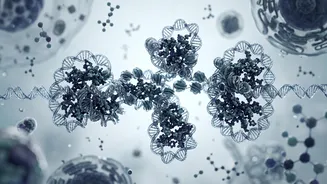
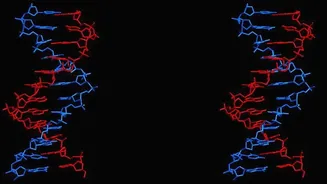
Think of the human genome as a single, massive instruction manual for building and running a body. The challenge is that every cell uses that same manual differently. A heart cell reads different chapters than a brain cell or an immune cell. AlphaGenome
2 is an advanced AI system designed to predict exactly which instructions specific cell types will follow. It builds on previous models like AlphaFold, which focused on protein structures, and the first AlphaGenome, which looked at DNA variations across broad tissues. The new version zooms in to the level of individual cells, offering a far more detailed view. It was trained on over 100 million cell profiles, allowing it to understand the subtle switches that make one cell different from another.
The Challenge of Cellular Diversity
The reason this is a breakthrough is because of cellular complexity. While every cell has the same DNA blueprint, the way genes are expressed (switched on or off) creates hundreds of specialized cell types. Predicting how a single tiny mutation in the DNA might affect a specific immune cell, but not a skin cell, has been one of the great unsolved problems in genetics. Previous methods often looked at tissues as a whole, averaging out these crucial differences. AlphaGenome 2’s ability to distinguish between closely related cell types and predict the effect of genetic variants at this granular level is what makes it a significant step forward for scientists.
How Does the AI Make Its Predictions?
AlphaGenome 2 uses a deep learning architecture to analyze vast amounts of data. It takes a long DNA sequence as its input and predicts thousands of molecular properties that control gene activity. The model was trained by feeding it data from the Human Cell Atlas and other large-scale genomic datasets, which map out gene expression in millions of individual cells. By comparing the DNA sequence with the actual activity observed in these cells, the AI learns the complex 'grammar' of gene regulation. This allows it to predict how a given genetic variant—even one it has never seen before—will impact gene expression and function in a specific cellular context.
A Potential Game-Changer for Medicine
The practical implications are enormous, particularly for drug discovery and personalized medicine. Many diseases, from cancer to autoimmune disorders, are driven by problems at the cellular level. By pinpointing which genetic variants affect which cells, AlphaGenome 2 could help researchers identify the root causes of disease much faster. This could lead to the development of more targeted therapies that act only on the specific cells involved. It could also speed up clinical trials by helping to identify patients who are most likely to respond to a particular drug based on their unique genetic makeup.
How Researchers Use the Predictions
For scientists, AlphaGenome 2's predictions offer a powerful way to prioritize their research. Instead of spending months in a lab testing countless genetic variants, they can use the AI's output to focus on the most promising leads. The predictions are often presented as a score, indicating how likely a variant is to be 'pathogenic' (disease-causing) or 'benign'. For example, the AlphaGenome Atlas provides a 'Variant Impact (AVI) score' for billions of possible mutations. This helps researchers working on large genetic studies narrow down broad DNA regions linked to a disease to the specific causal variants and the cell types they affect.
Limitations and the Road Ahead
Despite its power, AlphaGenome 2 is a research tool, not a clinical diagnostic one. Its predictions are not a substitute for clinical diagnosis and must be experimentally validated in a lab. However, by guiding and accelerating that lab work, it represents a pivotal shift. The model is part of a broader trend where AI is becoming an indispensable partner in scientific discovery. Future work will likely involve refining the model's accuracy further and expanding the number of cell types and biological states it can analyze. The collaboration between AI tools and human experts is set to unlock a new era in our ability to understand and treat human disease.