





The Martian Air Problem
Sending humans to Mars is one of the greatest technological challenges of our time. Beyond the 140-million-mile journey, the most fundamental problem is survival on a planet with an unbreathable atmosphere. The Martian air is about 96% carbon dioxide
(CO2), with only a minuscule 0.16% oxygen. Humans not only need oxygen to breathe, but a crewed return mission would require massive quantities of it to be used as a propellant to lift off from the Martian surface. Transporting all that oxygen from Earth is prohibitively expensive and heavy, making it a non-starter for any sustainable presence. The solution, known as in-situ resource utilization (ISRU), is to make what you need from what's already there. For Mars, this means turning the abundant CO2 into life-giving oxygen.
The First Oxygen Factory: MOXIE
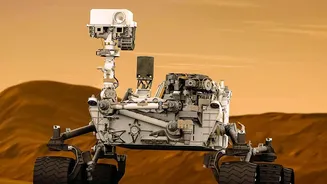
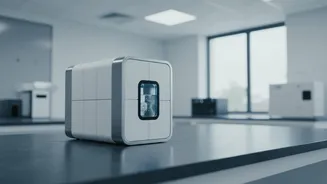
The first major step in proving this was possible came from a lunchbox-sized device aboard NASA's Perseverance rover. The Mars Oxygen In-Situ Resource Utilization Experiment, or MOXIE, successfully demonstrated that it could produce oxygen on Mars. MOXIE works through a process called solid oxide electrolysis. It pulls in the Martian atmosphere, filters it, and then heats it to a scorching 800 degrees Celsius (nearly 1,500 degrees Fahrenheit). At this extreme temperature, the CO2 molecules are split into oxygen ions and carbon monoxide. The oxygen ions are then combined to form breathable O2. MOXIE proved the concept, successfully and reliably producing about 6 to 10 grams of oxygen per hour—roughly the rate of a small tree on Earth. However, its high energy consumption and extreme temperature requirements pose challenges for scaling up the system to support a human crew.
A Cooler, Faster Alternative: Plasma
This is where the new improvements come in. Scientists are developing an alternative method that uses plasma instead of just high heat. Plasma, the fourth state of matter, is a gas of charged particles, including bullet-like electrons. When these high-energy electrons are fired into CO2, they can break the molecule apart without needing the same extreme temperatures as MOXIE. Several research teams have shown that this plasma-based approach is incredibly efficient. The natural conditions on Mars, with its low atmospheric pressure, are actually ideal for creating plasma. This method not only splits CO2 into oxygen and carbon monoxide but can also do it much faster and with less energy. One experimental reactor produced oxygen about 30 times faster than MOXIE for a similar energy input.
More Than Just Oxygen
The benefits of plasma and other low-temperature electrolysis methods extend beyond just making air. The same processes can be used to create other vital resources. For example, by introducing nitrogen from the Martian atmosphere into the plasma reactor, scientists have produced nitrogen oxides for the first time. These compounds are the building blocks of fertilizers, essential for growing food in Martian soil. Another innovative approach involves an ultra-low-temperature electrolyzer that uses Mars's frozen water (brine) and atmospheric CO2 to produce both oxygen and methane. Methane is a potent rocket fuel, meaning future explorers could potentially create both their breathable air and the fuel for their return journey using local resources. Other concepts even suggest using the temperature difference between a warm habitat and the frigid Martian exterior to power CO2 conversion.