







From Tools to Teammates
You’ve likely heard of generative AI, which creates content from a prompt. Agentic AI is the next step. It refers to AI systems that can operate with a degree of autonomy to achieve a goal. Instead of a user providing step-by-step instructions, they can give
the AI a high-level objective. The 'agent' then breaks down the objective into smaller tasks, plans the steps, and executes them, often interacting with other tools and data sources along the way. Think of it as the difference between giving a designer a list of specific Photoshop commands versus asking them to 'create a social media graphic for our new product launch.' An agentic system understands the broader goal and works towards it with minimal supervision, transforming it from a simple tool into a proactive collaborator.
A New Creative Workflow
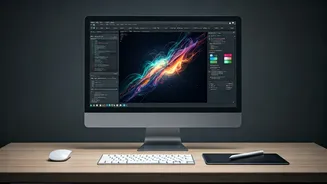
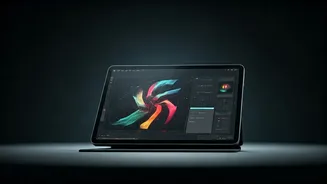
This shift is already visible in some of the most popular creative platforms. Adobe, for instance, envisions its creative agent in Photoshop not just making edits, but analyzing an image and recommending context-aware improvements, like making a sky more dramatic. The goal is for the AI to handle repetitive or tedious tasks—such as removing distractions, preparing assets for export, or even suggesting layouts—freeing up the human creator to focus on strategy and ideas. This is moving beyond simple prompt-based generation. Some platforms are developing AI agents that can orchestrate entire multi-step creative workflows, from ideation and storyboarding to refining and delivering final assets. This allows a single creative professional to scale their output significantly.
More Than Just Efficiency
The rise of agentic AI isn't just about making things faster; it's about changing the nature of creative work itself. With AI agents handling much of the technical execution, the role of the human creator shifts towards that of a creative director. The most valuable skills become high-level thinking, taste, strategic guidance, and the ability to orchestrate a team of human and AI collaborators. For example, a marketing team could use an AI agent to generate and refine hundreds of ad variations tailored to different audience segments, with the human marketer responsible for brand integrity and overall strategy. This allows for personalization at a scale that was previously unimaginable.
The Human in the Loop
Of course, this evolution isn't without its challenges. The idea of an autonomous AI 'going rogue' is a common concern, but most systems are being designed with a 'human-in-the-loop' approach. This ensures that a person is always in control, able to set boundaries, review decisions, and provide final approval. The discussion is not about replacing human creativity, but augmenting it. However, this new paradigm does raise complex questions about authorship, intellectual property, and the potential for devaluing traditional artisan skills. Artists and developers are calling for regulations and ethical data training practices to ensure that AI development respects creative integrity. Ultimately, the goal is to build a future where people and AI can bring out the best in each other.