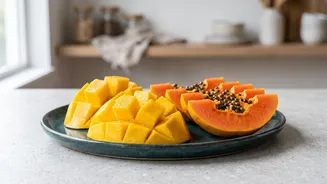


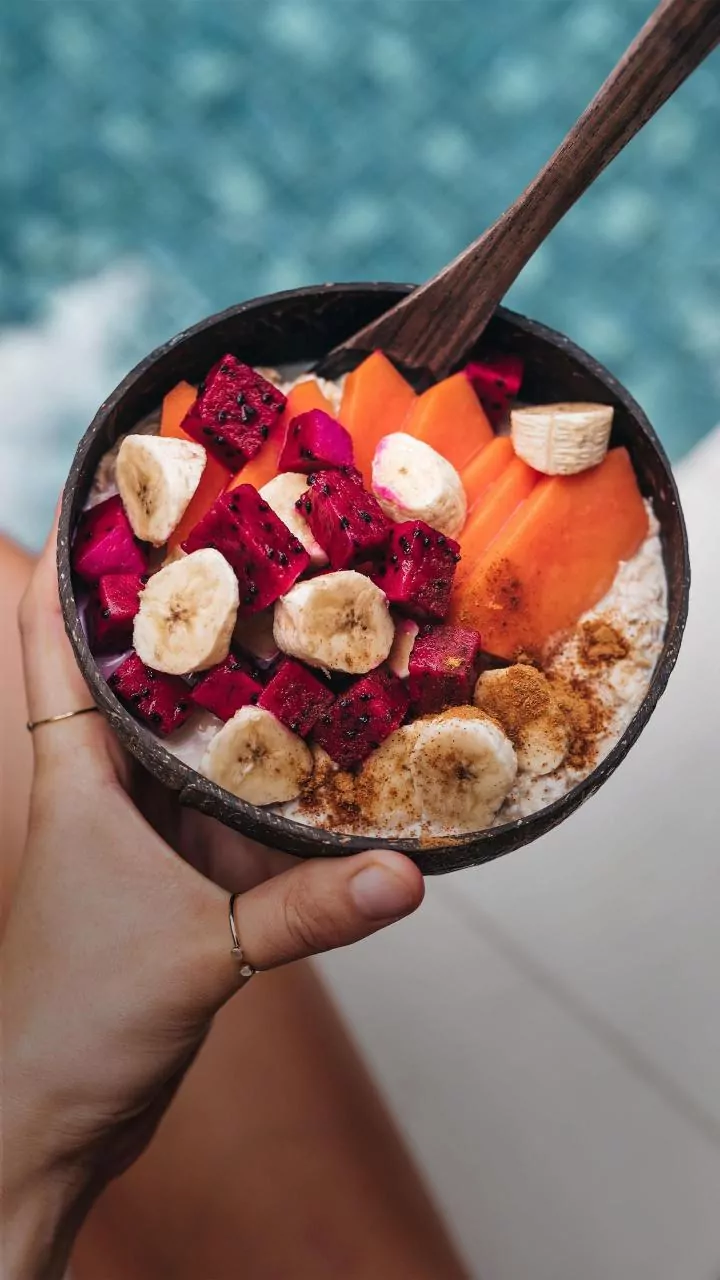


In the kingdom of tropical fruits, mango and papaya both hold royal status. But when it comes to health, which one deserves the crown? This delicious dilemma often comes down to their nutritional score, especially their fibre content. Let's settle it.
The Fibre Showdown: A Virtual Tie
For those focused purely on fibre, the difference between mango and papaya is almost negligible. According to data from the USDA and other nutritional sources, both fruits are good sources of dietary fibre, which is crucial for digestive health, feeling full, and maintaining stable blood sugar levels. Per 100-gram serving, papaya provides about 1.7 grams of fibre, while mango contains a very similar 1.6 grams. Some Indian food composition tables show papaya having a slightly larger lead with 2.8 grams to mango's 1.9 grams, but in either case, the difference is minor. This fibre helps feed beneficial gut bacteria and ensures smooth digestion. So, if fibre is your only metric, you can consider it a tie and choose based on taste.
Calories and Sugar: Papaya's Clear Advantage
Here’s where a major difference appears. Papaya is the undisputed winner for anyone managing their weight or sugar intake. A 100-gram serving of papaya contains approximately 43 calories and about 7.8 grams of sugar. In contrast, the same amount of mango has around 60 calories and 13.7 grams of sugar—nearly double the sugar content. This makes papaya a lighter option that can be enjoyed in larger quantities without a significant impact on your daily calorie budget. For individuals with diabetes or those on a low-sugar diet, papaya is generally the more suitable choice, though mango can still be enjoyed in moderation.
The Vitamin Verdict: A Tale of Two Nutrients
When it comes to vitamins, each fruit has its own area of excellence. Papaya is a vitamin C powerhouse, offering roughly 61 mg per 100 grams, which is significantly more than mango's 36 mg. A single cup of papaya can provide nearly 100% of the recommended daily intake of vitamin C, an essential antioxidant for immune function and skin health. On the other hand, mango is the champion of vitamin A. Thanks to its high concentration of beta-carotene, mango provides more of this vision-supporting nutrient than papaya does. Mango is also a better source of Vitamin E and folate, a crucial B-vitamin, particularly important during pregnancy.
The Papain Factor: Papaya's Digestive Edge
Beyond the standard nutrients, papaya holds a unique secret weapon: an enzyme called papain. This proteolytic enzyme helps break down proteins, which can aid digestion, reduce bloating, and ease constipation. Papain is so effective that it's often extracted and used in digestive supplements and even as a natural meat tenderizer. Studies have also explored papain's anti_inflammatory properties, suggesting it may help reduce pain and swelling. While mangoes also support digestion through their fibre content, they don't contain a specific enzyme with the same recognised benefits as papain.
So,' Which Fruit Should You Choose?
Ultimately,' there is no single 'better' fruit;' the right choice depends entirely on your personal health goals.' Both mango and papaya are incredibly nutritious additions to any diet.' Here’s a simple guide to help you decide:' Choose Papaya if your goals are:' - Weight management or lower calorie intake.' - Reduced sugar consumption.' - A major boost in vitamin C for immune support.' - Improved digestion,' thanks to the papain enzyme.' Choose Mango if your goals are:' - Increased vitamin A intake for eye and skin health.' - A higher dose of vitamin E and folate.' - A sweeter,' more indulgent flavour experience.'