


What Exactly Is Nordic Walking?
Originating in Finland as a way for cross-country skiers to train during the off-season, Nordic walking is a specific fitness technique, not to be confused with trekking or simply walking with poles. It involves using specially designed poles to propel
yourself forward, engaging your upper body with every step. Unlike trekking poles which are primarily for stability, Nordic poles are used to add intensity and turn a simple walk into a comprehensive workout that engages up to 90% of your body's muscles, compared to about 50% with regular walking.
The Full-Body Benefits
The main advantage of Nordic walking is its efficiency. By actively using the poles to push off the ground, you engage your arms, shoulders, chest, and core muscles. Research shows this increased muscle engagement can boost your calorie burn by 20% to 46% or even more compared to walking at the same pace without poles. This higher intensity also gives your heart a better workout, improving cardiovascular fitness. Furthermore, the poles provide additional stability and help distribute your weight, reducing the stress on your joints, particularly your knees and hips. This makes it an excellent low-impact option for people of all ages and fitness levels, including those with joint concerns.
Getting the Gear Right
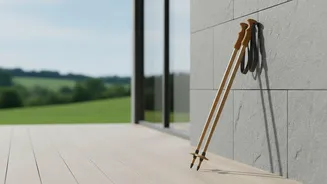
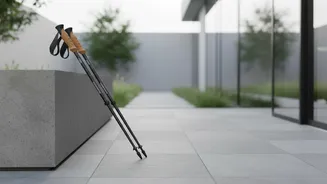
While you don't need a lot of specialised equipment, the right poles are essential. Nordic walking poles are different from trekking poles; they are typically lighter and feature a unique glove-like strap system. This strap allows you to push off through the pole without having to grip it tightly, enabling the correct arm swing and push-off motion. When choosing poles, look for ones that are the correct length for your height, often made from lightweight aluminium or carbon. As for footwear, comfortable walking shoes or trainers with good grip are perfectly suitable. Dress in breathable, layered clothing that allows for a free range of motion.
Mastering the Basic Technique
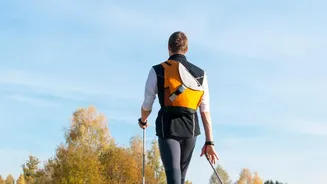
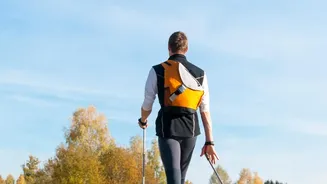
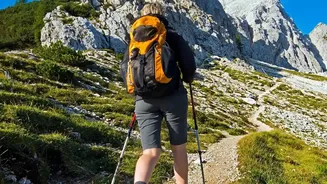
The fundamental movement of Nordic walking is based on a natural rhythm: your opposite arm and leg move forward at the same time. As your left leg steps forward, your right arm swings forward with the pole. You plant the pole tip on the ground roughly in line with the heel of your opposite foot. Crucially, the poles should be angled backwards. As you move past the planted pole, you push it back to propel your body forward. The movement should feel fluid, originating from your whole body, not just your arms. Maintain an upright posture, keep your shoulders relaxed, and look ahead.
Is It for You?
One of the best things about Nordic walking is its accessibility. It can be done almost anywhere you can walk—in a local park, on a quiet street, or along a nature trail. While it may seem like a niche activity, its popularity is growing in India as a gentle yet effective form of exercise. It's suitable for all ages and fitness levels, from athletes using it for cross-training to seniors looking to improve balance and mobility. Whether you want to manage weight, boost heart health, or simply find a more engaging way to stay active outdoors, Nordic walking offers a compelling and well-rounded option.