





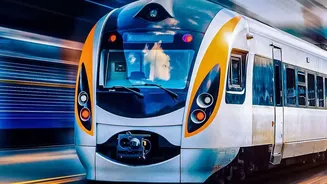

Passengers aboard three specific Vande Bharat sleeper trains are finding fewer options on their meal trays. The Indian Railway Catering and Tourism Corporation (IRCTC) has initiated a pilot project to offer a more compact menu.
A Focus on Quality Over Quantity
In a significant shift from
its traditional elaborate meal service, Indian Railways is testing a 'less is more' approach. The move, introduced on November 1, 2026, aims to tackle persistent passenger complaints regarding food quality, hygiene, and freshness on long-distance journeys. By reducing the number of dishes from as many as ten down to just four per meal, officials believe they can better monitor preparation, ensure consistency, and improve overall service. This airline-style approach is being managed by large-scale cloud kitchens and established hospitality groups like TajSATS and the Mayfair Group, which already supply major airlines and hotels. The goal is to see if a focused menu leads to higher passenger satisfaction. An early report from IRCTC's West Zone noted a 10% drop in catering complaints shortly after the new system was implemented.
The Three Affected Routes
This pilot project is not yet a network-wide change. For now, the trimmed menu has been exclusively rolled out on three Vande Bharat sleeper train routes. These are the long-distance services connecting New Delhi and Varanasi, Mumbai and Bengaluru, and Howrah with Kamakhya in Guwahati. The selection of these routes allows IRCTC to test the new model across different regions and passenger demographics. The corporation has stated that it will carefully evaluate passenger feedback from these three services before considering an expansion of the compact menu to other Vande Bharat trains or even other premium trains like the Rajdhani and Shatabdi Express.
What's Off the Menu?
So, what exactly are passengers missing? Quite a few of the accompaniments and lighter options have been removed. For breakfast, items like soup, egg omelettes, omelette sandwiches, and vegetable sandwiches are no longer part of the standard offering. Similarly, for lunch and dinner, the elaborate spread has been simplified. Side dishes such as a separate dry vegetable, curd, salad, pickles, and sweets will no longer be included on the meal tray. Even beverages like buttermilk and small treats like chocolates have been cut from the breakfast platter. The total weight of a meal has also been reduced from around 700-750 grams to approximately 450-500 grams, though officials state the portion size of the main items has not changed.
Your New Meal Options
While the menu is shorter, the core components of a meal remain. For breakfast, passengers can now expect a choice between options like idli and vada with sambhar, poha, or upma. For lunch and dinner, the new standard meal consists of four primary items: chapatis (or parathas), rice, dal, and one main dish. This main dish will have a vegetarian option, such as a paneer or seasonal vegetable preparation, and a non-vegetarian option, which is typically a chicken-based dish. The focus is on providing a simple, wholesome thali-style meal that is easier to prepare with high quality standards. While some regional variety remains, the core structure of the meal is now standardised across the trial routes.
What This Means for Travelers
For passengers on these routes, the most immediate change is a simpler, more predictable meal service. The choice is now more straightforward, and the hope from IRCTC is that the food served will be consistently fresher and of a higher quality. However, passengers who enjoyed the variety and the small extras like curd or a sweet with their meal might find the new offering a bit sparse. It's also worth noting that passengers still have the option to select 'No Food' when booking their tickets, which reduces the fare. For those who do opt for meals, the question of whether the catering charges will be adjusted to reflect the smaller menu remains a point of interest, though no changes have been announced yet. As this is a pilot project, the service may evolve based on the feedback collected during this trial period.