





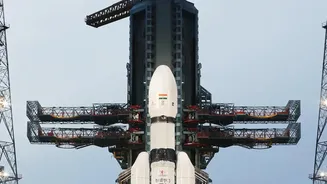
A Policy Shift Opens the Skies
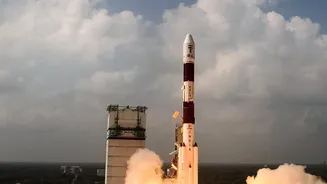
The single most significant catalyst for this transformation is the Indian Space Policy 2023. For years, the Indian Space Research Organisation (ISRO) was the primary designer, manufacturer, and operator of the nation's space assets. Private companies
were largely limited to being component suppliers. The 2023 policy dramatically changed this dynamic by formally inviting Non-Governmental Entities (NGEs) to participate in end-to-end space activities. This includes everything from building and launching their own rockets to owning and operating satellite constellations. The policy's objective is to enable and encourage a thriving commercial presence in space, allowing ISRO to transition away from routine operations and focus more on advanced research and development for pioneering missions.
The Rise of Private Ambition
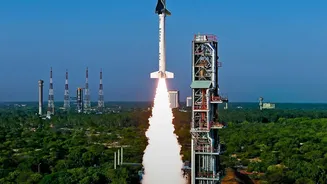
In the wake of these reforms, a vibrant startup ecosystem has emerged, with the number of space startups growing from just one in 2014 to over 400 by 2026. Leading this charge are companies like Hyderabad-based Skyroot Aerospace and Chennai-based Agnikul Cosmos. Skyroot made history in July 2026 by successfully launching its Vikram-1 rocket, becoming India's first private company to achieve an orbital launch. Agnikul, based out of IIT Madras, is also making strides with its innovative 3D-printed rocket engines and plans for its own commercial missions. These companies are not just building rockets; they are building a business case for accessible, on-demand launch services, aiming to capture a slice of the booming global small satellite market.
IN-SPACe: The New Facilitator
To manage this new public-private landscape, the government established the Indian National Space Promotion and Authorisation Centre (IN-SPACe). Envisioned as a single-window agency, IN-SPACe's role is to promote, enable, and authorise the activities of private space companies. It acts as an interface between ISRO and the private sector, facilitating access to ISRO's extensive facilities and technical expertise, which would be prohibitively expensive for startups to build from scratch. By providing a stable and predictable regulatory framework, IN-SPACe aims to create a level playing field that nurtures innovation and attracts investment into the sector.
The Cost-Effective Advantage
One of India's key strengths in the global launch market is its potential for cost-effectiveness. The success of ISRO's missions has long been noted for their frugal engineering, and private players are aiming to build on this reputation. Companies like Skyroot and Agnikul are leveraging innovative technologies like 3D printing and all-composite structures to reduce manufacturing costs and timelines. This cost advantage is particularly crucial in the small satellite launch segment, where numerous global companies are building large constellations for communication and Earth observation and are actively seeking affordable and frequent launch options. India is positioning itself to be a go-to destination for these commercial clients.
Hurdles on the Launchpad
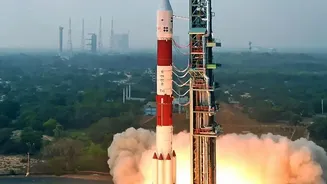
Despite the momentum, the path to a dominant launch industry is not without its challenges. Indian startups face intense global competition from established giants like SpaceX and a host of other international providers. While the Indian Space Policy 2023 is a foundational step, a more comprehensive national space law is still needed to address complex issues like liability, insurance, and intellectual property rights. Furthermore, scaling up operations will require significant capital investment, which can be difficult to secure for high-risk, long-gestation space ventures. Expanding infrastructure, including more launch pads beyond the primary one at Sriharikota, will also be critical to increasing launch frequency and avoiding bottlenecks.