




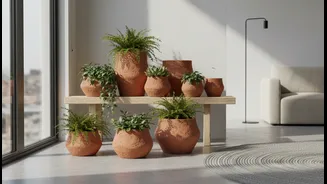



More Than Just Decoration
The idea that plants make us feel good is not just a feeling; it's backed by science. This concept is called 'biophilia'—the theory that humans have an innate desire to connect with nature. When we bring plants into our homes, we're satisfying this deep-seated
need. Studies have shown that interacting with indoor plants can lower stress hormones like cortisol, reduce blood pressure, and improve our mood. They create a visually calming atmosphere that helps us disconnect from daily pressures. While you'd need a veritable jungle to purify air like a high-tech filter, common houseplants do contribute to a cleaner indoor environment by absorbing certain pollutants and regulating humidity, which is especially welcome in homes with constant air conditioning.
The Hardy Air Purifier: Snake Plant
If you're looking for a plant that thrives on neglect, the Snake Plant (Sansevieria trifasciata) is your perfect match. Renowned for its hardiness, this plant is an excellent choice for beginners or those with busy schedules. Its upright, architectural leaves add a modern touch to any room. One of its standout features is its ability to perform photosynthesis at night, releasing oxygen while you sleep, which makes it an ideal companion for the bedroom. It's also celebrated for its air-purifying qualities, known to filter common household toxins. The Snake Plant tolerates low light and infrequent watering, making it perfectly suited for small, sometimes dimly lit, Indian apartments.
The Cascading Beauties: Money Plant & Spider Plant
No list of Indian house-plants is complete without the ubiquitous Money Plant (Epipremnum aureum). It’s beloved for a reason: it's virtually indestructible and grows happily in soil or a simple bottle of water. Its trailing vines can liven up a dull corner or a high shelf. Similarly, the Spider Plant (Chlorophytum comosum) is another low-maintenance favourite, known for being one of the easiest air-purifying plants to grow. It produces charming little offshoots, or 'spiderettes', that can be easily repotted. Both plants are excellent at filtering indoor air pollutants and thrive in the varied conditions of Indian homes, from humid monsoons to dry winters. Their cascading nature makes them perfect for hanging baskets, saving precious floor space in compact flats.
The Elegant Healer: Peace Lily
With its glossy dark green leaves and elegant white blooms, the Peace Lily (Spathiphyllum) brings a touch of sophistication to any space. It's a fantastic communicator, visibly drooping when it needs water, which helps prevent overwatering. The Peace Lily consistently ranks high for its ability to remove common airborne toxins like benzene and formaldehyde. It thrives in shady spots with indirect light, making it ideal for living rooms or even bathrooms where it can enjoy the higher humidity. Its ability to flower in low-light conditions means you get the restorative benefits of both foliage and flowers without needing a sun-drenched balcony.
Arranging Your Greenery for Calm
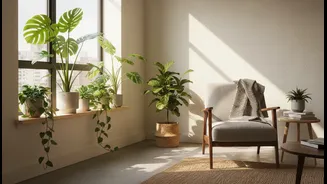
How you arrange your plants can be just as restorative as the plants themselves. Rather than scattering them, try grouping three or five plants of varying heights and textures together to create a lush focal point. This mimics the way plants grow in nature and has a more powerful visual impact. Use vertical spaces by placing trailing plants on top of cupboards or using wall-mounted shelves. This draws the eye upward and makes a small room feel more dynamic without taking up floor space. Finally, choose pots that complement your decor. A cohesive look reduces visual clutter, further enhancing the sense of peace and order in your home.