




The Monsoon Conundrum
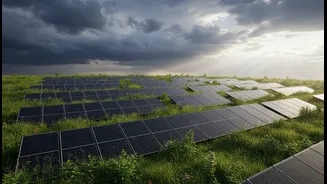
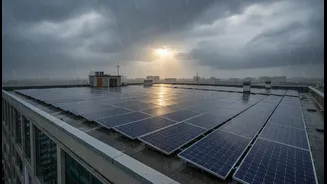
For solar panels, the monsoon presents a dual challenge. The most obvious is the thick cloud cover that dramatically reduces the amount of direct sunlight, or solar irradiance, hitting the panels. During peak monsoon months, solar energy output can drop
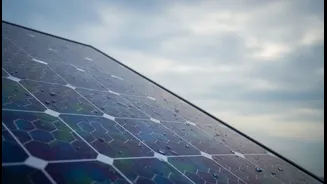
to just 10-25% of its normal capacity. This dip in generation is a significant hurdle for a country aiming for consistent renewable energy. The second, more subtle problem is grime. Dust and pollutants that accumulate on panels during the dry summer months don't always get washed away cleanly. Instead, the first rains can turn this layer of dust into a thick, sticky film of mud, further blocking the already scarce sunlight. While the rain does provide a natural cleaning service over time, the initial combination of clouds and grime creates a perfect storm for underperformance.
A New Generation of Materials
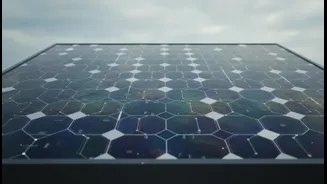
The heart of the race to solve this problem lies in materials science. Researchers are looking beyond traditional silicon-based panels and focusing on new materials that are inherently better at handling low-light conditions. The most promising of these are perovskites. Perovskite solar cells (PSCs) have a unique crystal structure that is exceptionally good at capturing energy from diffuse or scattered light—exactly the kind of light prevalent on a cloudy day. While a standard silicon panel's efficiency plummets under grey skies, lab tests have shown perovskite cells can achieve remarkable efficiency levels in low-light environments. Some studies have even demonstrated hybrid devices that use a thin film of perovskite to boost the low-light performance of existing silicon panels, suggesting a path to upgrade current technology. Though challenges with long-term durability remain, the potential for perovskites to make solar power more reliable year-round is driving intense research and development globally.
Smarter By Design
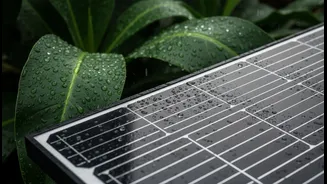
Alongside new materials, engineers are rethinking the design of the panels themselves. One major innovation is the bifacial panel. As the name suggests, these panels can capture sunlight from both their front and back surfaces. On an overcast day, when sunlight is scattered and reflecting off surfaces like clouds and the ground, a bifacial panel can generate more power by absorbing this ambient light from below. Another clever solution targets the grime problem directly: self-cleaning coatings. Inspired by the lotus leaf, researchers have developed superhydrophobic coatings that can be applied to a panel's surface. These coatings make the glass so water-repellent that raindrops bead up and roll right off, taking dust and dirt with them. This not only keeps the panels operating at peak efficiency but also reduces the need for manual cleaning.
The Indian Imperative
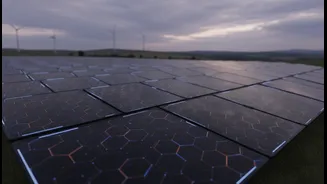
For India, cracking the monsoon code is not just an academic exercise; it is an economic and strategic imperative. The nation has one of the world's most ambitious solar energy programs, and the reliability of this energy source is crucial for grid stability and powering its growing economy. A solar panel that performs consistently through the monsoon transforms from a fair-weather power source into a dependable, year-round asset. Success in this race would reduce the reliance on coal-fired backup power during the rainy season, lower energy costs for consumers and industries, and solidify India's position as a global leader in renewable technology. By driving innovation in areas like low-light performance and durability, the unique challenge of the Indian monsoon could ultimately give rise to the next generation of solar technology for the entire world.