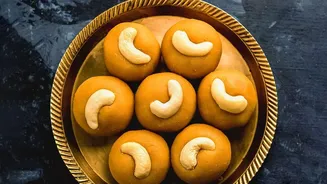


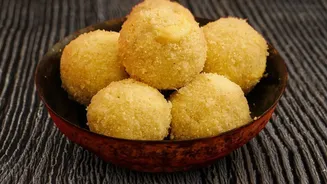


The dream is a soft, fragrant besan ladoo that melts in your mouth. The reality is often a hard, gritty, or raw-tasting disappointment. But what if the perfect ladoo isn't about a secret recipe, but about understanding a few key facts?
The Roasting Ritual
The single most
important step in making besan ladoo is roasting the gram flour, or 'bhunai'. This is not a process to be rushed. Roasting on high heat is the fastest way to ruin your ladoos, resulting in a bitter taste from burnt flour or a raw, pasty texture that sticks to the roof of your mouth. The key is to roast the besan slowly on a low flame, stirring constantly. This might feel like an arm workout, taking anywhere from 20 to 45 minutes, but it is crucial for an even cook. You'll know it's ready when the colour deepens to a uniform golden-brown and your kitchen fills with a beautiful, nutty aroma. At this stage, the mixture will also loosen up and start to release the ghee.
Choosing Your Flour
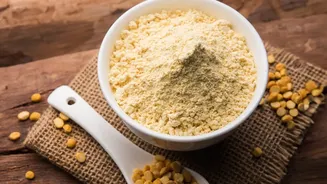
Not all besan is created equal. For the best texture, many halwais and experienced home cooks prefer a slightly coarse variety of gram flour, sometimes sold as 'ladoo besan'. This coarser grind gives the final product a desirable grainy, yet light, texture. If you can only find fine besan, don't worry. You can achieve a similar effect by adding a tablespoon or two of fine semolina (rava/suji) to the besan during the roasting process. This simple addition helps prevent the ladoo from becoming too dense or pasty. Another trick is to sprinkle about two tablespoons of water or milk into the besan once you are finished roasting; this helps the granules bloom and creates that 'danedaar' or grainy texture.
The Sugar Situation
The type of sugar you use and when you add it are critical for softness. Simply using granulated sugar will result in a gritty, sandy texture. While powdered sugar is a better alternative, the secret to a professional-tasting ladoo lies in using 'tagar' or 'boora'. This isn't just ground sugar; it's sugar that has been cooked and crystallised, giving it a porous texture that blends perfectly without melting. Timing is everything. Never add sugar to a hot besan mixture. This will cause the sugar to melt into a syrup, making the ladoos greasy, sticky, and flat. You must let the roasted besan cool until it is just warm to the touch—you should be able to handle it comfortably. If the mixture is too cold, however, it won't bind properly.
Getting the Ghee Ratio Right
Ghee is what binds the ladoo and gives it a rich, melt-in-the-mouth quality. However, the correct amount can be tricky. Too little ghee and your ladoos will be dry and crumbly, refusing to hold their shape. Too much, and they will become greasy and lose their form, especially in warmer weather. The best approach is to add ghee gradually. Many recipes call for roasting the besan in a portion of the ghee and adding more melted ghee later only if the mixture is too dry to bind. If you find your mixture is too crumbly while shaping, add a tablespoon of warm melted ghee to help it come together. Conversely, if the mix is too greasy, you can try adding a bit more roasted besan or chilling the mixture for about 20 minutes to help the ghee solidify before trying to shape the ladoos again.
The Art of Binding
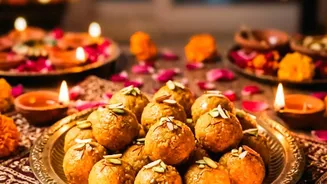
Once your besan is roasted, the sugar is mixed in, and the mixture is the right consistency, it's time to shape. The key is to work while the mixture is still warm, as it binds best at this temperature. If it has cooled down too much, the ghee will solidify, making it difficult to form the balls. Take a small portion of the mixture in your palm and squeeze it firmly a few times. This initial compression is important. At first, it might seem crumbly, but as you press and roll, the warmth from your hand will help the ghee bind everything into a cohesive ball. Once formed, let the ladoos sit at room temperature to set and firm up. They can be stored in an airtight container for several weeks, as the low moisture content helps preserve them.