

Landour, Uttarakhand: A Quiet Corner Above the Crowd
Just a short drive uphill from the bustling streets of Mussoorie lies Landour, a sleepy cantonment town that feels like a step back in time. Strict building regulations have preserved its old-world charm, with colonial-era bungalows, quiet winding roads,
and dense deodar forests. The joy of Landour isn't in sightseeing but in its gentle rhythm. Enthusiasts come here to walk the 'chukkar' (a circular path), read for hours in cosy cafes, and gaze at the Himalayan peaks from Lal Tibba, the highest point. It's a place that encourages you to put away your phone and simply be present.
Marayoor, Kerala: History, Sandalwood, and Serenity
While many flock to Munnar, slow travellers venture a little further to the rain-shadow village of Marayoor. This dry, sunny valley is famous for being the only place in Kerala with a natural sandalwood forest, filling the air with a woody fragrance. But its appeal runs deeper. Marayoor is a land steeped in history, home to ancient dolmens ('Muniyaras') from the Stone Age. Life here is unhurried. Visitors can watch jaggery being made from local sugarcane, explore rock paintings, and enjoy the pristine landscape without the usual tourist crowds.
Ziro Valley, Arunachal Pradesh: Culture in the Lap of Nature
A UNESCO World Heritage tentative site, Ziro Valley is a lush green expanse of paddy fields and pine-clad hills. It is home to the Apatani community, known for their unique sustainable farming practices and deep connection to the land. Beyond the famous Ziro Music Festival, the valley offers a profound sense of peace. Slow travel here means cycling through villages, staying in homestays to learn about Apatani culture, and hiking through pine groves. The pace of life is dictated by nature, offering a genuine digital detox and a chance for cultural immersion.
Majuli, Assam: Life on the River
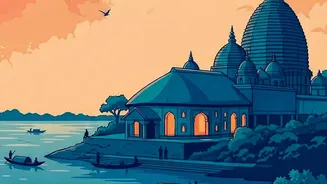
Majuli, the world's largest river island, sits peacefully in the Brahmaputra River and is considered the cultural capital of Assam. Life on this island moves at the river's pace. It is a hub of Neo-Vaishnavite culture, dotted with ancient 'Satras' (monasteries) where traditions of music, dance, and mask-making are preserved. Travellers are drawn to Majuli to disconnect from the mainland's hustle. They rent bicycles to explore tribal villages, stay in bamboo cottages, and watch mesmerising sunsets over the river. It's a destination best experienced slowly, allowing time for genuine connection with its people and fragile ecosystem.
Khonoma, Nagaland: A Green Warrior Village
Known as India's first green village, Khonoma has a remarkable story of transformation. Once a community of fierce warriors and hunters, the Angami residents banned hunting and logging to conserve their rich natural heritage, including the endangered Blyth's tragopan. Located near Kohima, this village offers terraced fields carved into the hillsides, traditional 'morungs' (youth dormitories), and a strong sense of community. A visit to Khonoma is a lesson in sustainability and conservation, inviting travellers to walk its clean paths and learn about its journey from a warrior past to a green future.
Diskit, Ladakh: Spirituality in the High Desert
As the main village in the majestic Nubra Valley, Diskit could easily be a busy hub. Yet, it retains a profound sense of calm, anchored by the ancient Diskit Monastery perched on a hilltop. Overlooking the Shyok River, the monastery and its colossal 106-foot Maitreya Buddha statue radiate peace across the valley. Slow travellers use Diskit as a base to absorb the stark, dramatic landscapes of Ladakh. The experience is not about rushing between sights but about acclimatising to the altitude, watching monks perform their rituals, and feeling the immense scale of the mountains.
Gokarna, Karnataka: A Quieter Coastal Escape
For those who find Goa's energy a bit too much, Gokarna offers a more laid-back alternative. While it has a spiritual identity as a temple town, its coastline of serene, sandy beaches connected by trekking trails attracts those looking to unwind. Beaches like Kudle and Half Moon are accessible mainly by foot or boat, naturally filtering out the crowds. The rhythm here is simple: morning swims, lazy afternoons in beachside shacks, and evenings watching the sunset. It is a place that organically encourages you to slow down, rewarding those who stay longer with a deeper sense of peace.
Mandawa, Rajasthan: The Open-Air Art Gallery
Tucked away in the Shekhawati region, Mandawa is often called an 'open-air art gallery'. This small town is famous for its grand 'havelis' (merchant mansions), their walls covered in intricate frescoes depicting everything from mythological tales to the arrival of the first motor cars. Unlike Rajasthan's bustling fort cities, Mandawa has a quiet, almost forgotten feel. Slow travel here is an act of discovery, wandering through lanes to find hidden artworks on crumbling walls, staying in a restored haveli, and experiencing a slice of heritage without the crowds.