






Why Your Grip Is the Unsung Hero of Strength
Grip strength is often the first link in the chain to fail during exercises like pullups, deadlifts, and rows. [1, 2] No matter how strong your back and arms are, if your hands can't hold on, you can't complete the work. But its importance extends far
beyond the gym. A solid grip translates to everyday tasks, from carrying heavy groceries with ease to opening a stubborn jar. Developing it improves your overall upper body strength, muscular endurance, and even long-term mobility. [15] It's a foundational element of fitness that provides control and stability, reducing injury risk by ensuring you can securely handle resistance, whether that's a barbell or your own bodyweight.
Understanding Low-Impact, Bare-Hand Training
The phrase "low-impact, bare-hand pullups" doesn't refer to a single exercise but a philosophy of training. It's about using variations that challenge your grip intensely while minimizing stress on the elbow and shoulder joints. This approach is perfect for building strength sustainably. Bare-hand training means forgoing straps or gloves, forcing your hands and forearms to do all the work, which directly translates into a more powerful and resilient grip. The following exercises are prime examples of this method, focusing on different types of grip strength, including crushing (squeezing) and support (endurance). [1]
The Towel Pullup: Your New Best Friend
Perhaps the single most effective variation for building a crushing grip is the towel pullup. [22] By simply draping one or two towels over a pullup bar and gripping the ends, you create a thick, unstable handle. [7, 9, 13] This forces the muscles in your hands and forearms to work significantly harder to stabilize your body and hold on. [11] The soft, shifting surface requires constant micro-adjustments, developing a type of functional grip strength that a rigid bar cannot. [13] Even if you can't perform a full pullup this way, simply hanging from the towels (a towel dead hang) is an incredibly potent exercise for building grip endurance. [11, 12] Start with short hangs and gradually increase your time.
Negative Pullups: Master the Descent
Negative pullups are an exceptional tool for building strength, especially if you're still working toward your first full pullup. [4] This exercise focuses exclusively on the lowering (eccentric) phase of the movement. [8] To perform one, you start at the top of the pullup position—with your chin above the bar—by either jumping up or using a box. [5] Then, you lower yourself down as slowly and controllably as possible. This prolonged time under tension is fantastic for building muscle and grip endurance without the high impact of explosive movements. [14] The slow, controlled descent requires immense grip strength to prevent you from dropping, teaching your body control through the full range of motion. [4, 5, 8]
Isometric Holds: Dead Hangs and Fingertip Hangs
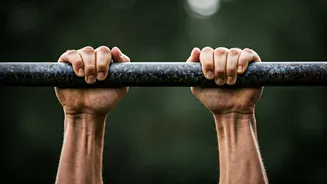
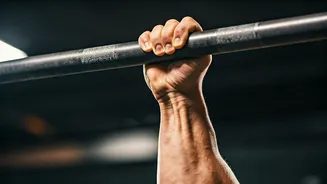
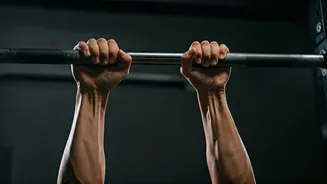
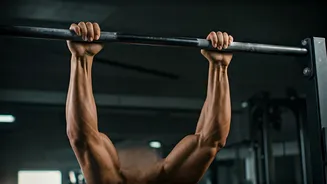
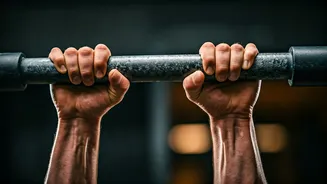
Sometimes the simplest exercises are the most effective. The dead hang is a foundational grip-building exercise where you simply hang from the bar with your arms fully extended. [3, 16] It directly trains your support grip, or your ability to hold on for extended periods. [1] You can vary your grip (overhand, underhand, neutral) to build more balanced strength. [1, 23] For a more advanced challenge, try fingertip hangs. By supporting your bodyweight with only your fingers on the bar, you intensely target the small muscles and tendons in your hands. [24] This variation, popular among climbers, builds incredible finger strength. Start with all fingers and progressively try to use fewer as you get stronger. [21]
Putting It All Together In Your Routine
To see real gains, integrate these exercises into your workouts two to three times per week. Don't do them all in one day; instead, sprinkle them into your existing routine. For example, you could end your upper body day with three sets of dead hangs, aiming to increase your hold time each week. [2] Another day, you might replace your regular pullups with three sets of towel pullups or negative pullups, focusing on low reps (3-5) with perfect form. Listen to your body and start slowly. Grip training can be demanding on your tendons, so consistency and gradual progression are more important than trying to do too much too soon. A sample starting point could be 3 sets of 30-second dead hangs or 3 sets of 5 slow negative pullups.