

A New Visitor in Our Cosmic Neighbourhood
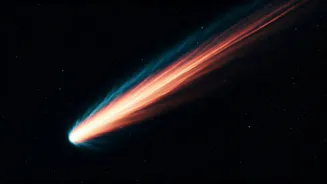
Look up this July, and you might just catch a glimpse of a celestial wanderer named 10P/Tempel 2. While it may not be the dazzling spectacle that makes headline news, this comet is currently the star of the show for amateur astronomers. Unlike the dramatic,
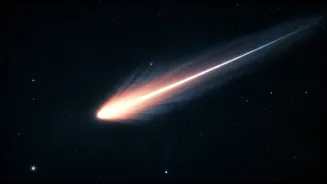
once-in-a-lifetime visitors from the far reaches of the solar system, Tempel 2 is a more familiar face. It is a short-period comet, meaning it completes an orbit around the Sun in a relatively brief 5.4 years. Discovered back in 1873 by Ernst Wilhelm Tempel, it’s a reliable visitor to our inner solar system. This month, it is once again gliding through the evening sky, offering a chance for those with binoculars or a small telescope to connect with a piece of our solar system's history as it brightens on its approach to the Sun.
How to See the Comet from India
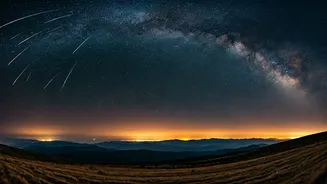
Catching Comet Tempel 2 requires a little preparation, but the reward is worth it. The comet will be visible throughout July and August in the evening sky, appearing after sunset. While it won’t be visible to the naked eye, a good pair of binoculars or a small telescope will bring its faint glow into view. For observers in India, the comet will appear in the evening sky, though it will be higher above the horizon for those in the Southern Hemisphere. To find it, you’ll need a clear view of the sky away from bright city lights. Using a stargazing app on your phone can help you pinpoint its exact location among the constellations. As it gets closer to its early August perihelion (its closest point to the sun), it is expected to brighten to around magnitude 7 or 8, making it an easier, though still challenging, target.
A Year of Cometary Hype and Heartbreak
The quiet arrival of Tempel 2 comes after a rollercoaster year for comet watchers. Earlier in 2026, the astronomical community was buzzing with excitement over a different object: C/2026 A1 (MAPS). Discovered in January, MAPS was a Kreutz sungrazer—a rare type of comet that passes perilously close to the Sun. Predictions suggested it could become a “Great Comet,” potentially shining brighter than Venus and even becoming visible in broad daylight. The world watched in anticipation as it hurtled towards its fiery encounter in early April. However, the immense heat and gravitational forces of the Sun proved too much. On April 4, just as it was expected to put on its grand show, Comet MAPS disintegrated, its promising glow fading into a dispersing cloud of dust.
The Other Contender in a Dramatic Season
Before the drama of MAPS unfolded, another comet, C/2025 R3 (PanSTARRS), also carried the hopes of sky-watchers. Discovered in late 2025, this long-period comet was another candidate for the year's brightest, promising naked-eye visibility from dark locations. For a period in April, it delivered a beautiful show in the predawn sky and was visible across India for those who knew where to look. It gave many a memorable celestial sight, but like all comets, its moment of glory was fleeting. After the disintegration of MAPS, PanSTARRS became the main event of the spring, serving as a reminder that in the world of comets, nothing is ever guaranteed, and even a modest success is a reason to celebrate.
Why We Chase These Icy Wanderers
So why all the fuss over these “dirty snowballs”? Comets are more than just beautiful objects; they are scientific treasures. Believed to be pristine leftovers from the formation of our solar system some 4.6 billion years ago, they are like time capsules from a distant past. By studying their composition—the ice, dust, and organic molecules that make them up—scientists can learn about the conditions that existed when the planets were born. Each comet, whether it's a spectacular sungrazer like MAPS or a steady visitor like Tempel 2, provides valuable clues about our own origins. Their unpredictable nature, from their brightness to their very survival, makes them a constant source of fascination and study, reminding us of the dynamic and ever-changing universe we inhabit.