




Grains and Flours: The Foundation
Atta, rice, and other flours are cornerstones of the Indian kitchen. While they seem robust, they have specific needs. Whole wheat flour (atta) contains natural oils in the germ, making it spoil faster than all-purpose flour. Store it in an airtight container
in a cool, dark cupboard for up to three months, or in the refrigerator or freezer for six months to a year to prevent it from turning rancid. White rice can last for years if kept dry and away from pests, but brown rice, like atta, has more oils and a shorter shelf life of about six months. The key for all grains is an airtight container to keep out moisture, which is their biggest enemy.
Lentils and Pulses: Pantry Powerhouses
Dals, chanas, and rajma are incredibly shelf-stable, often lasting up to two years or more under the right conditions. They are dry and hardy, making them perfect for bulk buying. However, they are not invincible. The main threats are moisture and insects. Store all pulses in airtight containers in a cool, dark pantry. While older lentils are safe to eat, they can become harder and require longer soaking and cooking times. To prevent insect infestations, a traditional method is to add a few dried bay leaves or dry red chillies to the storage container. Always follow the “First In, First Out” (FIFO) principle, using your older stock before opening a new batch.
Spices and Masalas: The Soul of Flavour
Spices don't spoil in a way that makes them unsafe, but they do lose their potency, aroma, and flavour over time. The rule of thumb is simple: whole spices last much longer than ground ones. Grinding exposes more surface area to air, accelerating the loss of essential oils. Whole spices like peppercorns, cloves, and cinnamon sticks can stay fragrant for up to four years, while ground spices are best used within one to two years. To get the most from your masalas, buy whole spices when possible and grind them in small batches. Store all spices in small, airtight containers away from heat, light, and steam—meaning the shelf above the stove is the worst possible place.
Cooking Oils and Ghee: Handle with Care
The biggest enemy of cooking oils and ghee is rancidity, a process accelerated by exposure to air, light, and heat. A rancid oil not only tastes and smells unpleasant but can also be harmful. Always store oils in a cool, dark cupboard, away from the stove. Once opened, try to use them within a few months. If you buy a large tin, consider decanting a smaller amount into a dark glass bottle for daily use, keeping the main tin sealed tightly. Ghee is more stable but should also be kept in an airtight container away from direct sunlight. During hot weather, storing certain oils in the refrigerator can extend their life, though they may solidify and need to be brought to room temperature before use.
The Right Tools for the Job
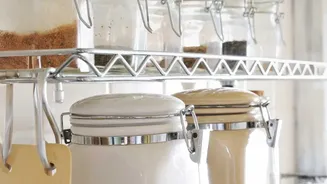
Your storage strategy is only as good as your containers. Investing in quality, airtight containers is non-negotiable for successful bulk storage. Glass, stainless steel, and BPA-free plastic are all good options. Glass and steel are non-reactive and won't absorb odours, making them great for spices and ghee. Airtight plastic is lightweight and cost-effective for large quantities of grains and dals. Choose transparent containers or label everything clearly with the item name and purchase date. This helps you track what you have and ensures you use older items first, preventing forgotten bags from languishing in the back of your pantry.