


A High-Stakes Orbital Task
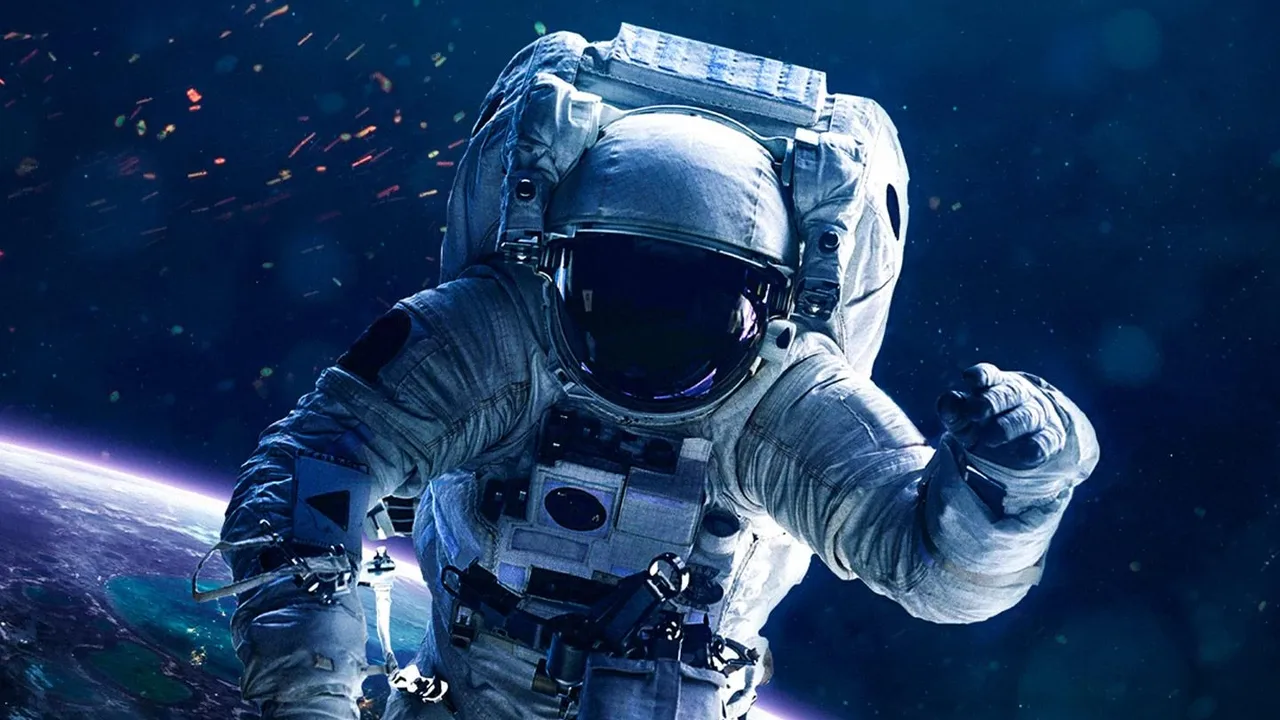
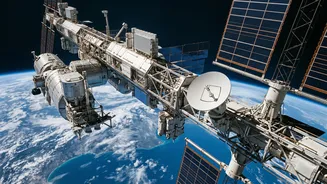
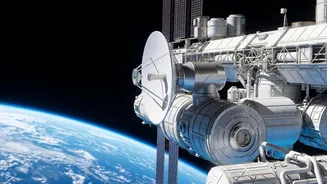
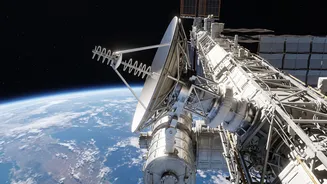
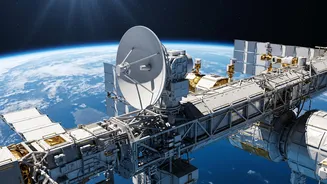
Floating in the silent vacuum of space, NASA astronaut Anil Menon and his colleague, ESA astronaut Sophie Adenot, embarked on a critical extravehicular activity (EVA) on Tuesday, August 25th. Their mission: to install a replacement Space-to-Ground antenna,
a key component for high-speed data and video transmission between the ISS and Mission Control in Houston. The original antenna had failed, and while redundant systems kept basic communications open, restoring full capability was a high priority. The spacewalk, which lasted six and a half hours, was Menon's third in his career, establishing him as a seasoned veteran of working in one of the world's most dangerous environments. The task was delicate and demanding, requiring the astronauts to manoeuvre the bulky hardware into place while battling the stiffness of their pressurized suits and the ever-present risks of space.
The Man Behind the Visor
Anil Menon is more than just an astronaut; he's a physician, a pilot, and a US Space Force Colonel. Born in Minnesota to a Ukrainian mother and an Indian father from Kerala, his journey to the stars is a story of incredible determination. With degrees in neurobiology from Harvard and both mechanical engineering and medicine from Stanford, his expertise is uniquely broad. Before joining NASA's 2021 astronaut class, nicknamed 'The Flies', Menon served as SpaceX's first-ever flight surgeon, helping to launch the historic Demo-2 mission. His experience extends to Earth's most extreme environments, serving as a first responder in earthquakes in Haiti and Nepal and treating climbers on Mount Everest. This diverse background in medicine and operations in high-stress situations makes him exceptionally suited for the challenges of long-duration spaceflight.
The Challenge of a Spacewalk
Working outside the ISS is one of the most physically and mentally demanding tasks an astronaut can undertake. Spacewalks are meticulously planned, but the environment is unforgiving. Astronauts face extreme temperature swings, from over 120°C in sunlight to -150°C in shadow. Their suits, while life-sustaining, are stiff and cumbersome, and working with tools requires immense physical effort, often leading to hand fatigue and injury. A constant threat is the risk of a suit puncture from micrometeoroids or orbital debris traveling at over 28,000 km/h. This particular repair had its own challenges; a previous spacewalk on August 18th to remove the faulty antenna took longer than expected due to difficulties with stubborn bolts and electrical cables, forcing the installation to be postponed to this successful follow-up EVA.
A Veteran and an Inspiration
Completing a third career spacewalk is a significant milestone. It signifies a high level of trust and confidence from NASA in an astronaut's abilities to perform complex, critical tasks under pressure. Menon's total time on spacewalks now stands at an impressive 19 hours and 20 minutes. His successful repair not only restores crucial operational redundancy to the space station but also serves as a powerful moment of inspiration. For India and the global Indian diaspora, Menon's achievements are a source of immense pride. His journey from a family with roots in Kerala to the forefront of space exploration highlights a path of excellence in science and service. Following the successful installation, Menon took a moment to thank the entire ground team, stating, "I'm proud we continue to accomplish challenges like today's and demonstrate NASA's deep capability to work in the harshest of environments."