





Why Explore Titan?
Before we get to the 'how', let's cover the 'why'. Titan is one of the most Earth-like worlds in our solar system, but with a twist. It's the only moon with a thick atmosphere, primarily made of nitrogen like ours. However, its surface is frigid, around
-179 degrees Celsius. Instead of water, it has rivers, lakes, and seas of liquid methane and ethane. This unique environment, rich in complex organic molecules, might resemble the primordial Earth before life began. It has all the key ingredients for life—abundant carbon-rich chemistry, a liquid medium, and energy sources—making it a prime destination to study how life might arise.
Not a Rover, but a Rotorcraft
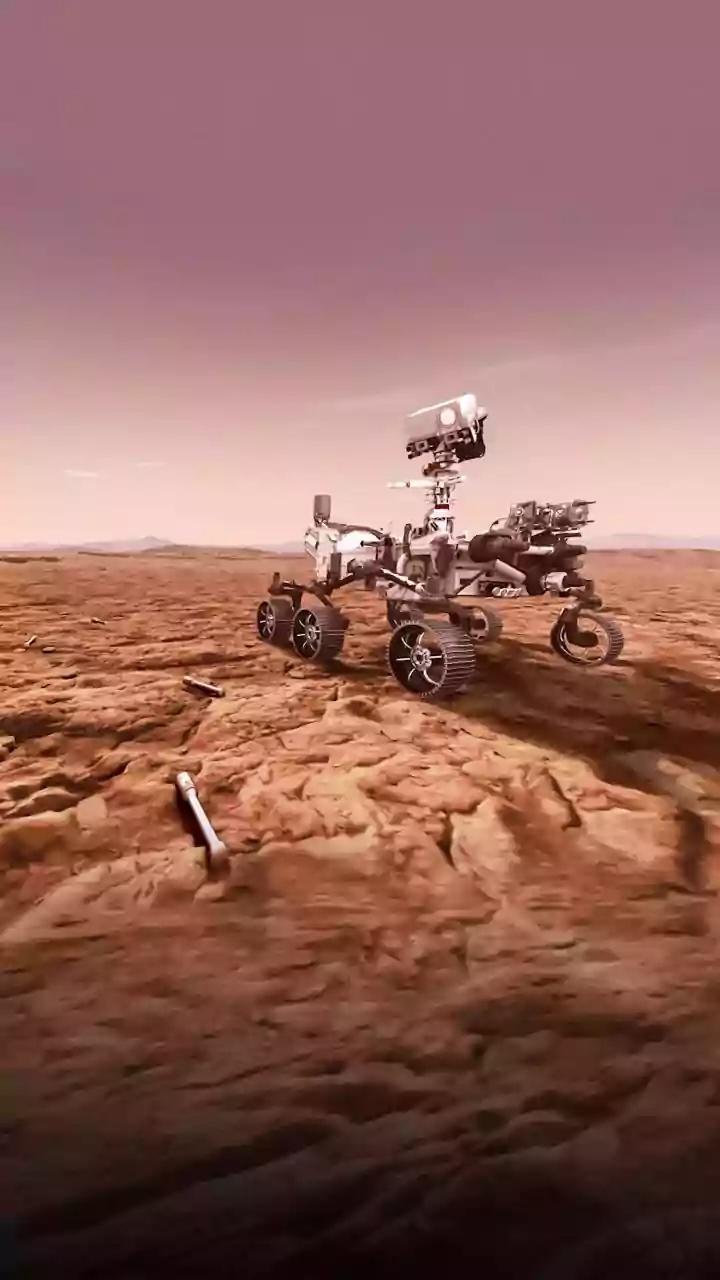
Unlike the wheeled rovers that have successfully explored Mars, Dragonfly is a revolutionary 'rotorcraft-lander'. Essentially a dual-quadcopter, this drone is about the size of a small car. This design was chosen specifically for Titan's unique environment. Rovers are limited by terrain, but a flying explorer can cover vast distances and access diverse geological sites, from icy plains to organic sand dunes and the edges of an impact crater. The plan is for Dragonfly to become the first vehicle to perform powered, controlled flight on another moon.
The Science of Flight on Titan
Flying on Titan is surprisingly efficient. The moon's atmosphere is four times denser than Earth's, and its gravity is only about one-seventh as strong. This combination of high atmospheric pressure and low gravity makes it much easier to achieve lift. Dragonfly will use eight rotors to navigate. The exploration strategy is a series of 'leapfrog' manoeuvres. During the long Titan day (which lasts 16 Earth days), Dragonfly will fly for several miles, a journey that might take just tens of minutes, land at a new science target, and then spend most of its time on the ground conducting experiments. Once its tasks are complete and its batteries are recharged, it will fly to the next site. This method will allow it to cover more than 175 kilometres during its primary mission.
Powering Through the Haze
Titan is far from the sun, and its thick, hazy atmosphere means solar panels are not a viable power source. Instead, Dragonfly will be powered by a Multi-Mission Radioisotope Thermoelectric Generator (MMRTG). This technology, also used on the Curiosity and Perseverance Mars rovers, converts heat generated by the natural decay of plutonium into electricity. This provides a consistent and long-lasting power source, allowing the rotorcraft to operate, fly, and run its scientific instruments regardless of the dim light or extreme cold. During the eight Earth days of Titan's night, the MMRTG will recharge Dragonfly's batteries for its next flight.
A Mobile Chemistry Lab in the Sky
Dragonfly is more than just a drone; it's a sophisticated mobile laboratory. Its main goal is to study prebiotic chemistry—the chemical steps that occurred before life emerged on Earth. To do this, it's equipped with a suite of instruments, including a mass spectrometer to identify chemical compounds and a drill to collect samples from the surface. By flying to dozens of different locations, Dragonfly will analyse materials from various environments to understand Titan's habitability and how far its complex organic chemistry has progressed. The mission will provide an unprecedented look at a world that could hold clues to our own origins.
The Long Journey Ahead
The mission is a long-term endeavour. NASA is targeting a launch window in July 2028 aboard a SpaceX Falcon Heavy rocket. The journey to Saturn's system is a long one; Dragonfly is expected to arrive at Titan in 2034. Upon arrival, it will perform a direct atmospheric entry, using an aeroshell and parachutes to slow down before its rotors take over for a powered landing. The planned science mission on the surface will last for approximately 3.3 years, during which this remarkable flying machine will hop across the alien landscape, sending back data that could rewrite our understanding of life in the cosmos.