





Looking for the perfect workout to build strong, toned legs? Both cycling and inline skating are fantastic choices, but they challenge your muscles in surprisingly different ways. Here’s a breakdown of how each activity shapes and strengthens your lower
body.
The Powerhouse vs. The Sculptor
When it comes to leg day, cycling and inline skating are two of the most effective and enjoyable options available. Both offer a low-impact cardiovascular workout that can build serious lower-body strength. However, the way they achieve this is fundamentally different. Think of cycling as the powerhouse, focused on raw strength and repetitive power, while inline skating acts as the sculptor, targeting a wider range of muscles for toning and stability. The choice between them isn't about which is 'better' overall, but which is better suited for your specific fitness goals, whether that’s building sheer force or creating lean definition and improving balance.
Cycling: The Quad and Glute Specialist
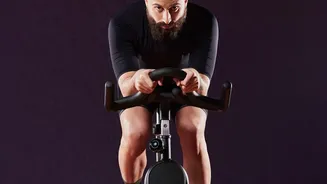
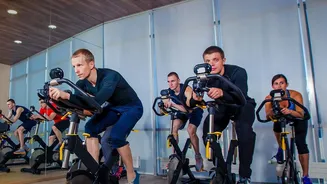
Cycling is renowned for its ability to build powerful leg muscles, particularly the quadriceps and glutes. The pedalling motion is a cycle of pushing and pulling. The downward push, known as the power phase, heavily engages the quadriceps at the front of your thigh and the gluteus maximus, your body's largest muscle. The hamstrings, located at the back of the thigh, are activated during the upward pull, though often to a lesser extent unless you're using clipless pedals and have a refined technique. This repetitive, forward-focused movement is excellent for developing muscular endurance and generating force, making it ideal for building strength on climbs and sprints.
Skating: Engaging the Entire Leg and Core
Inline skating requires a different kind of movement that recruits a more diverse set of muscles. The side-to-side pushing motion, or stride, is key. This lateral movement heavily engages the hip abductors and adductors (the outer and inner thigh muscles) to a degree that cycling does not. These muscles are crucial for stability and are often underdeveloped. Furthermore, skating constantly challenges your balance, forcing your core muscles—including your abs and lower back—to stay engaged to keep you upright. While your quads and hamstrings still get a great workout, skating adds an element of full-body coordination and toning, especially in the glutes and hips, which work hard to control each glide.
Cardio Burn and Joint Health
Both activities are kind to your joints, offering a low-impact alternative to running. Cycling can be considered a zero-impact activity, as your feet never strike the ground. Inline skating involves a smooth gliding motion with minimal impact, estimated to be less than 50% of the shock associated with running. In terms of caloric burn, the two are often comparable, but skating can sometimes have an edge. Because it’s harder to 'coast' while skating, it demands more continuous effort. Studies have shown that moderate inline skating can elevate your heart rate to 140–160 beats per minute, and because it engages more muscle groups simultaneously—including the core and upper body from arm swing—it can be an incredibly efficient calorie burner.
The Verdict: Which Is Right for You?
Choosing between cycling and skating depends entirely on your personal fitness aims. If your goal is to build raw power, especially in your quads and glutes, and you enjoy endurance challenges like long distances or steep climbs, cycling is an excellent choice. It’s a focused leg workout that delivers measurable strength gains. If you’re looking for a more comprehensive, fullbody workout that not only tones your legs but also enhances your balance, coordination, and core strength, inline skating is superior. Its unique lateral movement helps sculpt muscles that cycling might miss, leading to wellrounded fitness and improved stability.