


A Global Shift in Weather Patterns
For years, we've known that cities are warmer than the countryside, a phenomenon called the 'urban heat island' effect. Now, a growing body of evidence reveals a surprising counterpart: the 'urban wet island'. A major global study analysing over 1,000
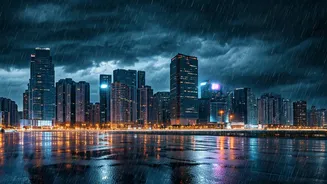
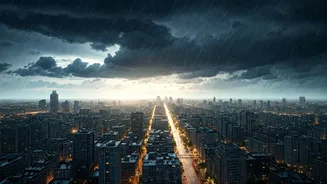
cities found that more than 60% of them receive more rainfall than adjacent rural areas. This isn't a minor difference. In some urban centres, like Houston in the United States, the anomaly can mean almost five extra inches of rain per year. This trend, confirmed by satellite and radar data collected over two decades, suggests that the very existence of a large city can measurably alter local precipitation patterns.
The Science of City-Made Rain
But why is this happening? It’s a combination of factors driven by the urban environment itself. Firstly, the well-known urban heat island effect plays a crucial role. Warmer air over the city tends to rise, creating powerful updrafts. As this air climbs, it cools, and the moisture within it condenses to form clouds, often leading to what’s known as convective precipitation. Secondly, city air is full of aerosols—tiny particles from vehicle exhaust and industrial emissions. These particles act as 'cloud condensation nuclei', essentially seeds around which raindrops can form, making rainfall more likely and intense. Finally, the physical structure of a city matters. Tall buildings create friction that can slow down weather systems, prolonging rainfall over the urban area.
A Blessing and a Curse
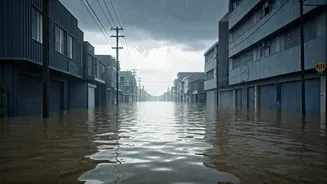
More rain might sound like good news, especially for water-scarce regions. It can help replenish depleted groundwater aquifers and support urban green spaces. However, this urban-induced rainfall is often a double-edged sword. Cities are dominated by impervious surfaces like roads and parking lots that cannot absorb water. When intense downpours occur, this water has nowhere to go, overwhelming drainage systems and leading to sudden, dangerous flash floods. This phenomenon turns a potential resource into a significant hazard, disrupting transport, damaging property, and posing a risk to public safety. The very process making the rain also amplifies its negative impact.
Designing for a Wetter Future
Recognising this new reality, urban planners and governments are shifting from simply funnelling water away to actively managing it. This has given rise to the 'Sponge City' concept, which uses nature-based solutions to help urban areas absorb, clean, and slowly release stormwater, much like a natural ecosystem. In India, cities like Chennai are already implementing sponge parks and infrastructure to mitigate both floods and water scarcity. Solutions include replacing concrete with permeable pavements, creating rain gardens, restoring urban lakes and wetlands, and installing green roofs. These 'blue-green' infrastructures not only manage excess water but also help cool cities, improve air quality, and create more liveable, resilient communities.