




The Farmer's Unforgiving Calendar
The story begins in the agricultural heartlands of Punjab and Haryana, north of Delhi. Here, farmers follow a tight, back-to-back cropping cycle dominated by paddy (rice) and wheat. The Kharif season sees paddy being sown in June-July and harvested from
late September through October. Immediately after, the fields must be prepared for the Rabi season's wheat crop, which has an optimal sowing window from late October to mid-November. Delaying wheat sowing can significantly reduce yields because the crop's growth cycle gets pushed into the hotter months, which damages grain development. This leaves farmers with an extremely narrow window, often just 10 to 20 days, to clear millions of tonnes of paddy stubble left behind by mechanical harvesters.
The Logic of the Burn
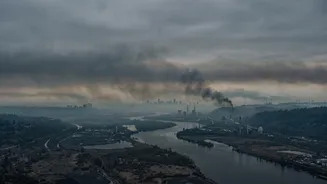
Faced with immense time pressure and economic constraints, farmers resort to the quickest and cheapest method to clear their fields: setting the stubble on fire. While alternatives like the 'Happy Seeder' machine, which can sow wheat amidst the stubble, or bio-decomposers exist, they come with challenges. These machines can be expensive to purchase or rent, and their availability during the peak window is limited. Furthermore, collecting and transporting the straw for other uses, like in bio-energy plants, is often not economically viable for small and marginal farmers due to high labour and transport costs and a lack of a guaranteed market for the residue. Burning, therefore, becomes the default option out of perceived necessity, releasing enormous plumes of smoke containing fine particulate matter (PM2.5 and PM10), carbon monoxide, and other toxins.
The Winter Weather Trap
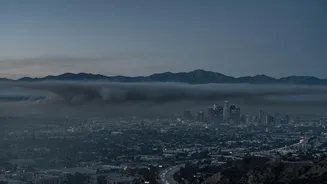
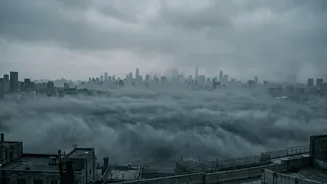
Just as this agricultural activity peaks in October and November, the weather over North India undergoes a fundamental shift. The onset of winter brings cooler temperatures and, crucially, lower wind speeds. This reduces the horizontal dispersal of pollutants. At the same time, a phenomenon known as temperature inversion becomes common. Normally, the air is warmer near the ground and gets cooler with altitude, allowing pollutants to rise and disperse. In winter, especially during long, cool nights, the ground cools rapidly, making the air near the surface colder than the air layer above it. This warmer upper layer acts like a lid, trapping the cold, dense air—and everything in it—close to the ground.
A Perfect Storm for Pollution
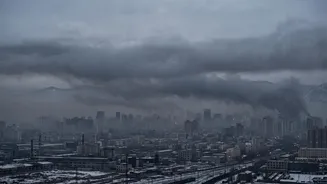
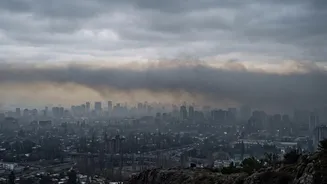
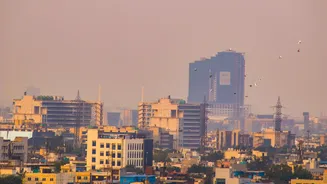
This is where the two timelines calamitously intersect. The north-westerly winds, which are common during this poststmonsoon period, carry the massive volumes of smoke from stubble burning in Punjab and Haryana directly towards Delhi. Upon reaching the capital, this incoming pollution runs straight into the atmospheric trap created by temperature inversion and calm winds. The city's geography, nestled in the Indo-Gangetic plain with the Himalayas acting as a northern barrier, further prevents the trapped air mass from escaping. The mixing height, or the altitude to which pollutants can disperse, shrinks dramatically from about a kilometre in summer to just a few hundred metres in winter, concentrating the toxic smoke in the air that millions breathe.
Adding Fuel to an Existing Fire
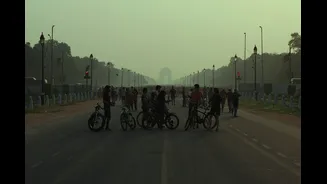
While stubble burning is a massive seasonal trigger, contributing significantly to Delhi's PM2.5 levels, it's not the sole villain. The smoke from farm fires acts as an overwhelming amplifier to the city's already high baseline pollution. This existing pollution comes from a combination of vehicular emissions, industrial output, road and construction dust, and the burning of waste. During winter, even without the influence of stubble burning, Delhi's air quality often deteriorates due to the same meteorological trapping factors. The arrival of smoke from farm fires pushes an already bad situation into a severe public health emergency, with the Air Quality Index (AQI) regularly soaring into the 'Severe' and 'Hazardous' categories.