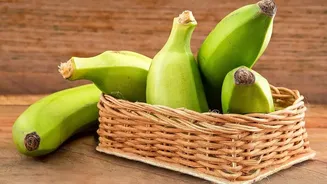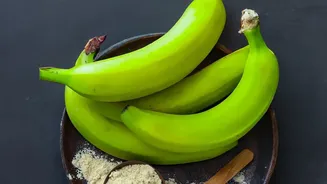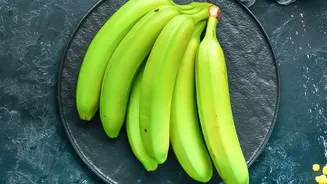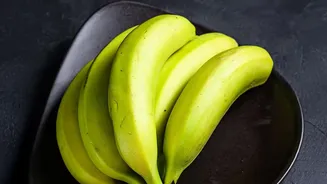



In the Indian kitchen, the banana leads a double life. We love the sweet, yellow fruit, but its green, unripe form is a culinary hero in its own right. So what sets them apart, and how do you use the raw version in savoury dishes?
Fruit vs. Vegetable: A Tale of Two Bananas
The most significant
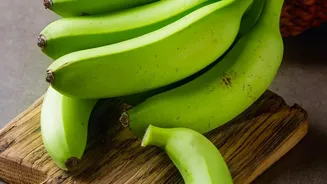
difference between a green and a yellow banana lies in how they are treated in the kitchen. A ripe, yellow banana is a fruit—sweet, soft, and ready to be eaten as a snack or mashed into desserts. A green banana, often called a raw banana or 'kachha kela', functions as a vegetable. It is firm, starchy, and has a neutral, slightly bitter taste, making it a perfect canvas for the bold spices used in Indian cooking. Think of it less as an unripe fruit and more as a starchy vegetable, similar in texture and application to a potato. This fundamental distinction is why you find green bananas in curries and stir-fries, not fruit salads.
The Nutritional Divide: Starch vs. Sugar
The shift from vegetable to fruit is a chemical process. As a banana ripens, its carbohydrate composition changes dramatically. Green bananas are packed with resistant starch, a type of fibre that is not easily broken down in the small intestine. This starch feeds good gut bacteria and leads to a slower release of energy, which helps in managing blood sugar levels. Conversely, as the banana turns yellow, enzymes convert this resistant starch into simple sugars like sucrose, glucose, and fructose. This is why ripe bananas taste sweet and provide a quick energy boost, while green bananas keep you feeling full for longer. Both forms are rich in essential nutrients like potassium, vitamin B6, and vitamin C.
Green Bananas in the Indian Kitchen
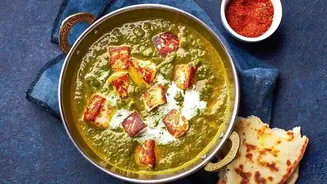
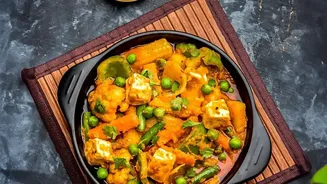
Across India, raw bananas are a staple in savoury cooking. In the South, 'vazhakkai' is used to make crisp fries (varuval), simple stir-fries (poriyal) with coconut and mustard seeds, and as a key ingredient in avial, a mixed vegetable stew. It's also battered and deep-fried into crunchy 'bajji'. In North and West India, 'kachhe kele ki sabzi' is a popular dry or gravy-based curry, where the banana chunks absorb the flavours of cumin, turmeric, and other spices. Raw bananas are also used to make koftas (dumplings in gravy), tikkis (patties), and even homemade chips, offering a healthier alternative to potato-based snacks.
How to Buy, Prep, and Cook
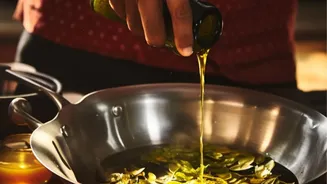
When shopping for green bananas, choose ones that are firm, unblemished, and entirely green without any yellow patches. Peeling them can be tricky due to their tough skin and sticky sap. It's easiest to trim the ends, score the peel lengthwise with a knife, and then pry it off in sections. To prevent the chopped pieces from browning, it's a good practice to place them in a bowl of water immediately after cutting. Green bananas can be boiled, steamed, pan-fried, or deep-fried. A common method involves parboiling the bananas before adding them to a curry, which ensures they cook evenly and become tender without turning mushy. Their firm texture holds up well to cooking, readily soaking up the flavours of any masala they are cooked with.