






A Feast of Devotion
At the heart of the Ganesh Chaturthi festival is the food, prepared not just for celebration but as a sacred offering, or 'naivedya'. The undisputed star is the modak, a sweet dumpling said to be Lord Ganesha's favourite. In Maharashtrian homes, families
gather to make 'ukadiche modak'—steamed rice-flour parcels filled with a fragrant mixture of fresh coconut, jaggery, and cardamom. The delicate pleating of these dumplings is a cherished skill passed down through generations. But the festive platter, or 'prasad thali', offers more. It often includes Puran Poli, a sweet flatbread stuffed with lentils and jaggery; savoury preparations like Sundal, a spiced lentil salad popular in the South; and various kheers and laddoos. These dishes are prepared with care, often following sattvic rules (without onion or garlic), and are first offered to the deity before being shared among family and friends, turning a meal into a blessing.
The Unifying Pulse of the Procession
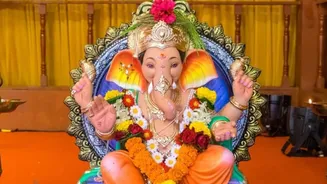
Ganesh Visarjan is a powerful display of community spirit. What began as a private family observance was famously transformed by Lokmanya Tilak in 1893 into a grand public event to foster unity. Today, that legacy thrives as neighbourhoods and local 'mandals' come together for the final procession. Streets are filled with music, from traditional 'dhol-tasha' drum troupes in Pune to energetic devotional songs everywhere. People from all walks of life dance and sing, accompanying their local Ganesha idol on its final journey. This collective participation fosters a deep sense of camaraderie and cultural identity, breaking down social barriers as everyone unites in a shared wave of devotion and celebration. It is a social phenomenon as much as a religious one, embodying a spirit of togetherness.
A Journey to the Shore
The festival also fuels a unique form of local travel. For many, Ganesh Visarjan is an opportunity for a cultural pilgrimage, drawing thousands of people to specific locations known for their grand immersion ceremonies. Cities like Mumbai, Pune, and Hyderabad become major hubs, attracting visitors from surrounding towns and even from across the country. Mumbai's Girgaon Chowpatty and Juhu Beach are iconic spots, where massive idols, including the famed Lalbaugcha Raja, are immersed amidst a sea of devotees. In Pune, the processions along the Mula-Mutha rivers are legendary for their discipline and traditional fervour. Even in Goa, the festival offers a different cultural lens, with more intimate but equally vibrant immersions at beaches like Miramar and Colva. This movement of people, all converging to witness or participate in the spectacle, turns the Visarjan into a significant travel experience, allowing people to witness the diverse regional customs of India.
Tradition Meets Modern Consciousness
In recent years, a growing environmental awareness has added a new dimension to these community traditions. Recognizing the impact of immersing idols made from Plaster of Paris and chemical paints, many communities and individuals are now embracing eco-friendly practices. This includes a return to traditional clay idols painted with natural dyes, which dissolve harmlessly in water. Many cities now set up artificial ponds for immersion to protect natural water bodies. Some families even perform the immersion at home in a bucket, using the clay-rich water for their gardens afterward. This modern consciousness doesn't dilute the tradition; instead, it enriches it, ensuring that the farewell to Ganesha is celebrated with respect not just for the divine, but for the environment as well.