




Beyond Permanent Day and Night
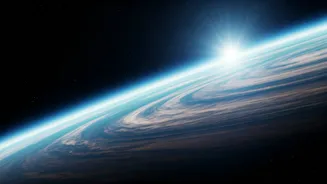
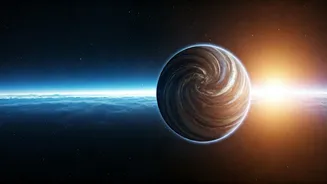
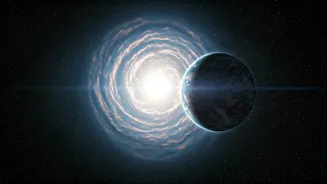
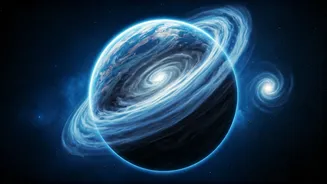
Imagine a planet where one side is locked in perpetual daylight, constantly baked by its star, while the other side faces the endless cold of a permanent night. This isn't science fiction; it's a reality for many exoplanets. These worlds are 'tidally
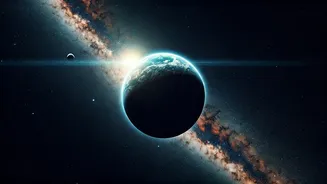
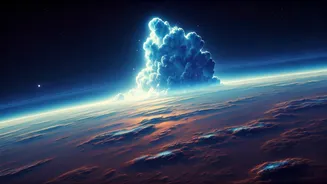
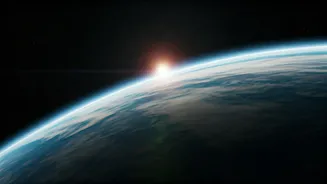
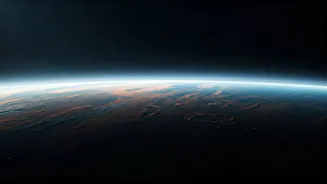
locked' to their stars, much like the same side of our Moon always faces Earth. This creates a world of extreme contrasts: a scorching dayside and a frigid nightside. For a long time, scientists focused on whether the dayside 'eye' facing the star could host life. Now, a new idea is gaining traction, focusing on the ring of twilight that separates these two extremes. This boundary region, known as the 'terminator', is a zone of permanent dawn or dusk, and it might just be the most interesting place on the entire planet.
A 'Just Right' Zone for Water
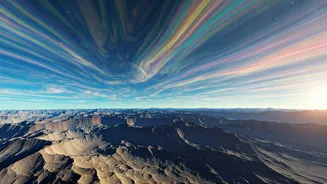
The key to life as we know it is liquid water. On a tidally locked planet, the dayside is often too hot, causing water to boil away, while the nightside is so cold that any water would be frozen solid in vast glaciers. The terminator zone, however, offers a potential sweet spot. Here, the temperature could be moderate enough to allow liquid water to exist on the surface. Research led by scientists like Dr. Ana Lobo at the University of California, Irvine, uses advanced climate models to explore this very possibility. Her work suggests that these terminator regions could maintain temperate climates, creating a habitable band between the planet's scorching and glacial sides. This opens up a whole new type of environment to consider in the search for life.
Water-Limited Worlds and Chemical Clues
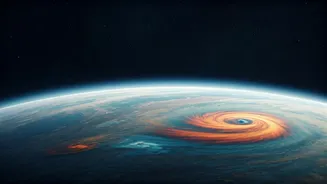
Interestingly, this 'terminator habitability' seems most likely on planets that don't have massive, deep oceans like Earth. Models show that on planets with limited water—perhaps with continents, lakes, and rivers instead of a global ocean—the climate is more likely to create this stable, habitable twilight ring. On a world covered in water, atmospheric winds tend to transport heat more efficiently from the day to the night side, evening out the temperatures and making a distinct terminator less likely to remain habitable. On drier, land-based planets, the sharp temperature difference is maintained, creating the perfect conditions for a temperate twilight zone. This is also where the planet's chemistry could get really interesting. The unique temperature and light conditions could drive chemical reactions that are different from those on either the day or night sides, potentially creating biosignatures—chemical signs of life—that we could one day detect.
Telescopes Peering Into the Dusk
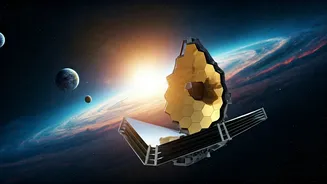
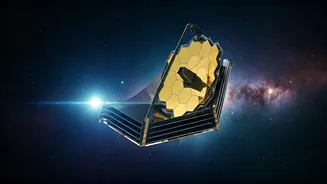
So how do we study the chemistry of a thin ring of twilight hundreds of light-years away? This is where powerful new instruments like the James Webb Space Telescope (JWST) come in. As an exoplanet passes in front of its star, astronomers can analyse the starlight that filters through its atmosphere. This technique, called transit spectroscopy, allows them to identify the chemical elements and compounds present. By carefully observing how this atmospheric signature changes as the planet rotates during its transit, scientists can begin to map the differences between the morning and evening sides of the terminator. Recent JWST observations have already detected surprising differences in temperature and cloud cover across the terminator of a gas giant planet, proving that we can indeed probe these distant twilight zones for their secrets. This is the first step toward eventually doing the same for smaller, rocky worlds that might harbor life.