




The Promise of the Sea
India faces a colossal plastic waste challenge, generating an estimated 26,000 tonnes every day, with a significant portion escaping collection systems and polluting our environment. Single-use plastics, especially from food delivery and takeaway meals,
are a major culprit. While conventional bioplastics made from corn or sugarcane have been proposed as alternatives, they often have drawbacks, such as competing for agricultural land and requiring industrial composting facilities that are scarce in India. This is where algae, specifically seaweed, enters the picture. As a raw material, it’s a powerhouse of sustainability. It requires no fresh water, land, or pesticides to grow. In fact, its cultivation can be beneficial, absorbing carbon dioxide and purifying ocean ecosystems as it grows.
How Algae Becomes Packaging
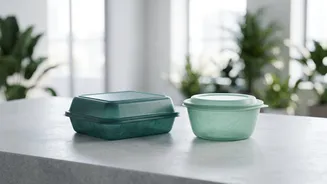
The transformation from marine plant to sturdy container is a marvel of green chemistry. Seaweed is rich in natural polymers like alginate and carrageenan. The process generally involves harvesting and drying the seaweed, then milling it into a powder. This powder is then used to extract the valuable polymers, which are mixed with other natural substances to create a thick, mouldable fluid. This bioplastic slurry can be cast into thin films for wrappers, used as a grease-proof coating for paper boxes, or moulded into containers, cups, and even cutlery. The resulting material has properties that can match traditional plastics for durability and functionality but with one crucial difference: it’s designed to disappear.
India's Green Innovators
A number of Indian startups are pioneering this technology. Mumbai-based Zerocircle, founded by ex-Googler Neha Jain, is a prominent name in the space. The company creates seaweed-based films and coatings that are not only home-compostable but also marine-degradable, meaning they safely dissolve in the ocean and are even edible for marine life. Zerocircle partners with farming communities in Gujarat and Tamil Nadu to source its seaweed, creating coastal livelihoods. Another key player is Bangalore-based Sea6 Energy. Starting at IIT Madras, the company has developed technology for mechanised ocean farming to make seaweed cultivation scalable. They are developing a range of products, including compostable films, grease-proof coatings for paper products, and heat-resistant straws, positioning themselves to tackle various forms of single-use plastic. These companies are part of a growing movement to find local solutions for a global problem.
The Hurdles to Overcome
Despite the immense potential, the path to replacing conventional plastic is not without its challenges. The most significant barrier is cost. Currently, most bioplastics are more expensive than their petroleum-based counterparts. Zerocircle’s material, for instance, is priced at a premium, though it expects to reduce costs as it scales. Secondly, scaling up production to meet the enormous demand for packaging requires significant investment in infrastructure, from seaweed farming to processing facilities. Ensuring a consistent, high-quality supply of seaweed is crucial and requires developing robust cultivation practices along India's extensive coastline. Finally, consumer awareness and a robust waste management system that can properly handle these new materials are needed to ensure they complete their eco-friendly lifecycle without ending up in landfills by mistake.
A Glimpse into a Plastic-Free Future
The rise of algae-based packaging in India represents a powerful shift in how we think about materials. It’s a move from a linear model of 'take, make, dispose' to a circular one where products return harmlessly to nature. Government initiatives like the ban on certain single-use plastics and stricter Extended Producer Responsibility (EPR) norms are creating a fertile ground for these innovations to grow. While seaweed won't solve the entire plastic crisis overnight, it is a critical piece of the puzzle. By harnessing a regenerative resource from the ocean, Indian entrepreneurs are not just building businesses; they are designing a cleaner future, one takeaway container at a time. The success of these ventures could pave the way for India to become a global leader in the blue economy and sustainable materials.