





How do you find something that is, by its very nature, invisible? This is the challenge facing astronomers hunting for black holes. Now, a new generation of cosmic detectives is using a clever technique: looking for fleeting, tell-tale patterns in starlight.
The Challenge of Finding Nothing
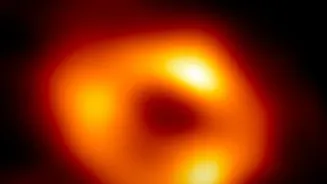
Black holes are the ghosts of the cosmos. Formed from the collapsed remnants of massive stars, their gravitational pull is so immense that nothing, not even light, can escape. This makes them impossible to see directly. For decades, astronomers have relied on indirect methods to find them. The most common way is to spot a black hole that is part of a binary system, paired with a star. As the black hole’s gravity pulls material from its companion star, this matter heats up and emits powerful X-rays, creating a beacon that telescopes can detect. Another method is to observe the frantic orbits of stars at the center of galaxies, which can reveal the presence of a supermassive black hole, a discovery that earned the 2020 Nobel Prize. But what about the millions of black holes believed to be wandering the galaxy alone? These isolated, or 'rogue', black holes are almost completely invisible, presenting a huge gap in our census of the universe.
A Trick of the Light
To find these dark drifters, scientists are turning to a phenomenon predicted by Albert Einstein over a century ago: gravitational lensing. His theory of general relativity tells us that massive objects warp the fabric of spacetime. When a massive-but-invisible object, like a black hole, passes in front of a distant star from our perspective, its gravity acts like a cosmic magnifying glass. This effect, known as gravitational microlensing, bends and focuses the background star's light, causing it to temporarily brighten and its apparent position in the sky to shift. The pattern of this brightening and shifting—how long it lasts and by how much—provides crucial clues. A long-lasting event, sometimes stretching over hundreds of days, can indicate that the 'lens' is an object of immense mass, like a black hole. By carefully measuring these subtle changes, astronomers can calculate the mass, distance, and even the speed of the invisible object that caused them.
The Hunt Is On
This technique is no longer just a theory. In recent years, astronomers have successfully used microlensing to identify what they believe to be the first isolated stellar-mass black holes. One such detection, nicknamed OB110462, was confirmed after observing a star that brightened and shifted for over 200 days. These discoveries require immense patience and precision, often combining years of data from observatories like the Hubble Space Telescope with ground-based surveys. More recently, teams have used a global network of radio telescopes to spot the gravitational 'pinch' a dark object creates in the lensed image of a background galaxy, allowing them to find a mysterious object with the mass of a million suns. This demonstrates how gravitational lensing can reveal objects that emit no light at all across the entire electromagnetic spectrum.
A New Era of Discovery
The success of these early efforts is paving the way for a new era in the hunt for dark objects. The Vera C. Rubin Observatory in Chile, set to conduct a decadelong survey called the Legacy Survey of Space and Time (LSST), will be a gamechanger. By repeatedly scanning the entire southern sky, Rubin will generate an unprecedented timelapse map of the cosmos, capturing billions of objects as they change in brightness. Its main goals include exploring transient objects like exploding stars and black holes. This massive firehose of data is expected to reveal thousands of microlensing events, providing a rich dataset for scientists to sift through in search of black hole candidates. Advanced algorithms and artificial intelligence will be essential to process the terabytes of data generated each night and flag the most promising light patterns for further study.