




Gaganyaan's Historic Ambition
The Gaganyaan programme is India's ambitious endeavor to demonstrate human spaceflight capability by launching a crew of three astronauts into a 400 km orbit for a three-day mission. Upon successful completion, India will join the elite club of nations—the
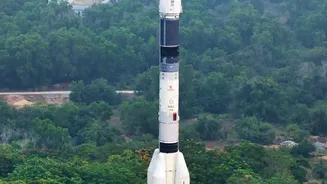
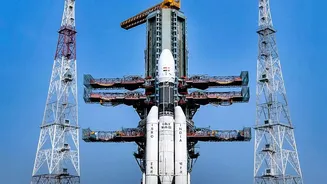
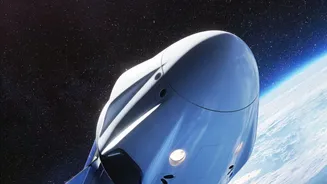
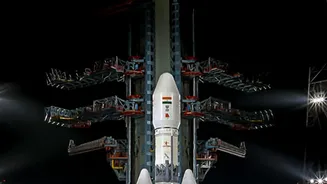
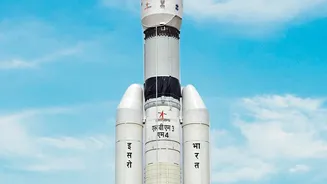
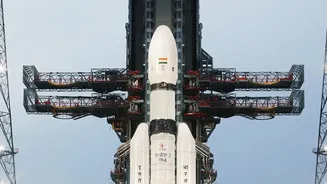
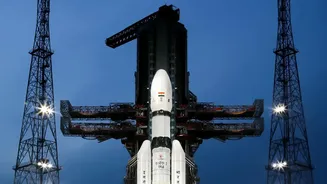
United States, Russia, and China—capable of independently sending humans to space. The mission relies on the human-rated LVM3 rocket (HLVM3), a modified version of ISRO's heavy-lift workhorse, to carry the Orbital Module, which consists of the Crew Module and the Service Module. But before astronauts can board, every system, especially those related to safety, must be proven to be flawless.
The Ultimate Ejection Seat
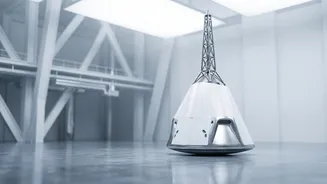
At the heart of astronaut safety during launch is the Crew Escape System (CES). Think of it as the most sophisticated ejection seat ever built. It's a tower-like structure fixed atop the crew module, packed with powerful, quick-acting solid fuel motors. Its sole purpose is to detect a launch vehicle failure within milliseconds and fire with immense thrust, pulling the crew module and its occupants away from the malfunctioning rocket to a safe distance. This system is non-negotiable for human-rated missions and represents the last line of defense in a launch emergency. ISRO's system is a 'tractor' type, meaning it pulls the capsule away, and it's designed to function at any point from the launch pad to high altitudes during ascent.
Simulating Disaster to Ensure Survival
To guarantee the CES works perfectly, ISRO has planned a series of rigorous trials known as abort tests. These uncrewed missions simulate failure scenarios to validate the escape mechanism. One key trial is the Pad Abort Test (PAT), which simulates an emergency right on the launch pad. In this scenario, the CES must fire and lift the crew module away from a potential explosion at ground level. ISRO previously conducted a PAT in 2018 but is expected to redo it due to significant design changes in the module. Another critical trial is the In-flight Abort Test, like the one successfully conducted in the TV-D1 mission in October 2023. This test simulates a failure during the rocket's ascent, where the CES must separate the module at high velocity and altitude, ensuring it can safely deploy parachutes and splash down.
A Symphony of Safety Systems
The Crew Escape System is just one piece of a larger safety puzzle. The entire Gaganyaan mission architecture is built on redundancy and caution. Once the CES pulls the module clear, a complex sequence of parachute deployments must execute flawlessly to slow the capsule's descent. The system uses drogue parachutes to stabilize the capsule at high speeds before the main parachutes deploy to ensure a gentle splashdown in the sea. Recent tests have also validated the Crew Module Up-righting System (CMUS), a flotation system that ensures the capsule stays upright in the water after landing, and the mechanisms that ensure a clean separation from the service module before re-entry. Every component, from the heat shield to the life support systems, has undergone thousands of individual tests to prepare for the uncrewed and, eventually, crewed flights.
The Path to India's Manned Mission
These uncrewed safety tests are critical milestones on the roadmap to the first crewed Gaganyaan flight. Following the successful TV-D1 abort test, ISRO is planning further demonstrations, including integrated air drop tests and another pad abort test, to fully qualify the system. Only after ISRO is completely satisfied with the performance and reliability of these safety systems through multiple uncrewed test flights will it set a date for launching Indian astronauts, or 'Vyomanauts'. This meticulous, safety-first approach underscores the complexity and high stakes of human spaceflight. While the final crewed launch is still some time away, the ongoing preparations and successful validation of the crew escape systems are bringing India steadily closer to its historic moment in space.