







The World Beneath Our Feet
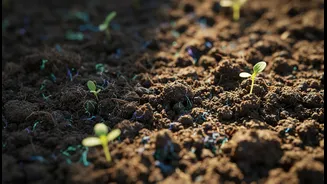
For much of modern agricultural history, soil was treated like an inert substance—a physical medium to prop up plants while chemical fertilisers provided nutrition. This approach, central to the Green Revolution, delivered massive gains in food production.
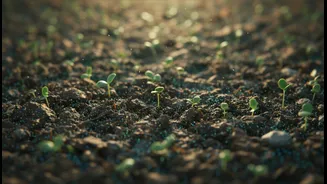
However, it also came with a cost. Decades of intensive farming, reliance on chemical inputs, and monocropping have degraded soil health across the world, including in India. Soils have lost organic matter, their ability to hold water, and the vast biodiversity of microorganisms they once hosted. Scientists now understand that healthy soil is a bustling ecosystem, home to billions of bacteria, fungi, and other organisms that are essential for plant health and resilience.
Harnessing the Fungal Network
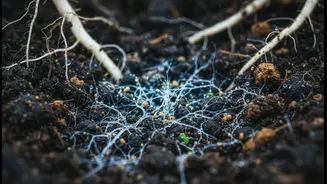
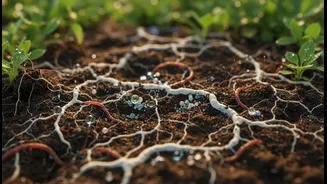
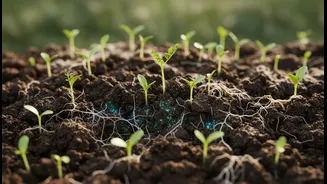
One of the most exciting areas of research is focused on arbuscular mycorrhizal fungi (AMF). These beneficial fungi form a symbiotic relationship with the roots of most plant species. The fungi create a vast network of fine threads, or hyphae, that extend far beyond the plant's own roots, acting as a super-highway for nutrients and water. This network allows plants to access phosphorus and other essential micronutrients that would otherwise be unavailable. In return, the plant provides the fungi with carbon. Researchers are now working to harness this ancient partnership, developing commercial inoculants that can reintroduce these beneficial fungi to depleted soils, helping to improve nutrient uptake, increase drought tolerance, and reduce the need for chemical fertilisers.
Meet the Soil's Microbiome
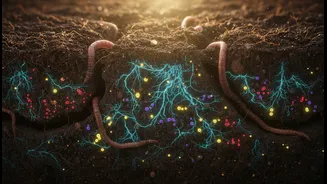
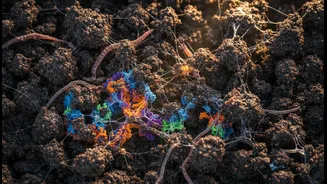
Beyond fungi, the soil is teeming with a diverse community of bacteria and other microbes, collectively known as the soil microbiome. This invisible world is a powerhouse of activity. Certain bacteria can pull nitrogen from the air and convert it into a form that plants can use, a process known as nitrogen fixation. Others produce natural antibiotics that can protect plants from disease-causing pathogens or secrete hormones that stimulate plant growth. A healthy and diverse microbiome improves soil structure, helps retain water, and is crucial for nutrient cycling. By understanding these complex interactions, scientists are developing new strategies, from microbial inoculants to regenerative farming practices, that foster a thriving microbiome to support crop productivity.
Designing Roots for Resilience
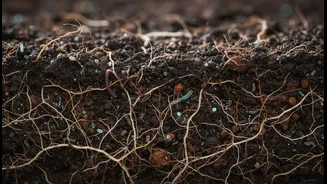
Another crucial frontier is the architecture of the root system itself. In the face of increasing droughts and water scarcity, a plant's ability to access water from deeper soil layers is critical. Plant scientists are using advanced tools like X-ray micro-computed tomography to study root systems without disturbing them, observing how different crop varieties respond to water stress. This research has led to the discovery of genes that control root architecture, such as the angle at which they grow. By identifying genes that encourage roots to grow steeper and deeper, breeders can develop new crop varieties of staples like maize, wheat, and rice that are more resilient to drought, a vital adaptation for a changing climate.
Why This Matters for India
These underground solutions hold immense promise for Indian agriculture, which faces a convergence of challenges: soil degradation, water scarcity, and the impacts of climate change. A significant portion of India's land is considered degraded, with low levels of organic carbon and imbalanced nutrient profiles from the overuse of chemical fertilisers. Innovations that restore soil biology can help reduce reliance on these inputs, improve soil fertility naturally, and make farms more resilient. Developing drought-resistant crops with deeper root systems is particularly crucial for a nation where agriculture is heavily dependent on monsoon rains. By embracing a biology-driven approach that works with nature, not against it, these underground solutions can help build a more sustainable and secure food future for India.