







The Push for Honest Labels
The Food Safety and Standards Authority of India (FSSAI) has been actively working to make food labels more transparent and less deceptive for consumers. In recent months, it has issued notices to numerous companies for making misleading claims like 'healthy',
'organic', or using unverified health benefits on their packaging. This regulatory push is part of an ongoing effort to enforce the Food Safety and Standards Act, compelling brands to ensure their marketing claims are scientifically backed and not just buzzwords. The goal is to move beyond the persuasive front-of-pack marketing and force companies to be truthful on the back, where the ingredient list and nutritional facts tell the real story. Recent amendments have even targeted bulk packaging, ensuring traceability and clear information for products supplied to hotels and caterers, which previously had limited disclosure rules.
The Trouble with 'Natural'
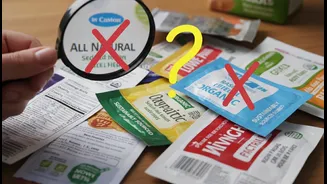
Of all the words used in food marketing, 'natural' is one of the most powerful and ambiguous. To a consumer, it often implies a product is unprocessed, wholesome, and free from anything artificial. However, this perception can be misleading. According to FSSAI's older guidelines, the term 'natural' can be used for food derived from a plant, animal, or mineral, as long as it contains no added ingredients. While this sounds straightforward, it leaves a significant grey area. For instance, a juice made from fruit concentrate can be called 'natural' even if the processing strips away many of the whole fruit's nutrients. A product can be made from 'natural ingredients' but still be highly processed. This gap between consumer expectation and regulatory definition is what makes the term so problematic. Recently, FSSAI has acted against brands for using 'All Natural' claims that don't meet its stipulated conditions, highlighting the ongoing confusion.
Regulation Meets Reality
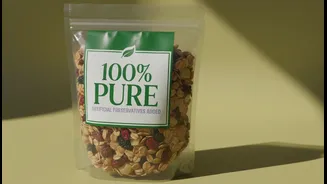
FSSAI's regulations from 2018 state that using terms like 'natural', 'fresh', or 'pure' is conditional. If a brand uses these words in a way that might mislead consumers, it must include a disclaimer stating that the word is just part of a brand name and doesn't represent the product's true nature. Violations can lead to hefty penalties. The regulator's recent actions show it is actively enforcing this, issuing notices to brands for making claims without the necessary approvals or scientific evidence. For instance, a product claiming to be 'organic' must have the proper certification, including the Jaivik Bharat logo, which many fail to display. Similarly, the regulator has cracked down on the use of '100%' in claims, as the term is not defined in regulations and can create a false sense of absolute purity. This demonstrates a clear intent to hold companies accountable for the language they use.
What Labels Still Can't Tell You
Despite FSSAI's efforts, labels cannot capture the full story of a product. The term 'natural' says nothing about a food's nutritional profile. A 'natural' fruit juice can still be loaded with sugar, even if it's naturally occurring. Likewise, 'natural' potato chips are still fried and high in sodium and fat. The fundamental processing method is often more important than the origin of the ingredients. A 'clean label' with simple, recognizable ingredients is often a better indicator of quality than a single marketing buzzword. The regulations also struggle to keep up with clever marketing strategies. For example, brands often list multiple types of sugars (like glucose syrup, dextrose, or maltodextrin) separately, so that 'sugar' doesn't appear as the first ingredient, even though it may dominate the product's composition. This means that even with stricter enforcement, the ultimate power lies in the consumer's ability to look past the claims.