
Sailing on a Sunbeam
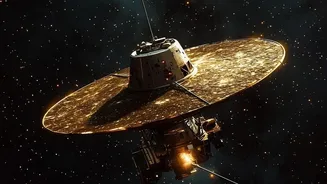
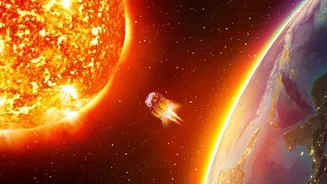
At its core, reflective sail technology, or solar sailing, is a beautifully simple concept. Instead of relying on heavy, finite chemical propellants like traditional rockets, a solar sail uses the pressure of sunlight itself for propulsion. Photons, the fundamental
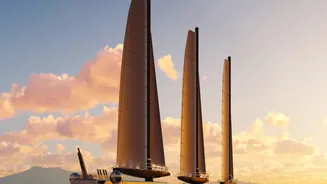
particles of light, have momentum. While the push from a single photon is infinitesimally small, over a vast, lightweight, reflective surface, their collective impact adds up. Think of it like a sailboat on the ocean, but in this case, the 'wind' is the constant stream of photons flowing from the sun, and the 'sail' is an ultra-thin, mirror-like membrane, often thinner than a human hair. This continuous, gentle push allows a spacecraft to accelerate slowly but steadily, eventually reaching incredible speeds without the limitations of a fuel tank.
A Landmark Breakthrough
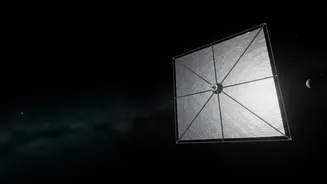
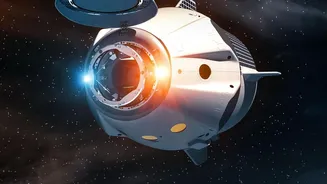
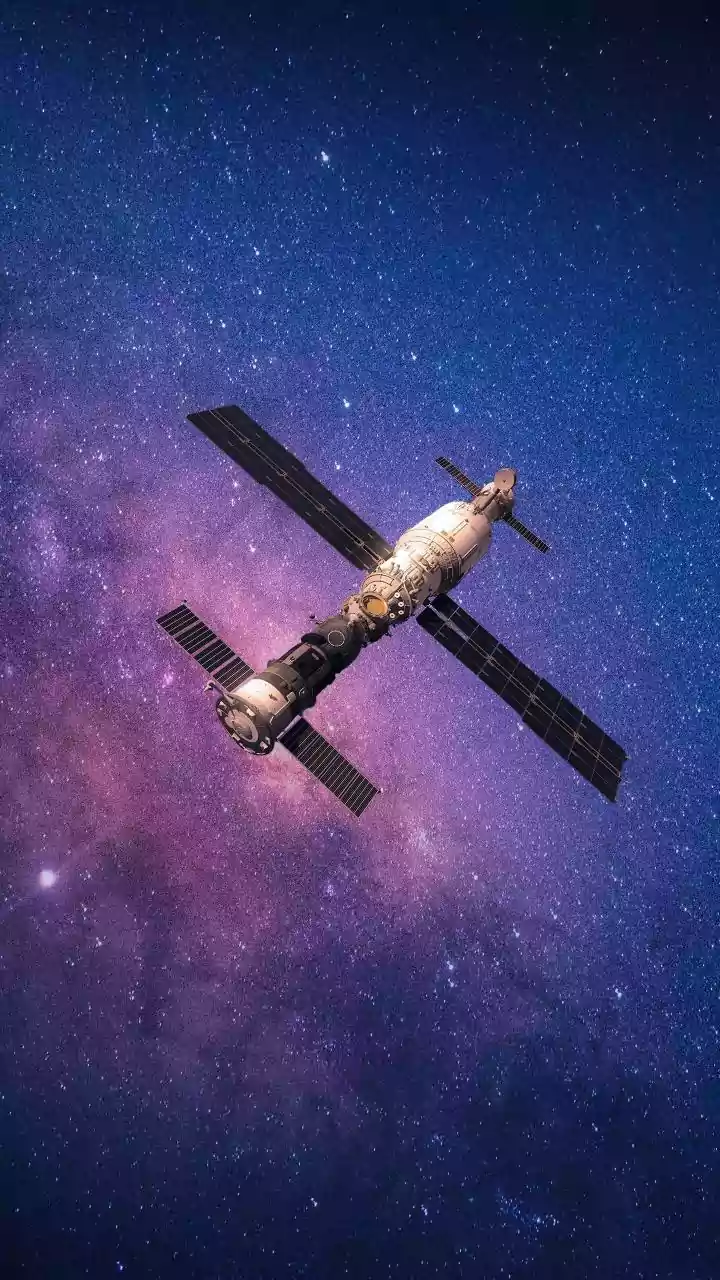
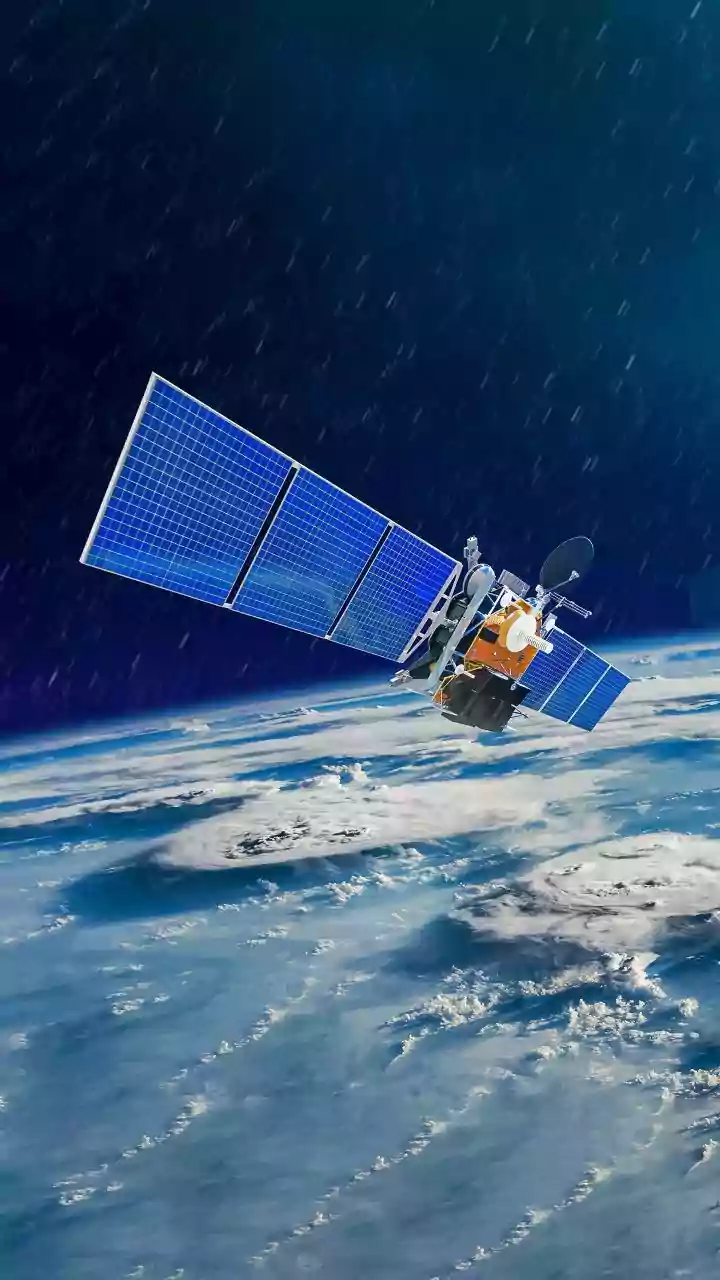
The recent excitement stems from the success of NASA's Advanced Composite Solar Sail System (ACS3) mission. Launched in 2024, the mission's primary goal was to test the deployment in space of new, lightweight composite booms designed to support larger and more robust solar sails. In recent weeks, the mission has successfully completed its key deployment objectives, unfurling a sail roughly 80 square meters in area—about the size of a small apartment—from a spacecraft no bigger than a microwave oven. This successful test of the boom and deployment system is a critical milestone. It validates the use of composite materials that are not only light but also stiff and resilient, paving the way for future sails that are twenty times larger or more, capable of propelling more ambitious deep-space missions.
Why This Changes Everything
For decades, space exploration has been constrained by what is known as the tyranny of the rocket equation: the more you want to accelerate, the more fuel you need, but the more fuel you carry, the heavier you are and the more acceleration you need. Solar sails break this cycle. By eliminating the need for onboard propellant, they open up a new realm of possibilities. Missions can be longer, and destinations previously considered unreachable come into play. A spacecraft powered by a solar sail could, for instance, maintain a fixed position relative to the sun to provide early warnings of solar storms, or embark on decades-long journeys to the outer solar system and even interstellar space. While the initial thrust is low, the constant acceleration means that over months and years, a solar sail craft can achieve velocities that would be impossible or prohibitively expensive for a chemical rocket.
Building on a Legacy of Success
The ACS3 mission builds on a foundation laid by previous pioneering efforts. Japan's IKAROS mission first demonstrated solar sailing in interplanetary space in 2010, and The Planetary Society's LightSail 2 project successfully used a solar sail to change its orbit around Earth between 2019 and 2022. These earlier missions proved the fundamental concept worked on a smaller scale. The success of ACS3's advanced composite booms now provides engineers with the confidence and the data needed to design the much larger sails required for true deep-space science and exploration. The technology is maturing from small-scale demonstrations to a viable, mission-ready propulsion system.
The Journey to the Stars
With these successful ground and orbital tests, the path is cleared for the next generation of solar sail missions. Engineers are already designing systems with sails covering 1,600 square meters or more—roughly the size of a hockey rink. One such project, Solar Cruiser, although not moving forward in its original form, has had its technology and research folded into new initiatives that could see a launch before the end of the decade. These larger sails could be used for asteroid reconnaissance missions, observing the poles of the sun from unique vantage points, or acting as relays for future crewed missions to Mars. Further in the future, many scientists believe massive sails pushed by powerful lasers could be humanity's best bet for sending the first probes to a nearby star system like Proxima Centauri.