
What is Space Weather?
Space is not the empty vacuum many imagine. It's filled with energetic particles and radiation, much of it originating from our own Sun. This environment is what scientists call space weather. The Sun constantly releases a stream of charged particles known
as the solar wind. More dramatic events, like solar flares and coronal mass ejections (CMEs), unleash massive bursts of radiation and magnetised plasma into space. While Earth's magnetic field protects us from the worst of it, these solar storms can have a profound effect on our planet's near-space environment, creating the beautiful aurora but also posing a significant risk to technology.
The Direct Threat to Satellites
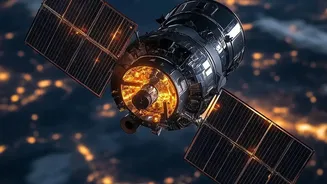
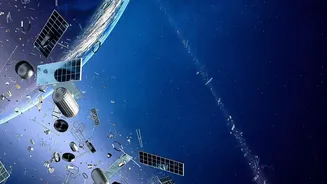
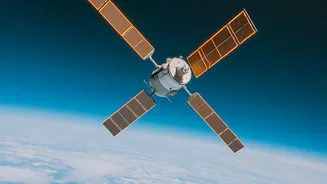
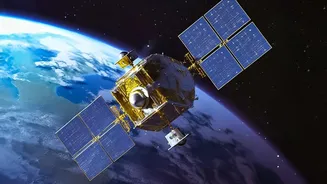
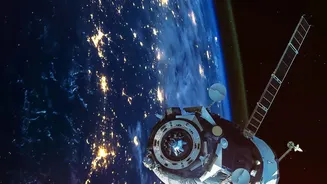
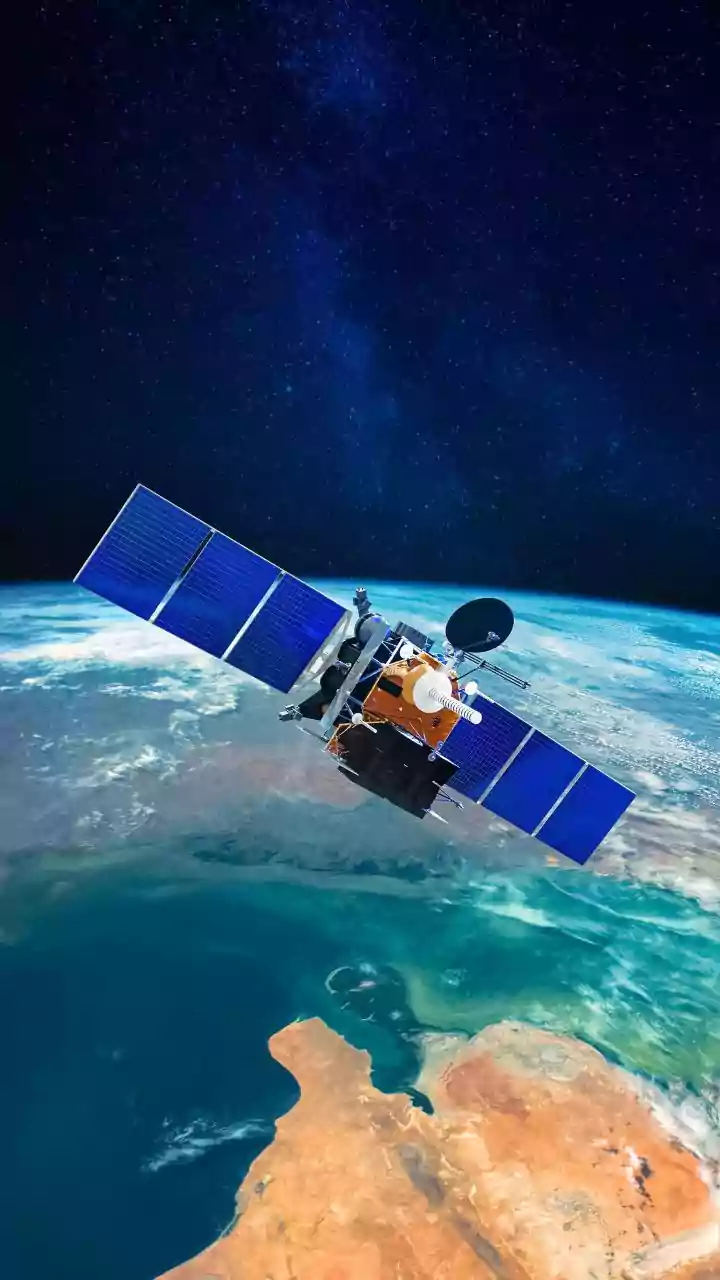
For satellites orbiting beyond the full protection of Earth's atmosphere, space weather is a constant hazard. Energetic particles from solar storms can damage sensitive electronics, degrade solar panels, and cause 'phantom commands' where a satellite malfunctions or behaves unexpectedly. In more severe cases, this can shorten a satellite's lifespan or lead to complete failure. Another significant risk comes from atmospheric drag. During a geomagnetic storm, the Earth's upper atmosphere can heat up and expand, increasing its density. For satellites in low-Earth orbit (LEO), this increased drag can slow them down, causing their orbit to decay and potentially leading to premature re-entry or even collisions with other satellites or space debris.
A Crowded Sky Amplifies the Risk
The problem is becoming more urgent with the rapid growth of satellite 'mega-constellations' operated by companies for global internet services. These networks involve thousands of satellites, often of identical design, in low-Earth orbit. This uniformity can be a weakness; a solar event that affects one satellite is likely to affect many others in the same way, potentially disrupting service on a massive scale. Recent history has already provided a stark warning. In one incident, a geomagnetic storm was blamed for the loss of dozens of newly launched internet satellites, which fell from orbit due to increased atmospheric drag. As our global economy becomes more reliant on these satellite-based services for everything from financial transactions to farming, the potential economic cost of a major outage is immense.
The Limits of Current Forecasting
Unlike terrestrial weather, where we can track storms for days, space weather forecasting is far more challenging. Our primary early-warning system involves satellites positioned about 1.5 million kilometres from Earth, which monitor the solar wind. However, this often provides a warning of only 30-60 minutes before a storm's effects reach us. This is barely enough time for satellite operators or power grid managers to take protective measures. The current solar cycle, which is near its peak, has already produced strong geomagnetic storms that have caused intermittent disruptions to GPS and radio communications. Scientists are concerned that our current models may underestimate the potential impact of a truly extreme, once-in-a-century event.
The Push for Better Prediction
This is why scientists are urgently calling for investment in more accurate forecasting capabilities. Proposals include deploying new satellites that can provide more spatial coverage of the Sun and give us a longer lead time. Researchers are also developing advanced models using artificial intelligence and machine learning to analyse vast amounts of data from solar observatories and identify patterns that could predict solar storms hours or even days in advance. Better forecasting would allow satellite operators to take preventative action, such as temporarily shutting down sensitive components or even adjusting a satellite's orbit to reduce drag. It would give industries from aviation to energy time to prepare for potential disruptions, mitigating the worst of the economic and societal impacts.