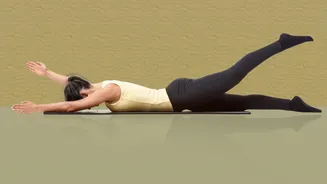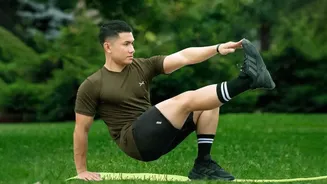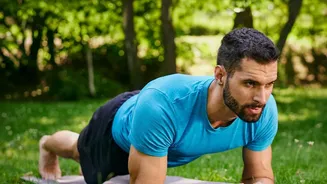



The Superman is a go-to move for building a stronger back. But for such a simple exercise, one question creates endless debate: should you use an exercise mat? The answer isn't just about comfort—it's about effectiveness and safety.
What is the Superman Exercise?
The Superman is a bodyweight
floor exercise designed to strengthen the posterior chain—the muscles along the backside of your body. When you lie face down and lift your arms, chest, and legs off the floor, you're primarily targeting the erector spinae muscles, which run along your spine and are crucial for posture and preventing back pain. It also engages your glutes, hamstrings, and shoulders. Because it requires no equipment and can be scaled for any fitness level, it has become a staple in physical therapy, personal training, and home workout routines for its ability to build foundational core strength.
The Core Debate: Mat vs. No Mat
The central question isn't as simple as it seems. For many, grabbing a mat is an automatic first step for any floor work. It signals a clean, dedicated workout space and offers a degree of comfort. But experts increasingly question whether that comfort comes at a cost. The debate isn't just about cushioning your bones; it's about the surface's impact on your body's mechanics. The stability of the surface you lie on can directly influence muscle activation, joint alignment, and the overall quality of the exercise. So, is your trusty mat helping you achieve perfect form, or is it subtly compromising your results?
The Case for Using an Exercise Mat
The most obvious reason to use a mat is comfort. Lying on a hard floor can be uncomfortable, especially on the bony parts of your hips and pelvis that press into the ground. A mat provides a layer of cushioning that can make the exercise more pleasant, encouraging you to perform it more consistently. For beginners, this comfort factor can be a significant motivator. Mats also offer a clear, defined workout area and a hygienic barrier between you and the floor, which is especially important in a gym setting. A good mat can also provide a non-slip surface, preventing you from sliding around as you move, though this is less of a concern with the static Superman exercise.
The Argument for a Hard Surface
The primary argument against using a mat—specifically a thick, soft one—is stability. The Superman exercise requires a stable base to ensure your spine remains in a safe, neutral position. A plush surface can allow your body to sink, potentially encouraging you to overarch your lower back as you lift. This not only reduces the effectiveness of the exercise but also increases the risk of strain. A firm, hard surface like a wood floor provides direct sensory feedback, helping you better feel which muscles are engaging and whether your body is properly aligned. This connection to a stable base allows for more controlled, precise movements and ultimately, better activation of the target posterior chain muscles.
The Evidence: What Experts Recommend
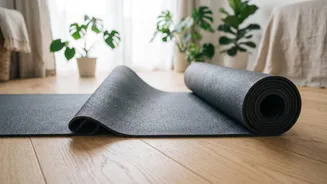
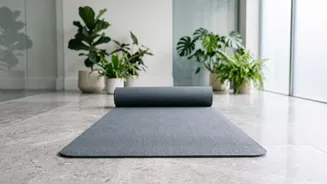
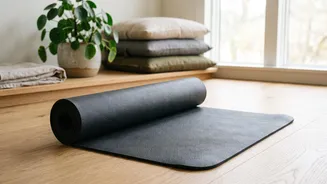
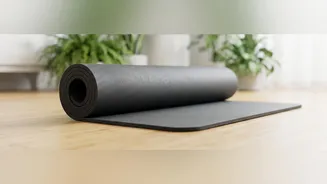
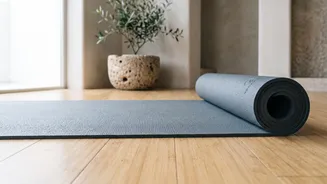
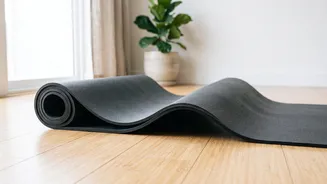
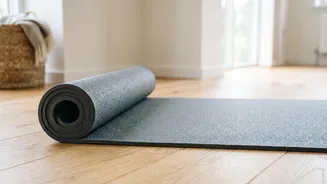
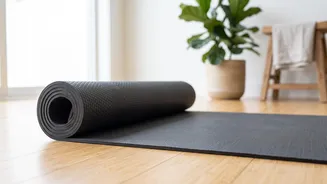
There isn't a large body of formal scientific research comparing mat vs. nomat setups for the Superman. However, the consensus among physical therapists and kinesiologists is clear : stability is paramount . The 'evidence ' comes from foundational principles of biomechanics . For an exercise focused on spinal stabilization , the surface you use should support that goal . Experts generally advise against using thick , squishy mats like those used for Pilates or gymnastics , as they can compromise form . The recommendation is to use either a hard floor or a very thin , dense yoga - style mat . This type of mat offers a touch of cushioning and hygiene without sacrificing the stability needed for proper execution . It strikes the ideal balance , providing just enough comfort to protect your bones while keeping you firmly connected to the ground .
The Verdict : Form Over Comfort
Ultimately , the quality of your Superman exercise is determined by your form , not the surface beneath you . If a hard floor feels fine , there is no evidence - based reason to add a mat . If you prefer a bit of cushioning , a thin , dense yoga mat is the ideal choice . You should absolutely avoid thick , soft mats that allow your hips or torso to sink . The best setup is one that allows you to perform the movement with control , keeping your neck long and your lower back in a neutral position . Focus on lifting with your glutes and back muscles , not on achieving maximum height . Listen to your body and choose the surface that helps you execute the exercise correctly and without pain .