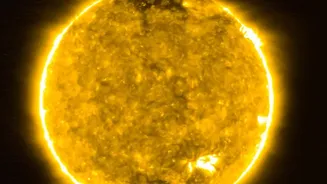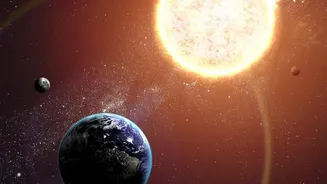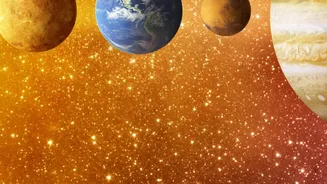


Our Sun won't burn forever. In about five billion years, it will exhaust its fuel, swell into a red giant, and then shrink into a white dwarf. But what happens to the planets that survive this violent transformation? It's a cosmic mystery.
The Sun’s Violent Transformation
The end for
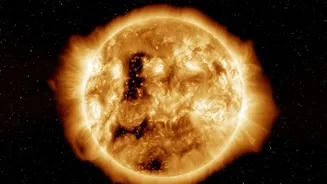
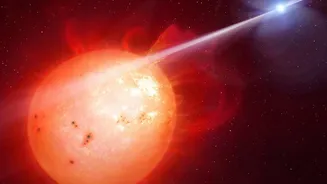
our Sun begins when the hydrogen fuel in its core runs out. Without the outward push of nuclear fusion, gravity will take over, causing the core to collapse and heat up. This new heat will cause the Sun's outer layers to expand dramatically, transforming it into a red giant. Its size will swell to potentially engulf the orbits of Mercury, Venus, and possibly even Earth. Any planet caught in this fiery expansion will be vaporised. After about a billion years as a red giant, the Sun will shed its outer layers, creating a beautiful, expanding cloud of gas called a planetary nebula. At the center of it all, the hot, dense core of the former star will remain. This Earth-sized stellar remnant is a white dwarf.
A New and Unstable Solar System
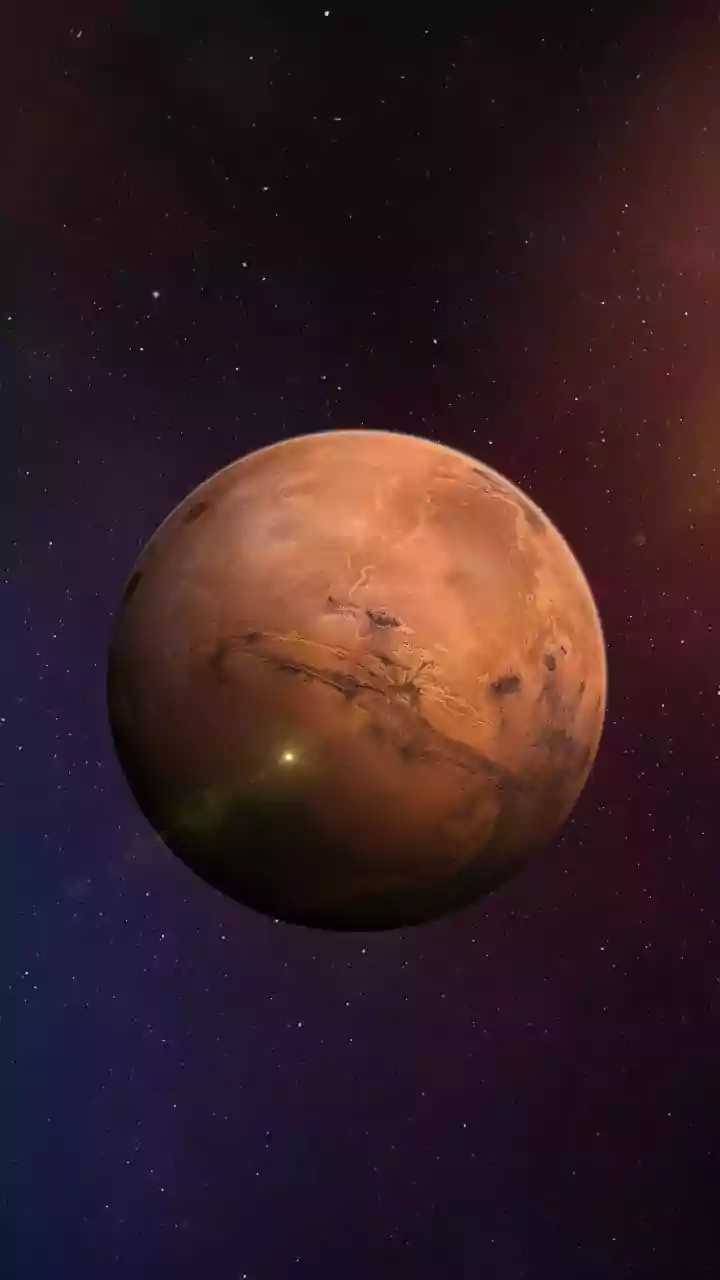
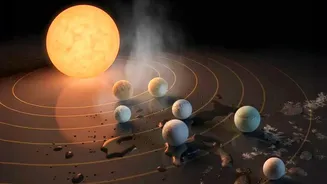
Once the Sun becomes a white dwarf, it will have lost nearly half its mass. This dramatic reduction in gravity will cause the remaining planets—likely Mars and the gas giants—to drift into wider, more distant orbits. For a long time, scientists believed this new configuration would be stable for billions of years. However, recent research suggests a much more chaotic future. New simulations show that the Sun may not lose its mass smoothly, but in uneven bursts that could send gravitational recoils through the system. This 'shaking up' of the solar system could destabilise the orbits of the surviving giant planets much sooner than expected, potentially within a billion years of the Sun becoming a white dwarf.
Clues from Cosmic Graveyards
To understand our distant future, astronomers look to other white dwarf systems that are already ancient. What they've found is fascinating. Between 25% and 50% of white dwarfs show signs of being 'polluted' with heavy elements like calcium and silicon. These elements should have sunk deep into the star's dense core, so their presence in the atmosphere means the white dwarf must be actively consuming rocky material. This debris is thought to be the remains of asteroids and moons, gravitationally perturbed by surviving giant planets and sent careening toward the white dwarf, where they are torn apart by immense tidal forces. These cosmic graveyards are direct evidence that planetary systems can survive, at least in pieces, the death of their star.
The Fate of the Outer Planets
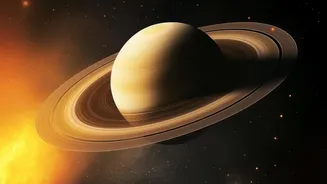
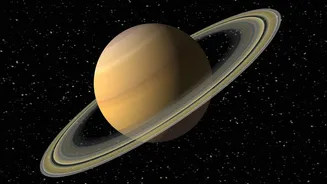
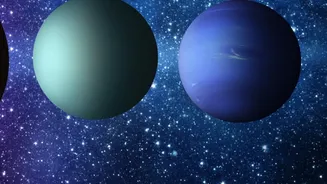
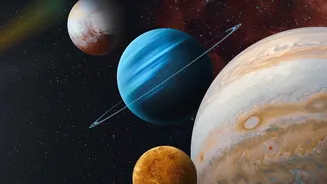
The gravitational dance of the surviving planets will be complex and violent. Jupiter, Saturn, Uranus, and Neptune will survive the red giant phase, but their new orbits could become dangerously unstable. Simulations show that planets could be thrown out of the solar system entirely or have their orbits dramatically altered. For example, Saturn might be ejected, while Uranus and Neptune could even swap places. The immense gravity of Jupiter, no longer balanced by the Sun's full mass, could wreak havoc on the asteroid belt, flinging rocky bodies inward toward the white dwarf or outward into interstellar space. This chaotic environment, full of flying debris, would be a far cry from the orderly system we know today.
A Ring of Dust and Debris
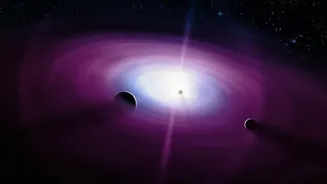
The final stage for many of these wayward asteroids and planetary fragments is to be shredded into a disk of dust and debris that orbits the white dwarf. Astronomers have observed these debris disks around many white dwarfs, and recent findings show they can have complex structures, such as multiple rings. This suggests that surviving planet-like bodies might be embedded within the rings, shaping their structure. Over millions of years, the material in these rings spirals inward and is consumed by the dead star. It's a vision of our own solar system's potential end: a cold, dark remnant of a sun surrounded by the dusty ghosts of its former worlds.