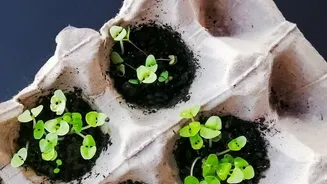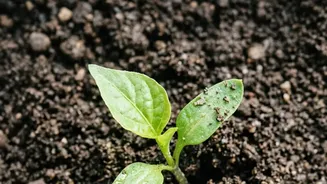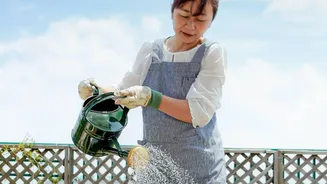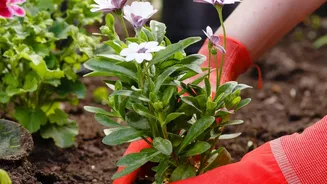







As the November air brings a pleasant chill, it's the perfect time to prepare your balcony for a spectacular show of winter flowers. The secret to a garden bursting with colour lies in providing the right nutrition at the right time.
Why November Nutrition is Critical
November is the prime
growing season for winter annuals in India. Plants like petunias, pansies, marigolds, and dahlias are in their vegetative stage, building the foundation for future blooms. The feeding they receive now directly impacts the quantity and quality of flowers you'll enjoy through the colder months. Neglecting their nutritional needs at this stage can lead to weak plants with sparse, small flowers. It's a crucial window to establish strong roots and healthy foliage that will support a season of vibrant colour. Before you feed, always do a quick check-up. Remove any dead leaves or spent flowers and ensure the soil isn't already waterlogged.
Understanding Bloom-Boosting Nutrients (NPK)
Fertilizer labels show an NPK ratio, which stands for Nitrogen (N), Phosphorus (P), and Potassium (K). For flowering plants, this ratio is key. Nitrogen fuels green, leafy growth, but too much can discourage flowering. Phosphorus is the star player for blooms; it stimulates root development and flower bud formation. Potassium contributes to overall plant health, strong stems, and disease resistance, improving the quality and size of the flowers. For winter flowers, you'll generally want a fertilizer where the middle number (P) is high.
The Best Organic Fertilizers to Use Now
Organic fertilizers are excellent for long-term soil health and provide a slow, steady release of nutrients. One of the most popular choices in India is mustard cake ('sarson ki khali'). It is rich in nitrogen, phosphorus, and potassium, making it a well-rounded food for flowering plants. To use it, create a liquid feed: soak about 100 grams of mustard cake in a litre of water for two to four days. Once fermented, dilute this concentrated liquid with at least five to ten times more water before applying it to the soil. Vermicompost is another fantastic option, providing balanced nutrients and improving soil texture. You can add a handful to each pot every month. Bone meal is a great slow-release source of phosphorus to encourage more blooms. Mix a tablespoon into the topsoil of a medium-sized pot at the beginning of the season.
Using Chemical Fertilizers for a Quick Boost
While organic options are preferred for soil health, chemical fertilizers can provide a quick and targeted nutritional boost. A balanced NPK fertilizer like 19-19-19 or 20-20-20 is good for the initial vegetative growth phase of young plants. As plants mature and get ready to bud, switching to a bloom-booster formula with higher phosphorus and potassium, such as NPK 10-26-26, is beneficial. Another commonly used fertilizer is DAP (Di_Ammonium Phosphate), which is high in phosphorus and promotes strong root development and flowering. A few granules (around half a teaspoon for a medium pot) can be mixed into the topsoil, away from the stem, once or twice during the early growing season. Always use chemical fertilizers sparingly as overuse can burn plant roots.
Application Guide and Best Practices
Correct application is just as important as the fertilizer itself. Always water your plants a day before fertilizing to ensure the soil is moist, which prevents root burn. When using liquid fertilizers like the mustard cake solution, apply it directly to the soil, avoiding the leaves. A good frequency for feeding most winter annuals is once every 15–20 days. Observe your plants; if leaves turn yellow, it could be a sign of overwatering or over–fertilizing, not necessarily a lack of nutrients. Reduce feeding frequency as deep winter sets in and plant growth naturally slows down. Finally, remember that sunlight is just as crucial as food. Ensure your flowering plants are getting at least 4–6 hours of direct sun to properly utilize the nutrients you provide.