







The Promise of 'No Added Sugar'
In India, the Food Safety and Standards Authority of India (FSSAI) has clear rules for this claim. A product can be labelled 'No Added Sugar' only if no form of sugar or sugar-containing ingredient has been added during its manufacturing. This means no table
sugar, honey, jaggery, corn syrup, or similar sweeteners. If a product has this label but contains natural sugars, it must also state 'CONTAINS NATURALLY OCCURRING SUGARS'. On the surface, this seems straightforward. The manufacturer hasn't added any extra sugar. However, this is where the confusion begins, as the rule says nothing about the sugars already present in the ingredients themselves, which can be very high.
The Hidden World of 'Natural' Sugars
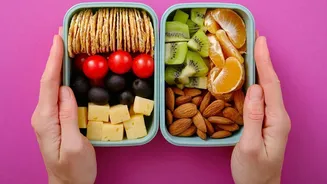
The key is to understand the difference between two types of sugars: intrinsic and free. Intrinsic sugars are those found within the cellular structure of whole foods, like a fresh apple or a carrot. They come packaged with fibre, water, and other nutrients, which slow down their absorption in our bodies. Free sugars, however, include sugars added to foods plus those naturally present in honey, syrups, and, crucially, fruit juices and fruit juice concentrates. When you see a 'No Added Sugar' label on a carton of 100% fruit juice, it means no extra sucrose was added, but the juice itself is considered a source of free sugars. These are processed by the body much faster than the sugars in a whole piece of fruit.
Fruit Juice vs. Whole Fruit
Think about how many oranges it takes to make one glass of juice. You might drink the juice of four or five oranges in a minute, but you would likely not eat five whole oranges in one sitting. This is the core of the issue. Juicing removes most of the dietary fibre, the very component that helps manage blood sugar levels. Without fibre, the natural fructose from the fruit hits your system rapidly, causing a blood sugar spike similar to that from other sugary drinks. Products using fruit juice concentrates or fruit purees as sweeteners can be particularly deceptive. These are highly concentrated sources of fruit sugar that can be used to sweeten a product, allowing it to legally carry the 'No Added Sugar' label while still being very high in total sugar content.
Your Body Can't Always Tell the Difference
While the source might be 'natural', your body metabolises the free sugars from fruit juice very similarly to how it processes added sugars from a can of soda. Large amounts of rapidly absorbed fructose can overwhelm the liver. While eating whole fruits is consistently linked to positive health outcomes, high consumption of fruit juice has been associated in some studies with an increased risk of health issues when consumed in large quantities, simply due to the concentrated sugar load. The claim on the front of the pack is a marketing statement; the nutritional information on the back tells the full story.
How to Be a Smarter Shopper
Don't let the front-of-pack claims be your only guide. The most important tool you have is the nutrition label and the ingredients list. First, ignore the marketing slogans and turn the package over. Look for the 'Total Sugar' and 'Added Sugar' lines in the nutrition facts panel. A 'No Added Sugar' product will list 0g for added sugars, but the 'Total Sugar' value might still be very high. Next, scan the ingredients list. Ingredients are listed by weight, so if 'fruit juice concentrate', 'fruit puree', or 'date paste' are near the top, the product is likely high in natural sugars. Choosing whole fruits over fruit juices, and water over sweetened beverages, remains the most reliable way to manage sugar intake effectively.