



A Gift from Halley's Comet
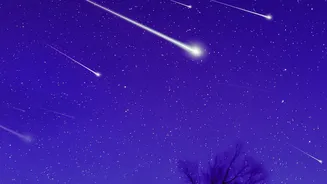
The Orionid meteor shower is an annual celestial event caused by the Earth passing through the trail of debris left by the famous Halley's Comet. Each tiny speck of dust and ice from the comet burns up upon entering our atmosphere, creating the fast,
bright streaks we call meteors or 'shooting stars'. They are known for their speed and tendency to leave glowing trails that can linger for a few seconds. The shower gets its name from the constellation Orion, as the meteors appear to radiate from a point near it. For viewers in India, the radiant rises in the east after midnight, making the pre-dawn hours the ideal time to watch.
Perfect Timing in 2026
Mark your calendars for the night of October 21-22, 2026. This is when the Orionid shower is predicted to reach its peak activity, potentially producing up to 20 meteors per hour in perfect conditions. What makes 2026 an exceptional year is the phase of the moon. The peak viewing night coincides with a New Moon, meaning the sky will be naturally dark, without any bright moonlight to wash out the fainter meteors. This cosmic alignment provides a rare and fantastic opportunity for observation, but it also means that the only remaining obstacles are the ones in our own atmosphere.
The Challenge of City Lights
For most people in India, the biggest barrier to seeing the Orionids will be light pollution. The constant glow from streetlights, buildings, and vehicles in major cities like Delhi, Mumbai, Bengaluru, and Kolkata creates a bright haze that blankets the sky. This artificial brightness dramatically reduces the number of visible meteors, often obscuring all but the very brightest ones. To truly enjoy the show, you must escape the city. Even travelling 20-30 kilometres outside a major urban centre can make a significant difference. Look for designated dark sky parks, wildlife sanctuaries, or simply a remote rural area with an open view of the sky.
Navigating Post-Monsoon Skies
Weather is another critical factor. Late October in India is a transitional period. The southwest monsoon has typically withdrawn from most of the country, leading to clearer, drier skies in the northern and central regions. However, parts of southern and eastern India can still experience lingering cloud cover or retreating monsoon showers. These clouds can completely obstruct the view of the night sky. There is no way around this challenge other than planning ahead. Always check your local weather forecast in the days leading up to the peak. If clouds are predicted, you may need to be flexible and consider travelling to a nearby area with a clearer forecast.
The Battle Against Haze and Smog
Beyond clouds, air quality itself plays a crucial role. In many parts of North India, particularly across the Indo-Gangetic Plain, late October often sees a rise in atmospheric haze and smog due to agricultural stubble burning and changing weather patterns. This layer of pollutants acts like a dirty screen, scattering light and reducing the transparency of the sky. It can make it difficult to see even bright stars, let alone the fainter streaks of meteors. Unfortunately, this is a widespread issue that is hard to escape. Your best bet is to aim for higher altitude locations, like hill stations, where you might be able to get above the densest layers of haze.
Your Guide to a Great Viewing Night
With a bit of preparation, you can significantly increase your chances of witnessing a memorable meteor shower. First, find a dark location away from city lights with a wide, unobstructed view of the sky. Second, dedicate at least 20-30 minutes for your eyes to fully adapt to the darkness; avoid looking at your phone screen during this time. Third, get comfortable. Lie down on a blanket or a reclining chair to avoid neck strain. You don't need a telescope or binoculars, as meteors can appear anywhere in the sky. Finally, be patient. The show happens in spurts, with lulls in between. The best hours are from midnight until dawn, so a little dedication goes a long way.