





It’s a fruit bowl staple and a go-to snack, but is there more to the humble banana than meets the eye? The answer is yes. The journey from firm and green to soft and spotted involves a major nutritional shift that can impact your body differently.
The Great Starch to Sugar Conversion
The
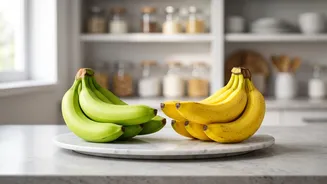
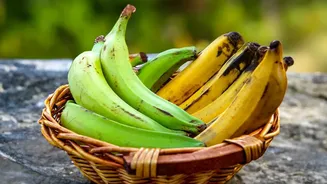
most significant change that occurs as a banana ripens is the transformation of its carbohydrates. A green, or unripe, banana is packed with resistant starch. This type of starch functions much like dietary fibre, as it's 'resistant' to digestion in your small intestine. Because of this, it doesn't cause a rapid spike in blood sugar levels. As the banana matures, turning from green to yellow, enzymes begin breaking down that complex resistant starch into simple sugars like glucose, fructose, and sucrose. This is why a ripe yellow banana tastes significantly sweeter and has a softer, mushier texture. By the time it's fully ripe, a banana that once contained up to 80% starch might have only 1% left.
Impact on Digestion and Gut Health
The difference in carbohydrate content directly affects how your body digests the fruit. The resistant starch in green bananas acts as a prebiotic, feeding the beneficial bacteria in your gut. This process helps produce compounds that support digestive health. However, for some people, especially those not used to high-fibre foods, the high resistant starch content can cause gas or bloating. Ripe yellow bananas, on the other hand, are generally considered easier to digest. With most of the starch converted to simple sugars, your body can break them down and absorb the energy more quickly. This makes ripe bananas a better choice for individuals with sensitive stomachs or for young children.
Blood Sugar and the Glycemic Index
If you're managing blood sugar levels, the ripeness of your banana is a crucial factor. Due to their high resistant starch content, green bananas have a low glycemic index (GI), typically around 30 to 42. This means they release energy slowly and cause a more gradual rise in blood sugar. Conversely, as a banana ripens and its sugar content increases, its GI value climbs. A fully ripe yellow banana can have a GI between 51 and 62, placing it in the low-to-medium category. While this is still considered moderate, it provides a quicker energy boost, making ripe bananas a popular choice for athletes before a workout.
A Boost in Antioxidants
While green bananas win on the resistant starch front, ripe bananas have their own nutritional advantage: antioxidants. As a banana ripens and develops yellow skin, and eventually brown spots, its levels of antioxidants like flavonoids and other phenolic compounds increase. These compounds are beneficial because they help protect your body's cells from damage caused by oxidative stress. Those brown spots on an overripe banana are actually a visual sign of this antioxidant power-up, indicating that even a fruit that looks past its prime can still offer health benefits.
Which Banana Is Right for You?
Ultimately, there is no 'good' or 'bad' banana—it all depends on your personal health goals and taste preferences. Choose a green banana if:
- You want to support your gut health with prebiotic fibre.
- You need to manage your blood sugar levels and prefer a slower energy release.
- You are looking for a snack that will keep you feeling full for longer.
Reach for a ripe, yellow banana if:
- You need a quick and easily digestible source of energy, such as before exercise.
- You have a sensitive stomach or find green bananas hard to digest.
- You want a higher concentration of antioxidants.
- You simply prefer a sweeter taste and softer texture.