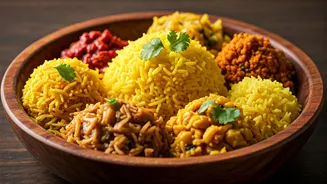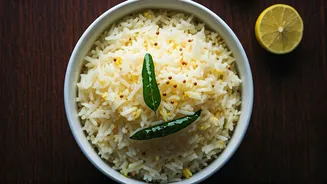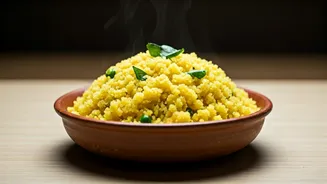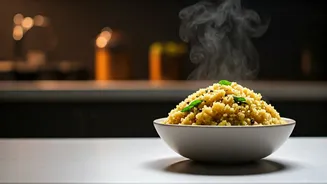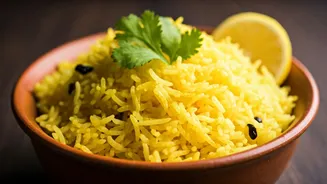






1. Its Simplicity is its Superpower
At its heart, lemon rice is a masterclass in culinary efficiency. It’s the art of transforming humble leftover rice into a spectacular meal with just a handful of pantry staples. A simple tempering of mustard seeds, lentils, and curry leaves, a pinch
of turmeric for that glorious colour, a crunch of peanuts, and a generous squeeze of lemon — that's all it takes. This simplicity is its greatest strength. It requires no elaborate preparation, no rare ingredients, and no long hours over the stove. In a world of complex recipes, lemon rice is a reassuring reminder that the most delicious things are often the most straightforward.
2. A Perfect Symphony of Flavours
To call lemon rice 'sour' is to do it a great disservice. It’s a beautifully balanced symphony of tastes and textures. The tang of the lemon is the lead singer, but it's supported by a whole chorus. You get a subtle bitterness from the mustard seeds, an earthy savouriness from the urad and chana dals, a mild heat from green or red chillies, and a fragrant aroma from the curry leaves and asafoetida. Then comes the texture: the soft, individual grains of rice, the delightful crunch of roasted peanuts or cashews, and the tender bite of the lentils. Every spoonful is a complete, multi-sensory experience that keeps your palate engaged and excited.
3. The Ultimate Travel Companion
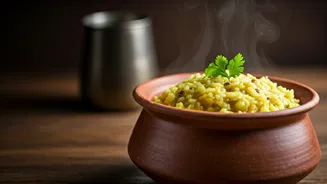
Long before there were snack bars and packaged meals, there was *kattusadam* — food tied in a cloth for a journey. Lemon rice, known as *chitranna* in Karnataka and *elimichai sadam* in Tamil Nadu, is the king of travel foods. The lemon juice acts as a natural preservative, preventing the rice from spoiling quickly, even without refrigeration. It’s neat, easy to eat on the go, and provides a satisfying, flavourful boost of energy. For generations of Indians, the taste of lemon rice is inseparable from the gentle rock of a train, the view from a bus window, or the simple joy of a family picnic.
4. A Dish Steeped in Culture
Lemon rice isn't just a quick lunch; it’s woven into the cultural and spiritual fabric of South India. It is a common *prasadam* (a blessed food offering) in temples, its pure, sattvic ingredients making it a suitable offering to the divine. The bright yellow colour, derived from turmeric, is considered auspicious and is often associated with festivals and celebrations. Whether it’s prepared for a puja, a festive feast, or simply to break a fast, lemon rice carries a significance that goes far beyond its ingredients. It's a taste of tradition, devotion, and community.
5. A Canvas for Creativity
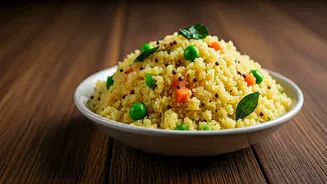
While the classic recipe is perfect on its own, lemon rice is also an incredibly versatile canvas. It welcomes additions and variations, allowing every household to have its own signature version. Some add finely chopped onions for a touch of sweetness, while others might toss in grated carrots, green peas, or capsicum for extra nutrition and colour. The choice of nuts can range from peanuts to cashews to almonds. Some recipes call for a special *podi* or powder for an extra layer of flavour. This adaptability ensures that lemon rice never feels monotonous; it can be tailored to suit any taste or occasion.