





A New Frontier in Robotic Intelligence
A new force is emerging in the world of artificial intelligence and robotics. Eka Robotics, a startup with deep roots in advanced AI research, has captured global attention with its breakthrough 'physical AI' model. Officially launched in October 2026,
this system is not just another step in automation; it represents a fundamental shift in how robots learn and interact with the physical world. The company, which recently achieved a staggering $1.45 billion valuation after a $150 million funding round, is moving beyond robots that simply follow pre-programmed instructions. Instead, it is creating machines that can 'feel' and 'intuit' their way through complex tasks, a capability that has long been a holy grail for roboticists.
The Vision-Force-Action Breakthrough
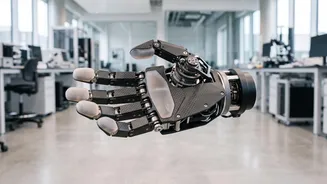
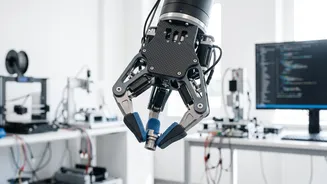
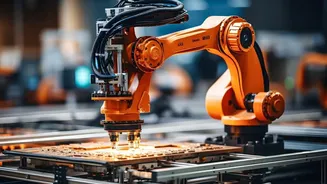
At the heart of Eka's innovation is its Vision-Force-Action (VFA) model. Unlike traditional systems that rely heavily on visual data, Eka's robots combine sight with a sense of touch, using force sensors in their grippers to understand and adapt to objects. This allows a robot to feel if a grasp is slipping and correct it, or use resistance to guide its own movement. The company’s philosophy is that for robots to become truly general-purpose, they must master physics, not just mimic human actions. To achieve this, Eka trains its AI models in complex physics simulators, where they can accumulate thousands of hours of experience in minutes—learning by trial and error across countless scenarios before applying that knowledge in the real world. This method overcomes the long-standing 'sim-to-real' barrier that has often stumped progress in the field.
Superhuman Speed and Dexterity
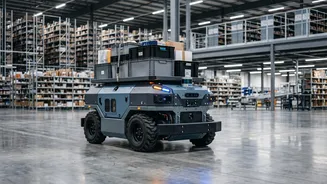
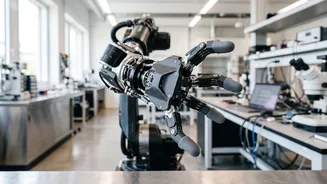
The results of this approach are already proving transformative. Eka's robots can perform pick-and-place operations at a rate of 1,500 per hour, more than double the average human speed of around 600 per hour. They have demonstrated the ability to handle a wide variety of objects, from fragile and slippery items to performing contact-rich tasks like screwing in a lightbulb or inserting wires—all without being specifically trained on those exact objects. This versatility is what sets the project apart. It signals a move away from highly specialized, single-task robots towards adaptable machines that can be deployed across different functions in warehouses, assembly lines, and logistics centres with minimal retraining. This new funding will help Eka scale its technology for more tasks and accelerate customer deployments.
Fueling India's Robotics Ecosystem
While Eka Robotics itself is a global company with roots at institutions like MIT, its success is deeply intertwined with India's broader ambitions. The project's focus on foundational AI research directly contributes to a growing ecosystem. By pushing the boundaries of what's possible, Eka is creating both technology and talent that will fuel further innovation. The project validates the high-level research capabilities within the Indian diaspora and serves as a magnet for investment and talent. India's robotics market is already the fastest-growing in Asia, expanding at over 17% annually, driven by national initiatives like 'Make in India'. Though robot density remains low compared to global leaders, this gap represents a massive opportunity for growth, which companies like Eka are poised to fill.
The Future of Physical Work in India
The rise of such advanced robotics naturally raises questions about the future of human jobs. However, the narrative is shifting from one of replacement to one of collaboration. As robots take over repetitive and physically demanding tasks, they create a need for new, higher-skilled roles in robot supervision, maintenance, programming, and quality control. Eka’s mission statement itself speaks of creating general-purpose robots that work safely alongside people. For India, which has the world's largest working-age population, this technological shift is critical. It presents an opportunity to upskill its workforce and become a leader not just in manufacturing, but in the high-tech industries that will define the 21st-century economy. Eka's project is more than just a business success; it's a building block for a future where Indian innovation powers the global stage.