






More Than a Mission
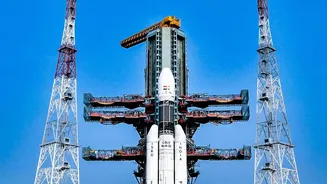
When an ISRO rocket lifts off from Sriharikota, the entire country watches. These missions have become national events, moments of collective pride that do more than just place satellites in orbit. They act as a powerful catalyst for scientific curiosity,
especially among young students. The success of missions like the Mars Orbiter Mission and Chandrayaan-3 has turned space exploration into a tangible and exciting field, making millions of children look up at the stars and wonder, “What if?” This enthusiasm is a crucial first step in building a scientific temperament and encouraging more students to pursue careers in Science, Technology, Engineering, and Mathematics (STEM). The visibility of these achievements helps demystify space science, transforming it from a textbook concept into a real, accessible career path for aspiring innovators.
Catching Them Young with YUVIKA
To channel this nationwide enthusiasm into a structured format, ISRO launched the YUva VIgyani KAryakram (YUVIKA), or Young Scientist Programme. This flagship initiative is designed to “catch them young” by providing selected school students, primarily those who have just finished Class 9, with a two-week residential programme at various ISRO centres. The programme is fully sponsored by ISRO, covering travel, lodging, and all materials for the students. Participants get hands-on training, build model rockets, interact with senior scientists, and witness the real-world application of space technology. With a special preference for students from rural areas, YUVIKA aims to democratise access to space science and ensure that talent from every corner of India is nurtured.
The Impact of a First-Hand Visit
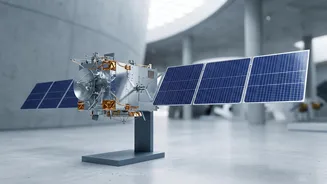
While programmes like YUVIKA are for a select few, ISRO also opens its doors to thousands of students through organised institutional visits. Schools and colleges can arrange for their students to visit facilities like the Vikram Sarabhai Space Centre in Thiruvananthapuram or the U R Rao Satellite Centre in Bengaluru. Though individual visits are not permitted, these group tours offer an unparalleled opportunity to see satellite models, mission control rooms, and exhibition halls up close. For many students, seeing the physical scale models of rockets and satellites they've only read about is a transformative experience. It bridges the gap between theoretical knowledge and practical engineering, showing them that the complex physics and mathematics they learn in class are used to achieve incredible feats.
From Spectators to Future Innovators
The ultimate goal of these outreach efforts is to create a robust pipeline of talent for India's future. By engaging students early, ISRO is not just recruiting for its own future needs but is fostering a broader culture of scientific inquiry. The 'Chandrayaan effect' has been cited as a major boost for STEM education, with a noticeable increase in student engagement following the mission's success. Initiatives like YUVIKA provide career guidance and expose students to diverse fields like robotics, aerospace engineering, and astrophysics. Furthermore, ISRO has established Space Technology Incubation Centres (S-TICs) at several technical universities to support startups and encourage student-led innovation, creating an ecosystem where young talent can thrive.