




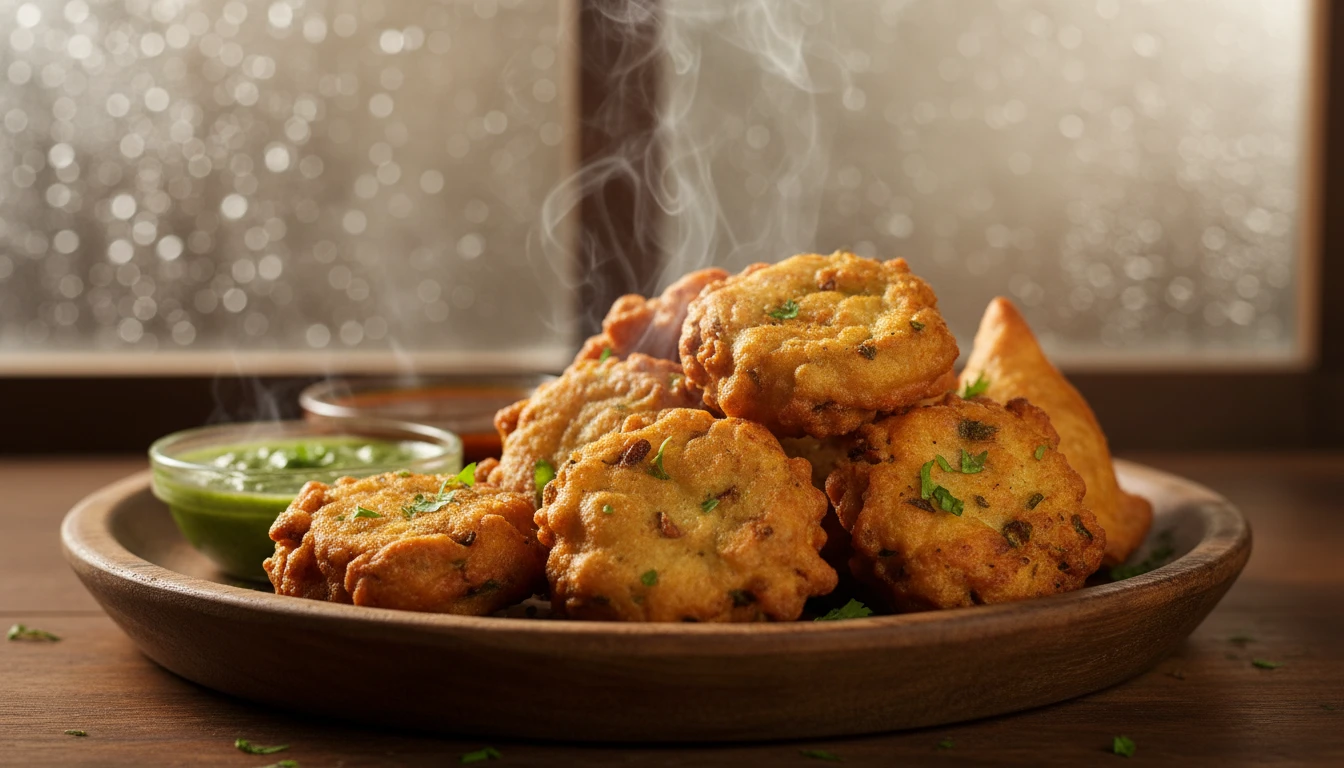




Your Brain on Gloomy Weather
First, it’s important to understand what’s happening in our brains. Gloomy, overcast skies and a lack of sunlight can cause a dip in serotonin, a neurotransmitter that helps regulate mood. This drop can make you feel a bit low or sluggish. In response,
the brain seeks a quick fix. Carbohydrate-rich and fatty foods, like samosas and pakoras, help boost serotonin levels, providing a temporary lift in mood. These foods stimulate the release of dopamine, the brain's reward chemical, making you feel pleasure and satisfaction. So, that craving isn’t just hunger; it's your brain seeking comfort on a dreary day.
An Atmosphere Primed for Aroma
The monsoon doesn’t just change the view; it changes the air itself. High humidity makes the air dense with water vapour. While some research suggests high humidity can sometimes mute certain delicate scents, it also helps odor molecules from hot food linger in the air longer, making their aroma more present. The distinct smell of rain, known as petrichor, also plays a role. This earthy scent, which many people find calming and nostalgic, is strongly linked to memory and emotion in the brain. When your brain is in this relaxed, nostalgic state, it's more receptive to the comforting smells associated with those memories, like freshly fried snacks.
The Irresistible Chemistry of the Crunch
Much of the satisfaction from monsoon snacks comes from a chemical process called the Maillard reaction. When foods like besan-coated pakoras hit hot oil, the amino acids and sugars in the food react, creating hundreds of new flavour and aroma compounds. This reaction is responsible for the golden-brown colour and the complex, savoury taste that makes fried food so irresistible. Furthermore, the texture itself is a huge part of the appeal. The satisfying crunch of a crispy snack provides a powerful sensory contrast to the damp, soft environment of a rainy day. This textural opposition is inherently pleasing to our brains, making the experience feel more complete.
A Symphony of Sizzles and Sounds
Our sense of hearing plays a surprisingly significant role in how we perceive flavour, a phenomenon sometimes called "sonic seasoning". The sound of rain tapping on a window pane, combined with the sizzle of food frying in a pan, creates an auditory backdrop that enhances the feeling of comfort and anticipation. Even the sound of your own chewing matters. Research has shown that amplifying the sound of a crunch can make food seem fresher and more enjoyable. The loud crunch of a pakora or samosa is a key part of its sensory profile, signalling crispness and satisfaction to the brain before you've even fully registered the taste.
The Comfort of Temperature Contrast
Finally, there's the simple, primal comfort of warmth. When the outside temperature drops, our bodies naturally crave warm foods to help maintain our core temperature. But the satisfaction is psychological, too. Holding a hot cup of chai or biting into a steaming hot bhajiya creates a delightful contrast with the cool, damp air. This contrast between the external environment and the internal sensation of warmth enhances feelings of cosiness and well-being. It's a physical sensation that the brain interprets as safety and comfort, turning a simple snack into a deeply reassuring ritual.