

The All-Important Atmosphere
For a planet to be considered habitable in an Earth-like way, it needs more than just rocky ground. A stable atmosphere is crucial. It provides breathable air, shields the surface from harmful radiation, regulates temperature, and allows for liquid water—the
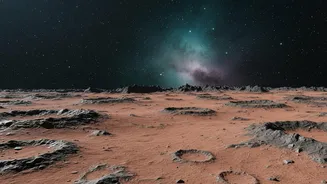
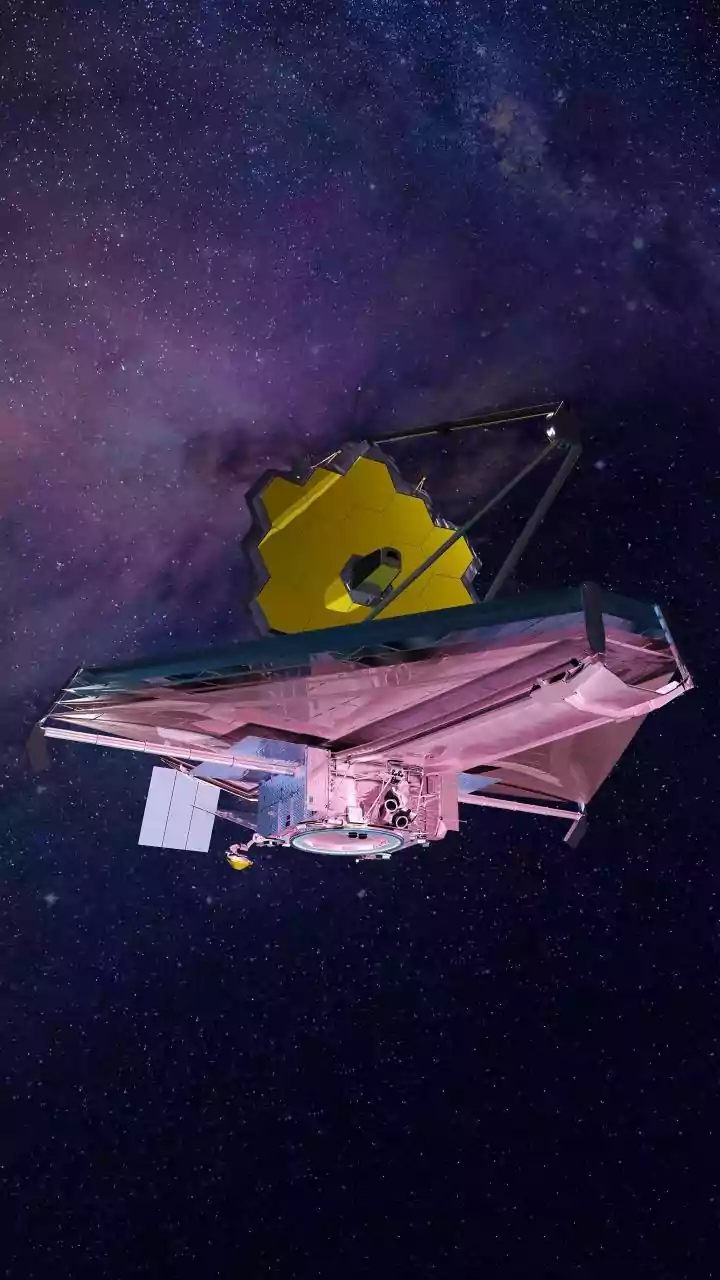
cornerstone of life as we know it. For years, astronomers have focused on the “habitable zone,” or “Goldilocks zone,” the orbital ring around a star where temperatures are just right for liquid water. However, JWST’s observations are showing that this is just one piece of a much more complex puzzle. The telescope has found that many planets within this zone, especially those in the famous TRAPPIST-1 system, appear to have no significant atmosphere at all.
Cosmic Blasting Zone
So, where are the atmospheres going? The primary culprit is the very star the planets orbit. Many of the most common stars in our galaxy, known as M-dwarfs or red dwarfs, are incredibly volatile, especially in their youth. They erupt with powerful flares and emit intense streams of X-ray and ultraviolet (XUV) radiation. This high-energy onslaught, combined with a constant stellar wind of charged particles, can literally sandblast an atmosphere away over millions of years. This process, called atmospheric escape or photoevaporation, is particularly brutal for planets orbiting close to their stars, which is exactly where the habitable zones for these dim stars are located.
A Tale of Two Planets
JWST’s observations of the TRAPPIST-1 system, 40 light-years away, serve as a prime example. The telescope studied the innermost planets, TRAPPIST-1 b and c, and found them to be bare rocks with no thick, Venus-like atmosphere as some had hoped. Even TRAPPIST-1 e, a world squarely in the habitable zone, shows no definitive signs of a substantial atmosphere, though scientists haven't completely ruled out a thinner one. The lesson is that proximity to a volatile star can be a death sentence for a budding atmosphere. Conversely, the telescope found surprising evidence of an atmosphere around 55 Cancri e, a scorching “super-Earth” so hot its surface is likely molten. Scientists believe this is a “secondary” atmosphere, continuously being replenished by gases bubbling out of its magma ocean, as its original atmosphere was stripped away long ago.
Rewriting the Rules of Habitability
These findings are forcing a rewrite of the planetary habitability rulebook. The new rules are more complex and stringent. It’s no longer enough for a planet to be in the right location. To be truly habitable, a rocky world likely needs to: orbit a stable, quiet star; be massive enough for its gravity to hold onto its gases; and possess a strong magnetic field to deflect the worst of the stellar wind. The disappointing discoveries of airless worlds are, in fact, progress. They show that atmospheric loss is a critical factor that has been underestimated. While JWST has yet to find a definitive atmosphere around a small, rocky planet, each barren world it identifies helps scientists refine their models and narrow the search.