






The Ruling That Empowers Passengers
In a significant decision dated July 22, 2026, a district consumer commission in Kerala held an airline accountable for a three-day baggage delay. The court ordered the airline to pay a total of ₹53,923, which included reimbursement for essential purchases,
compensation as per the Ministry of Civil Aviation's Passenger Charter, and litigation costs. The commission noted that the airline's failure to provide compensation, despite the passenger filing complaints, constituted a clear “deficiency in service”. This ruling underscores a crucial point: passengers have strong rights, but exercising them depends entirely on having the right proof.
Before You Fly: The First Record
Your documentation process should begin before you even leave home. Lay out the contents of your checked luggage and take clear photographs or a video. This creates a visual inventory of what you packed. While it may feel like an unnecessary step, this simple record can be invaluable if your bag is declared lost (typically after 21 days) and you need to file a claim for the value of its contents. Airlines may require proof for valuable items, and photos can help substantiate your claim when original receipts are not available.
At The Airport: Your Most Crucial Step
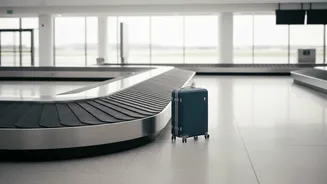
If your bag doesn't appear on the carousel, do not leave the baggage reclaim area. Your immediate action is the single most important step in any future claim. Go directly to your airline's baggage service counter and file a Property Irregularity Report (PIR). This report is the official acknowledgement from the airline that your bag is missing. You will be given a copy with a unique file ID or reference number; guard this document carefully. Without a PIR filed at the arrival airport, an airline may reject your claim entirely.
The Essential Paper Trail
Once the PIR is filed, your job is to meticulously collect and preserve every related document. This paper trail is your power when dealing with the airline. The key records to keep are: your boarding pass (or a digital copy), the baggage claim stickers (the receipts with the barcode you get at check-in), and your PIR reference number. If the delay forces you to buy essentials like toiletries, basic clothing, or other necessities, you must keep every single original, itemised receipt. These receipts are your evidence for reimbursement claims for reasonable and necessary expenses incurred due to the delay.
Building and Filing Your Claim
With your documents in order, you can formally file your claim with the airline, a step separate from filing the initial PIR. For delayed baggage, you generally have 21 days from when you receive the bag to submit a claim for reimbursement of essentials. For damaged baggage, the window is often shorter, typically 7 days. When you submit, include copies of your PIR, boarding pass, baggage tags, and all receipts for expenses. Be clear and concise in your communication, referencing your flight details and PIR number. Under the DGCA's Passenger Charter, liability for delayed or damaged domestic baggage is limited to ₹20,000.
When to Escalate the Issue
If the airline fails to respond or offers an unsatisfactory resolution, you have further recourse. As seen in the recent Kerala case, the passenger first filed a complaint on the INGRAM consumer portal before approaching the consumer commission. India has a four-tier escalation system for passenger grievances. Keeping a detailed record of all your correspondence with the airline—including dates, times, and who you spoke with—is vital if you need to escalate your complaint to a consumer forum or the DGCA.