


A Sweet Steeped in Legend
The connection between Lord Krishna and milk-based sweets is legendary, and the peda holds a special place. Mathura, the sacred birthplace of Krishna, is the origin of this iconic sweet. According to tradition, peda is one of the most beloved offerings,
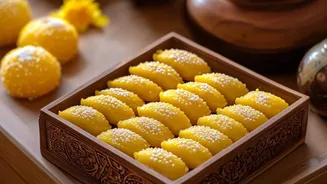
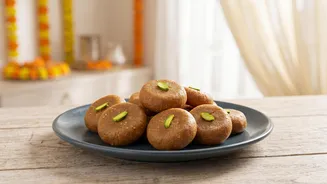
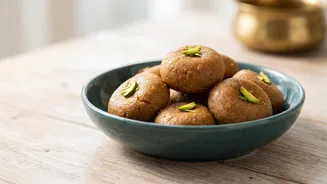
or 'bhog', for Krishna, making it an essential part of Janmashtami celebrations. The sweet itself is a rich, caramelised milk fudge made from khoya (milk solids), sugar, and ghee, flavoured with aromatic cardamom. While there are many peda varieties, the Mathura-style version is famous for its distinct dark, roasted colour and grainy texture, a result of slowly cooking the milk solids until they caramelise. Making it at home is not just about preparing a dessert; it's about partaking in a tradition that connects millions of devotees to the heart of the festival.
Gather Your Ingredients
The beauty of Mathura peda lies in its simple yet high-quality ingredients. For the most authentic taste, using full-fat milk to make fresh khoya is traditional, though good quality store-bought khoya is a great time-saver. You can also use milk powder to create instant khoya. The special grainy texture is often achieved by using 'bura' or 'tagar' (a type of unrefined powdered sugar), but regular powdered sugar works well too. Here’s what you'll need: Khoya (Mawa): 250 grams, grated Sugar: 1/2 cup, powdered (adjust to taste) Ghee: 2 tablespoons Milk: 2-3 tablespoons (if needed) Cardamom Powder: 1/2 teaspoon Nutmeg Powder: A small pinch (optional, for authentic flavour) Extra Powdered Sugar or Bura: For coating the pedas
The Art of Peda Making: A Step-by-Step Guide
Patience is key to achieving the perfect Mathura peda. The roasting of the khoya is the most crucial step, as this is where the flavour and colour develop. 1. Roast the Khoya: Place a heavy-bottomed pan or kadai on low to medium heat. Add the grated khoya and begin to roast it, stirring continuously. As it heats, it will melt and start to clump together. 2. Caramelise with Ghee: After about 5-7 minutes, the khoya will begin to change colour. Add the ghee and continue to roast, still stirring constantly to prevent it from burning. Scrape the sides of the pan as you go. The goal is a deep, golden-brown colour and a rich, nutty aroma. This process can take 15-25 minutes on a low flame. 3. Cool the Mixture: Once the khoya has reached the desired dark brown colour, turn off the heat and transfer the mixture to a separate plate or bowl to cool down completely. This is a vital step; adding sugar to hot khoya will cause it to melt and become watery, making it impossible to shape the pedas. 4. Add Flavour: Once the mixture is cool to the touch, add the powdered sugar, cardamom powder, and nutmeg powder. Mix everything together thoroughly with your hands, rubbing the mixture to ensure it's well combined and has a slightly grainy texture. 5. Shape the Pedas: If the mixture feels too dry to bind, add a tablespoon of milk at a time until it comes together into a firm dough. Take small portions of the mixture and roll them into smooth balls. Gently flatten them with your thumb to create the classic peda shape. 6. Coat and Serve: Roll each peda in the extra powdered sugar or bura until it is lightly coated on all sides. Let the pedas rest for an hour to set before serving as prasad or enjoying with your family.
Tips for Perfection
Creating the perfect Mathura peda is an art. Here are a few tips to ensure success: Use a Heavy Pan: A thick, heavy-bottomed kadai is essential to prevent the khoya from sticking and burning. Low and Slow is the Way to Go: Do not rush the roasting process. The deep flavour and colour come from slowly cooking the milk solids on a low flame. Stir, Stir, Stir: Continuous stirring is non-negotiable. This ensures even cooking and prevents any part of the khoya from burning, which would impart a bitter taste. Cool Completely: Always ensure the roasted khoya has cooled down to room temperature before adding sugar. This is the most common pitfall that leads to a runny mixture. Texture is Key: For that authentic, slightly crumbly and grainy texture, don't over-knead the final mixture. If you have access to it, using bura sugar instead of regular powdered sugar will enhance this texture.