








Beyond Just 'Cleaning Up' Space
The conversation around 'space sustainability' has been gaining urgency for years. In simple terms, it’s about ensuring future generations can use space by addressing current problems, the most significant being orbital debris. Every satellite launch
and mission leaves behind a trail of junk, from spent rocket stages to tiny fragments from collisions. With tens of thousands of tracked objects and countless smaller, untraceable pieces of debris whipping around the planet at extreme speeds, the risk to operational satellites providing critical services—from weather forecasting to GPS—is immense. Recent BRICS meetings, including one hosted by India in Bengaluru, placed this issue on the agenda, with member nations discussing the need for debris-free missions and responsible space operations. But while keeping Earth's orbit usable is a shared goal, the talks quickly revealed a more immediate and unifying priority.
A Pivot to a Shared View of Earth
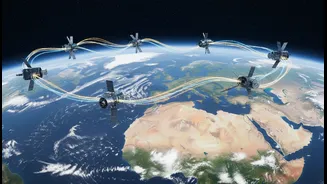
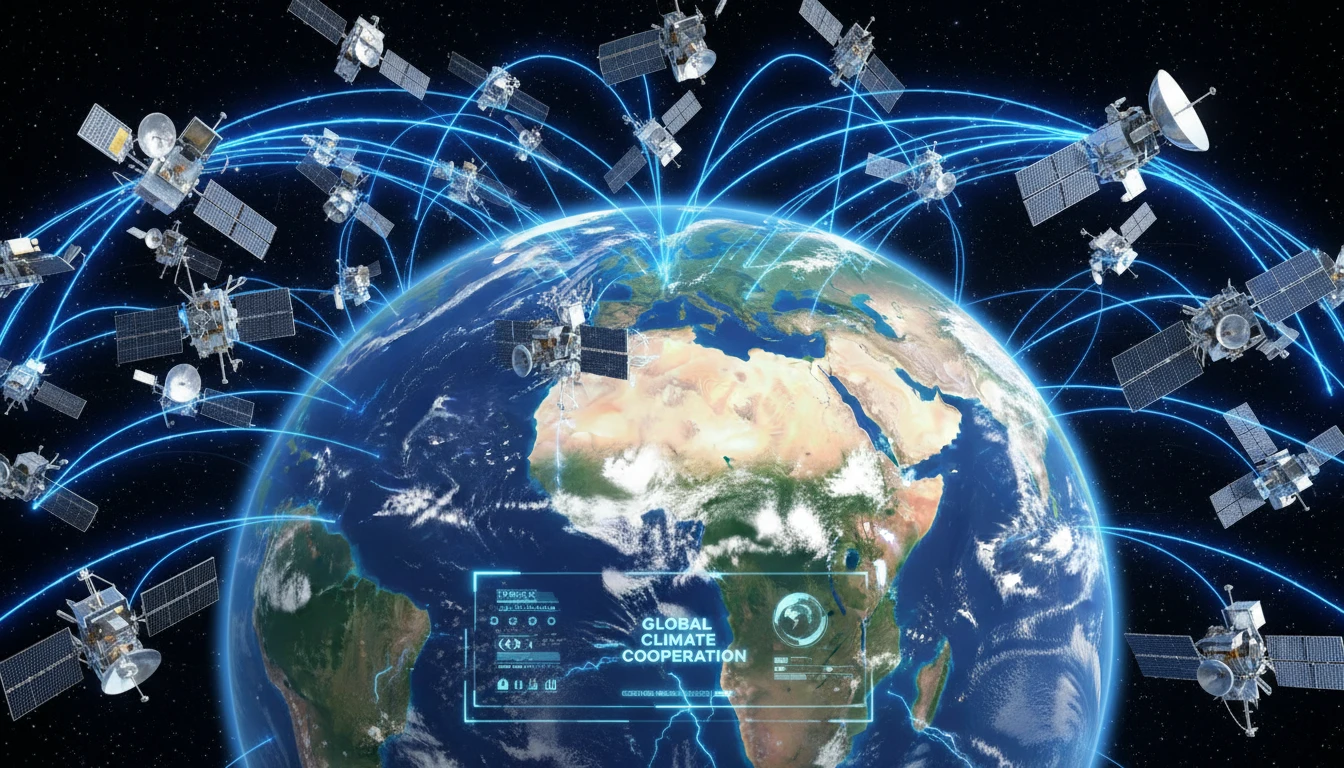
The real breakthrough was the renewed and strengthened commitment to a cooperative BRICS Remote Sensing Satellite Constellation. First agreed upon in 2021, this initiative creates a 'virtual constellation' by pooling data from existing Earth-observation (EO) satellites belonging to member nations. This includes India's Resourcesat-2 and 2A, Russia's Kanopus-V, and satellites from China and Brazil. Instead of launching a whole new network, the agreement establishes a framework for sharing data from these powerful eyes in the sky. The plan is to create a robust data exchange platform, with a roadmap for its creation laid out from 2025 to 2029. This collaborative approach allows member countries to access a much wider range of satellite imagery and information, effectively giving them a more comprehensive and timely view of the planet without the massive cost of building everything from scratch.
Why Earth Observation Matters Now
The focus on Earth observation speaks to the pressing challenges that all BRICS nations face on the ground. This isn't about abstract space exploration; it’s about using space technology to solve urgent, real-world problems. The shared satellite data will be used for critical applications like monitoring climate change, managing natural disasters, ensuring food security, and protecting the environment. For countries like India, Brazil, and South Africa, which are highly vulnerable to climate impacts and natural disasters, this cooperation is invaluable. For instance, Russian satellite data has already been supplied to India to aid in the aftermath of earthquakes. By combining their resources, BRICS nations can better predict floods, monitor droughts, manage agricultural resources, and respond more effectively when disaster strikes. It’s a pragmatic shift from the long-term, abstract goal of orbital cleanup to the immediate, tangible benefits of planetary monitoring.
The Geopolitics of a BRICS Constellation
This move is not just about science and disaster management; it's also a significant geopolitical statement. For decades, satellite data has been dominated by Western powers, primarily the United States' Landsat program and Europe's Copernicus system. While this data is often publicly available, having an independent, cooperative network gives the BRICS bloc strategic autonomy. It reduces reliance on Western-controlled infrastructure and allows member nations to pursue their own socio-economic and security objectives with data they collectively manage. During recent meetings, leaders from Brazil and Russia emphasized that this cooperation helps reduce technological asymmetries among members and strengthens their collective hand on the world stage. Proposing a formal BRICS Space Council is the next logical step, aimed at coordinating more complex joint missions and cementing this partnership for the long term.
India's Central Role
India, through the Indian Space Research Organisation (ISRO), is a cornerstone of this initiative. With its advanced and long-standing remote sensing satellite program, India is a major contributor to the virtual constellation. By chairing recent meetings, India has pushed for the bloc to move beyond simple data sharing towards what it calls a 'BRICS Space Economy'—a framework for co-development, joint innovation, and commercial partnerships. This vision includes encouraging collaboration between startups and private industries across member nations, an area where India’s own 'NewSpace' ecosystem is rapidly growing. For India, this deepened cooperation reinforces its leadership role in space governance and creates new opportunities for its burgeoning private space sector to engage on a global scale.