
A New Tool for an Ancient Quest
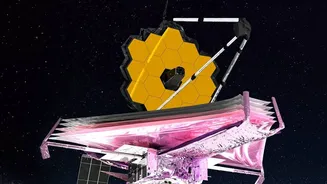
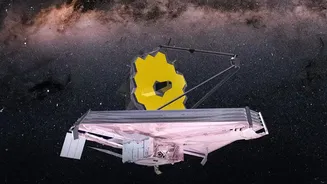
For centuries, humanity has looked to the stars and wondered if we are alone. The James Webb Space Telescope represents a monumental leap in our ability to answer that question. This technological marvel, orbiting far beyond the Moon, is equipped with
instruments sensitive enough to parse the chemical makeup of planets hundreds of light-years away. While finding little green men is still the stuff of science fiction, finding the ingredients for life—like water—is now a reality. Recent discoveries have moved planetary science from theory into an era of hard data, providing an incredible return on the technological investment in the telescope.
How Webb 'Sniffs' a Distant Atmosphere
The primary method Webb uses is called transmission spectroscopy. Imagine an exoplanet passing in front of its host star from our point of view. As the starlight shines through the thin ring of the planet's atmosphere, gases like water vapour, methane, and carbon dioxide absorb very specific wavelengths, or colours, of light. This process leaves behind a unique chemical 'fingerprint' or 'barcode' in the light that reaches the telescope. By analysing which parts of the light spectrum are missing, astronomers can definitively identify the molecules present. This technique allows scientists to study the composition of an atmosphere without ever seeing the planet directly.
WASP-96 b: A World with Water and Clouds
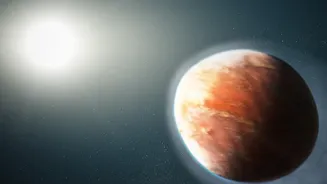
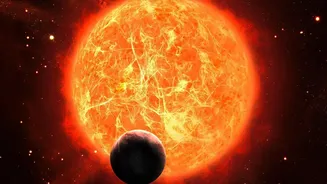
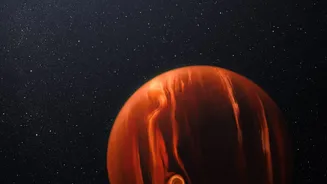
One of the first and most celebrated demonstrations of Webb's power was its observation of WASP-96 b, a gas giant located about 1,150 light-years away. The spectrum captured by JWST provided an unambiguous signature of water vapour in its atmosphere. Interestingly, the data also offered clear evidence for the presence of clouds and hazes, which was a surprise as the planet was previously thought to be cloud-free. While a scorching hot gas giant like WASP-96 b is not habitable, this finding was a crucial proof of concept. It showed that the telescope could not only detect key molecules but also reveal more complex atmospheric dynamics, paving the way for studies of more Earth-like worlds.
K2-18 b: A 'Hycean' World of Interest
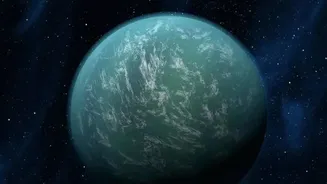
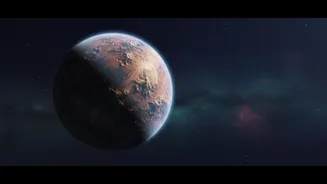
A more tantalising target has been K2-18 b, a sub-Neptune exoplanet orbiting within its star's habitable zone 124 light-years from Earth. Webb's observations confirmed the presence of carbon dioxide and methane, and also detected water vapour. The abundance of these molecules, combined with a shortage of ammonia, strongly supports the hypothesis that K2-18 b could be a 'Hycean' world—a planet with a hydrogen-rich atmosphere covering a liquid water ocean. Adding to the intrigue, initial data showed a possible hint of dimethyl sulfide (DMS), a molecule that on Earth is overwhelmingly produced by life, particularly marine phytoplankton. However, scientists urge caution, as the DMS signal is tentative and could have non-biological origins.
More Than Just Finding Water
Detecting water vapour is a monumental first step, but it is not the end goal. It is a crucial piece of a much larger puzzle. The presence of water on a rocky planet in the habitable zone would be a landmark discovery, suggesting conditions could be right for liquid water to exist on its surface. But astronomers are looking for a suite of molecules, or biosignatures, that could point towards biological processes. The balance of gases like methane and carbon dioxide provides clues about a planet's climate and geology. For instance, recent studies suggest that water on some of these worlds might be hidden deep within the planet, beyond the reach of Webb's atmospheric scans. Each detection helps scientists refine their models of how planets form and what makes them potentially habitable.