




What is the Summer Solstice?
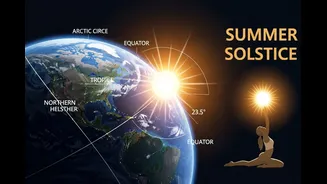
The summer solstice, also known as 'midsummer', is the moment when one of Earth's poles has its maximum tilt toward the Sun. For us in the Northern Hemisphere, this means the Sun reaches its highest and northernmost point in the sky. The result is the longest
period of daylight and the shortest night of the entire year. This year, the solstice officially occurs on June 21. While the change in daylight from the day before and after is minimal, this date marks the peak of the sun's power, a celestial high point that has fascinated humanity for millennia.
The Science Behind the Sunlight
It’s not about the Earth being closer to the Sun—in fact, we're typically farther away during the Northern Hemisphere's summer. The magic is all in the tilt. Our planet spins on an axis that is tilted at an angle of about 23.5 degrees. As we orbit the Sun, this tilt means that for half the year, the Northern Hemisphere is angled more towards the Sun, and for the other half, the Southern Hemisphere gets more direct sunlight. The summer solstice is the exact moment when our hemisphere's lean towards the Sun is at its absolute maximum. Think of it as the planet taking a deep, sun-drenched breath before it begins to slowly tilt away again, leading us eventually towards winter.
A Day of Global and Local Significance
Across the globe, the solstice has always been a time of celebration and spiritual significance. Ancient monuments like Stonehenge in the UK are famously aligned with the solstice sunrise. In India, the event has deep cultural roots. The solstice marks the transition from Uttarayana (the Sun's northward journey, considered auspicious) to Dakshinayana (its southward journey). This period is significant in Hindu traditions, influencing agricultural cycles and festivals. Furthermore, in a brilliant modern connection, June 21st is also celebrated as International Day of Yoga. The day was chosen in part for its symbolism of light, consciousness, and harmony, resonating deeply with the principles of yoga and the energy of the longest day.
The Solstice Experience in India
Experiencing the longest day of the year in India is a unique affair. In many parts of the country, the solstice arrives not with gentle summer warmth but in the midst of sweltering pre-monsoon heat or the first welcome showers of the rainy season. The extra daylight can mean longer, sweatier afternoons, but it also offers a golden opportunity. It’s a chance for a longer evening stroll once the heat subsides, an extra hour for children to play outside, or a leisurely chai on the terrace as the twilight stretches on. The extended daylight alters the rhythm of our day, inviting us to slow down and sync up with nature’s grand clock.
How to Make the Most of the Extra Daylight
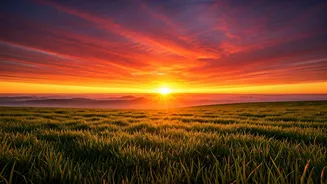
You don't need a grand ritual to mark the longest day. The best way to celebrate is simply to enjoy the extra light. Consider waking up a little earlier to catch the sunrise—it’s the start of a truly special day. Plan an evening activity that is usually rushed: a longer walk in a local park, a game of cricket with friends, or even some terrace gardening. It’s also a perfect day to practice yoga, aligning your personal energy with the Sun's peak power. Or, simply find a comfortable spot, put your phone away, and watch the colours of the sunset unfold. The gift of the solstice is time, a few extra minutes of golden light to spend as you please.