






The Golden Elixir for Plants
Neem oil is a vegetable oil pressed from the fruits and seeds of the neem tree (Azadirachta indica), a tree that’s been revered in India for centuries for its medicinal and agricultural properties. For gardeners, it’s nothing short of a miracle. The reason
it’s so effective lies in its complex chemical makeup, particularly a compound called Azadirachtin. This isn't a harsh chemical that kills on contact; instead, it works in a much smarter, more holistic way. It disrupts the life cycle of pests, acting as a repellent, an anti-feedant (making leaves taste bad), and a growth regulator that prevents larvae from maturing into adults. This multi-pronged attack is what makes it such a formidable ally for your green space.
Why It's Perfect for Balcony Gardens
Urban gardens, especially those on balconies and terraces in Indian cities, face a unique set of challenges. The concentration of plants in a small space can lead to rapid pest infestations, while humidity during monsoon season creates a perfect breeding ground for fungal diseases like powdery mildew. Neem oil is a triple-threat solution. It’s an insecticide (fights insects like aphids and mealybugs), a miticide (tackles spider mites), and a fungicide (combats fungal infections). Because it’s biodegradable and considered safe for humans and pets when used correctly, it’s an ideal choice for a home environment where you want to avoid spraying harsh synthetic chemicals.
Your Simple DIY Neem Oil Spray
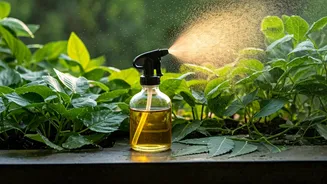
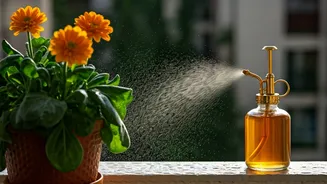
Forget buying expensive pre-mixed solutions. Making your own neem oil spray is incredibly easy and cost-effective. You only need three things: cold-pressed neem oil, a gentle liquid soap, and water. The soap acts as an emulsifier, allowing the oil and water to mix. Here’s a standard recipe: 1. **Start with 1 litre of lukewarm water.** Warm water helps the oil mix more easily. 2. **Add 1 teaspoon (5 ml) of 100% cold-pressed neem oil.** Quality matters, so look for pure oil for the best results. 3. **Add ½ teaspoon (2-3 ml) of mild liquid soap.** A simple dish soap or a plant-safe insecticidal soap works perfectly. Pour all ingredients into a spray bottle and shake vigorously. You will need to shake it periodically during application as the oil and water will try to separate over time. It’s best to make a fresh batch for each use, as the mixture can lose its efficacy after about 8 hours.
How to Use It Like a Pro
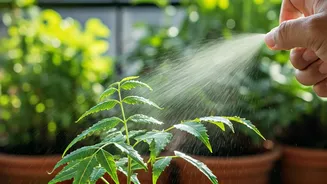
Proper application is key to success and ensures you don't harm your plants. First, always do a patch test. Spray a small, inconspicuous leaf on each plant type and wait 24-48 hours to check for any signs of leaf burn or damage. Some plants can be more sensitive than others. Once you know your plants tolerate it, follow these steps: * **Spray in the evening or early morning.** Applying neem oil in direct, hot sunlight can cause the leaves to burn (a condition called phytotoxicity). * **Be thorough.** Pests love to hide on the undersides of leaves and in the crevices where leaves meet the stem. Make sure you spray all surfaces of the plant until the liquid is just starting to drip off. * **Don’t drench the soil.** While neem oil can be used as a soil drench for some issues like fungus gnats, for general pest control, focus on the foliage. * **Repeat regularly.** For an active infestation, apply the spray every 5-7 days. As a preventative measure during peak pest season, a spray every 10-14 days is usually sufficient.
A Few Words of Caution
While neem oil is a natural wonder, it’s not completely without its considerations. It’s a broad-spectrum agent, meaning it can harm some beneficial insects like ladybugs and bees if they are directly sprayed. Applying it in the evening when these pollinators are less active significantly reduces this risk. Furthermore, never apply it to plants that are already stressed from underwatering or extreme heat, as this can worsen their condition. And as with any garden product, it's wise to keep the concentrated oil and spray mixture away from children and pets. By using it thoughtfully, you can harness its power without any unintended consequences, keeping your balcony garden healthy and vibrant.