





A Demand Explosion Meets a Supply Crunch
India's appetite for air travel is growing at a staggering pace. The country's aviation market is projected to expand at an annual rate of 7.1 percent between 2026 and 2036, one of the highest growth rates in the world. This surge is driven by a burgeoning
middle class, greater economic activity, and a strong post-pandemic rebound in both leisure and business travel. However, this explosive growth has run into a serious roadblock: a severe shortage of available aircraft. The problem is twofold. Firstly, airlines simply don't have enough planes to meet the rising passenger numbers. Secondly, and more critically, a significant portion of the existing fleet is grounded. By March 2025, over 130 aircraft across Indian carriers were idle, representing roughly 16% of the entire industry's fleet. This has put immense pressure on capacity, leading to constrained schedules and volatile airfares.
The Engine Conundrum
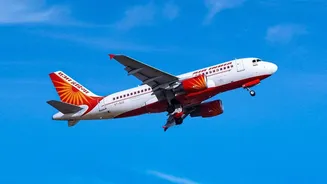
The primary cause for the large number of grounded planes lies with engine trouble. Specifically, supply chain issues and manufacturing defects related to Pratt & Whitney (P&W) engines that power many Airbus A320neo aircraft—a workhorse of Indian domestic fleets—have wreaked havoc. Airlines like IndiGo have had to ground dozens of aircraft due to issues like powder metal contamination found in engine components. These engines required maintenance far sooner than anticipated, and a global bottleneck in repair and overhaul (MRO) services, compounded by supply chain disruptions, meant that getting them back in the air has been a painfully slow process. The crisis was a major factor in the collapse of Go First, which had a large part of its fleet grounded due to the engine failures.
A Historic Shopping Spree
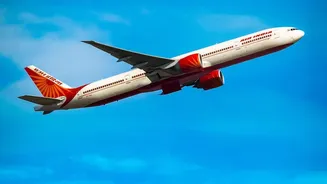
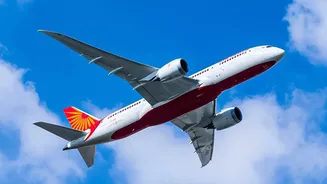
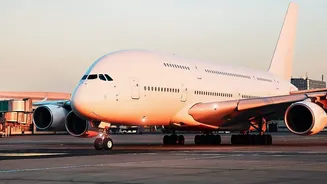
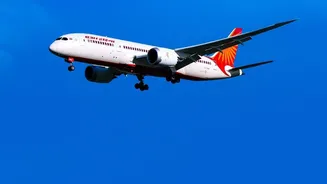
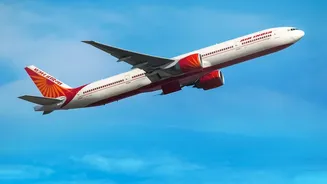
In response, Indian airlines have embarked on one of the largest aircraft acquisition sprees in global aviation history. Major carriers like Air India, IndiGo, and the rapidly growing Akasa Air have already placed firm orders for over 1,200 new planes from manufacturing giants Airbus and Boeing. This includes massive, headline-grabbing deals from a revitalised Air India under Tata ownership and market leader IndiGo. These orders for a mix of narrowbody jets like the Boeing 737 MAX and Airbus A320 families, along with widebody aircraft like the Airbus A350, are not just about replacing grounded planes. They represent a massive strategic bet on the future of Indian aviation, positioning the carriers to capture decades of projected growth.
Another 1,000 Planes on the Horizon
Even with over 1,200 aircraft already in the order pipeline, the industry believes it's not enough. According to Union Commerce and Industry Minister Piyush Goyal, Indian airlines are preparing to order an additional 1,000 planes to meet the country's total estimated requirement of over 2,000 aircraft. Airlines are reportedly urging manufacturers to speed up deliveries, which are currently spread out over the next decade, with some deliveries scheduled as late as 2034. This push highlights the urgency of the capacity crunch. The newcomer, Akasa Air, exemplifies this aggressive expansion. Since starting in August 2022, it has rapidly grown its fleet and has firm orders for over 200 Boeing 737 MAX aircraft.
What This Means for Passengers
For the Indian flier, this massive fleet expansion should bring welcome changes, but patience is required. In the short term, the capacity shortage will likely contribute to unpredictable and often high airfares, especially during peak seasons. However, as hundreds of new aircraft begin to arrive over the coming years, the increased capacity should lead to more stable and competitive pricing. Passengers can also look forward to more flight options on existing routes, the launch of new domestic and international connections, and a more reliable network less prone to disruptions from aircraft shortages. The government is also working to create a domestic aircraft leasing and financing ecosystem in GIFT City, which could help reduce costs for airlines in the long run. While challenges like fuel costs and a new mandate for using more expensive Sustainable Aviation Fuel (SAF) from 2027 remain, the influx of new, more fuel-efficient aircraft is the most crucial step toward securing an affordable and expansive future for Indian air travel.