

The Hidden Strain of Sitting
The human body is designed for movement. When you sit in a traditional chair for hours, your knees are typically bent at a 90-degree angle. This fixed position can lead to several problems. Firstly, it puts continuous pressure on the kneecap (patella)
and the cartilage beneath it. This can cause discomfort often referred to as patellofemoral pain syndrome. Secondly, prolonged sitting shortens and tightens the muscles around your hips and the back of your thighs (hamstrings), while weakening others like your glutes and quadriceps. This muscular imbalance disrupts the stability of the knee joint, altering its alignment and increasing strain during everyday movements like walking or climbing stairs. Finally, a static posture reduces the circulation of synovial fluid, the natural lubricant in your joints, leading to stiffness and discomfort.
Why Standard Chairs Fall Short
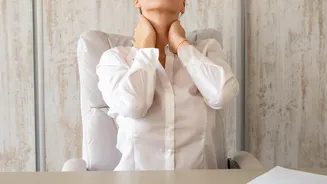
Most standard office chairs have a flat, hard-edged seat pan. This design often creates a pressure point on the underside of your thighs, just behind the knees. This area, known as the popliteal fossa, contains major arteries, veins, and nerves. Compressing this area can restrict blood flow to your lower legs, causing numbness, tingling, and fatigue. To relieve this pressure, people often instinctively slide forward, away from the backrest. This slouching posture breaks the chain of support, causing the pelvis to tilt backward and the spine to curve, which not only strains the back but also indirectly impacts the alignment and stress on your hips and knees.
The Ergonomic Advantage: Key Features
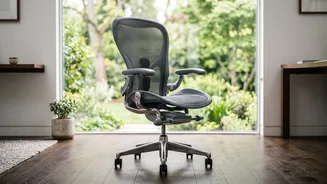
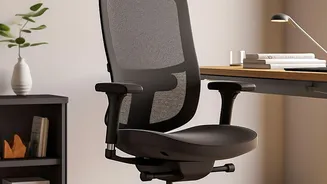
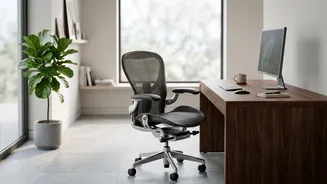
Ergonomic chairs are engineered to work with your body, not against it. They offer specific adjustable features designed to mitigate the strains of prolonged sitting. For knee and joint health, two features are particularly critical: an adjustable seat depth and a waterfall seat edge. These elements work together to properly distribute your weight, support a neutral posture, and enhance circulation. By customizing the fit to your body, an ergonomic chair allows you to sit back fully, engaging the lumbar support while eliminating harmful pressure on your lower body.
The Waterfall Seat Edge Explained
One of the most important yet overlooked features of an ergonomic chair is the 'waterfall' seat edge. Instead of a hard, 90-degree angle, the front of the seat has a soft, rounded curve that slopes downward. This simple design element dramatically reduces the pressure on the back of your thighs. By preventing the seat edge from digging into your legs, it allows for unimpeded blood circulation, which helps prevent numbness, swelling, and fatigue in the lower legs. This feature encourages you to sit with your feet flat on the floor, promoting a healthier posture from the ground up and reducing the overall load on your knee joints.
Perfecting Your Position with Seat Depth
Adjustable seat depth allows you to slide the seat pan forward or backward to fit your thigh length. The ideal position leaves a small gap of about two to four fingers' width between the back of your knees and the edge of the seat. If the seat is too deep, its edge will press into the back of your knees, restricting blood flow. If it's too shallow, your thighs won't be adequately supported, leading to muscle fatigue and increased pressure on your lower back and sit bones. By getting the seat depth right, you ensure your weight is evenly distributed while allowing your back to rest firmly against the chair's lumbar support, maintaining healthy spinal alignment and reducing compensatory strain on your knees.
Beyond the Chair: A Holistic Approach
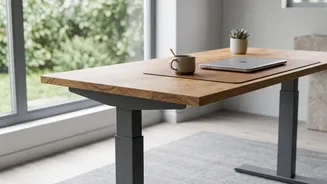
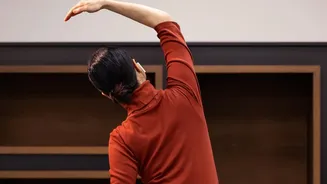
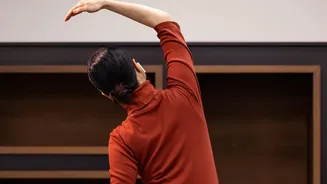
While an ergonomic chair is a powerful tool, it's most effective as part of a broader strategy for joint health. The most crucial habit to adopt is regular movement. Aim to stand up, stretch, and walk around for a few minutes at least once every hour. Simple stretches for your hips, hamstrings, and quadriceps can counteract the muscle tightening that occurs from sitting. Ensure your entire workstation is ergonomic: your monitor should be at eye level to prevent neck strain, and your feet should rest flat on the floor or on a footrest, keeping your knees at a comfortable, roughly 90-degree angle.